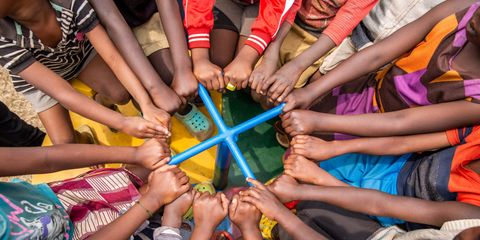
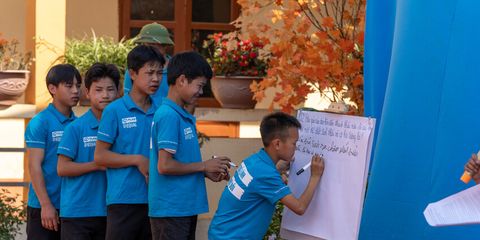
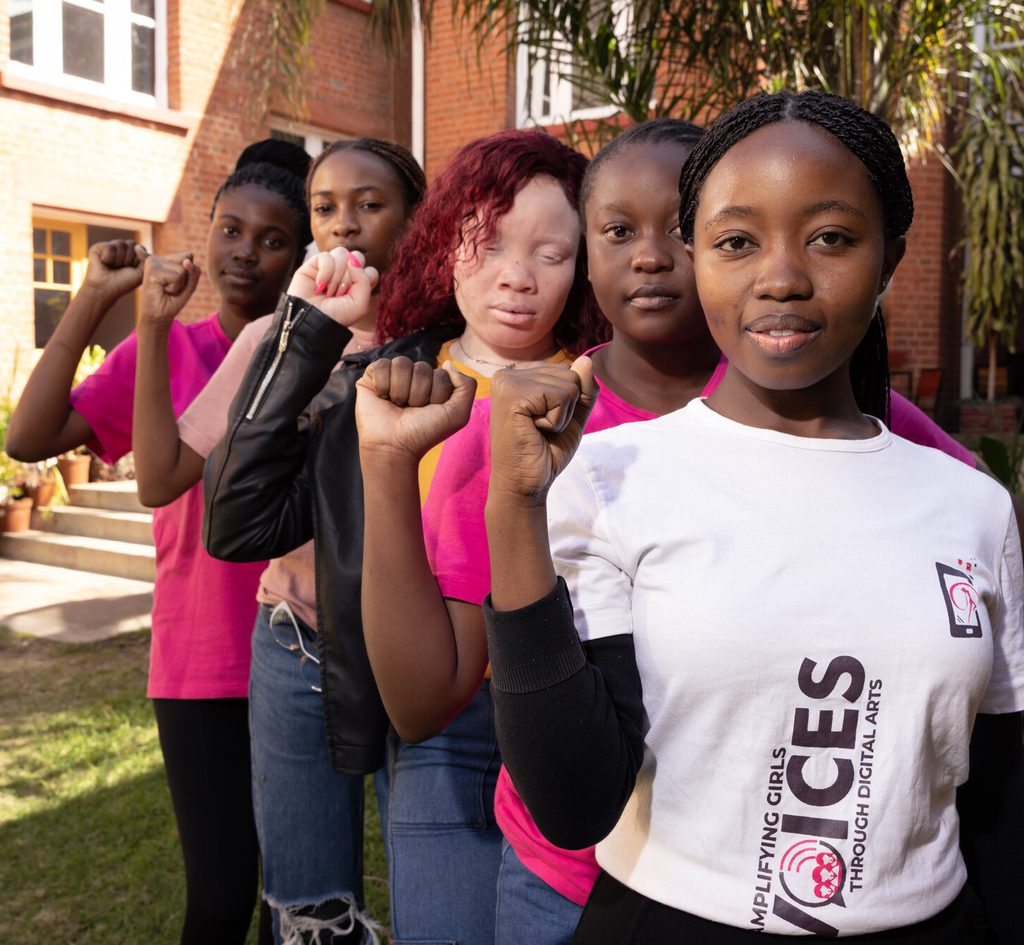
Working with and through partners is critical to achieving our goal of positively impacting the lives of 200 million girls.
Why our partners are key to our work and values
As an outward-looking organisation Plan International recognises that working with and through partners is critical to achieving our goal of positively impacting the lives of 200 million girls over five years as emphasised in our global strategy All Girls Standing Strong Creating Global Change (2022-2027).
We build relationships with a wide variety of partners. Whether our partnerships focus on sharing skills and expertise when implementing projects together, advocacy and influencing policy and practice change, campaigning for our causes, resource mobilisation, or championing and raising awareness of our work – all of it is essential to achieve impact and reach around our goals.
We are committed to becoming a locally-led, globally connected organisation.
We are committed to becoming a locally-led, globally connected organisation and work meaningfully and equitably to support and strengthen our partners and partnerships.
Plan International is a proud signatory of the Pledge for Change: a collective initiative with the overarching purpose to shift power, decision-making and funding closer to local communities, partners, and programme participants. At its core, the Pledge acknowledges the unequal power dynamics at play in the development and humanitarian sector, and the urgent change required to address these.
At Plan International, we strongly believe that how we work with partners is as important as achieving our goals. Our partnerships reflect our purpose and values, and although our relationships may look very different depending on who we are working with, and what for, the principles underpinning our partnerships are the same and we strive to nurture youth-centred, mutually-respectful and power aware partnering practices.
Case study: Royal Melbourne Institute of Techology
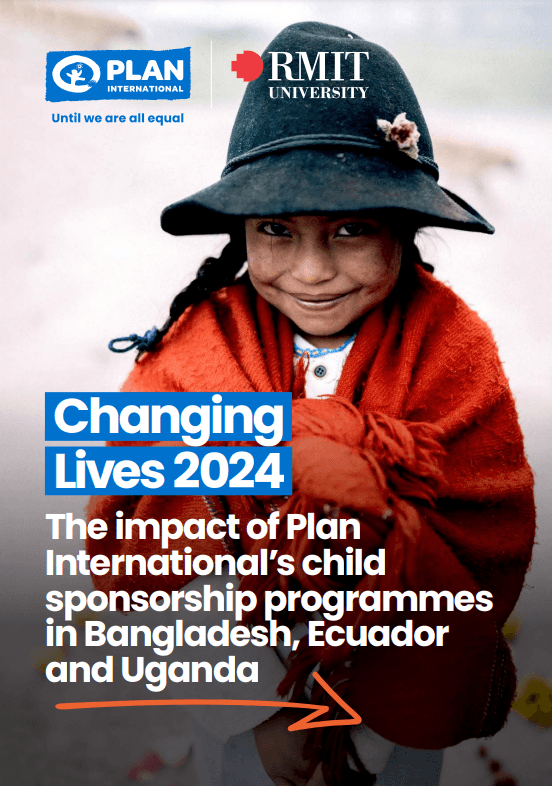
As an evidence-based, learning organisation, Plan International embeds data-driven decision-making into the design of all our initiatives and advocacy for maximum impact – and our academic and research partners are key to this success.
In collaboration with theRoyal Melbourne Institute of Technology (RMIT University), we launched an action-oriented research series: ‘Changing Lives’in 2019 that has since published four studies.
Findings from this series will be used to inform the Next Gen Sponsorship initiative aimed at revitalising and evolving Plan’s sponsorship model to achieve our ambition to reach 200 million girls.
Civil Society Organisations
Case study: Learn Work Develop Rwanda
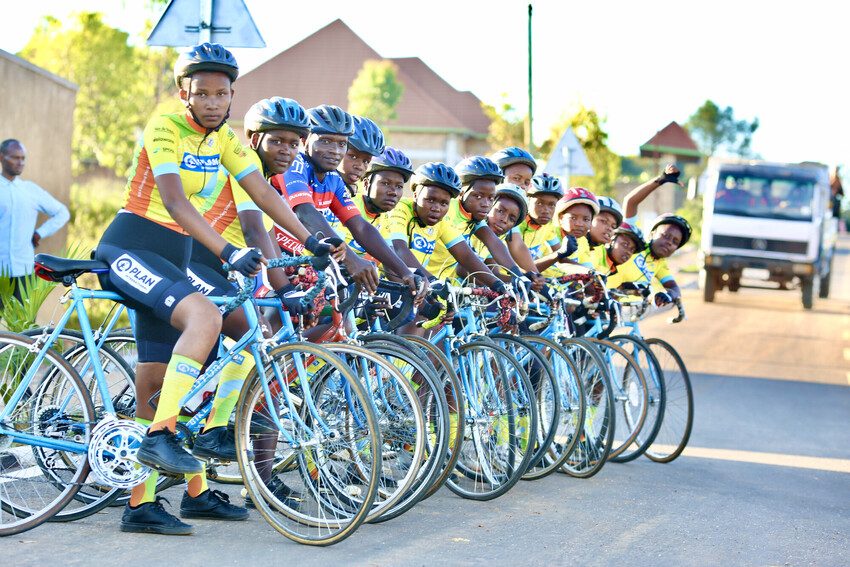
‘Bike for Future’ is implemented by Learn Work Develop Rwanda and sponsored by Plan International Belgium and Plan International Rwanda partnering to empower youth in cycling and vocational training.
During its first cohort, the project welcomed 30 cycling team participants. Through the vocational skills training, 9 girls engaged in welding, 15 in bicycle mechanics, 15 in tailoring and 1 girl in information, communication and technology.
The project emphasises gender transformation and challenging stereotypes: engaging 60% girls and 40% boys.
Girls take part in the Bike for Future project. Image credit: Plan International
Family Trusts/Foundations and Individual Donors
Case study: MacKenzie Scott
MacKenzie Scott is the visionary philanthropist behind Amazon’s success and signatory of the Giving Pledge: publicly committing to donate 50% of her wealth in her lifetime.
In 2024, Scott joined Plan International’s mission to achieve equality for girls in Brazil with an incredible unrestricted donation of US$ 8 million.
The funds will be used to increase the impact of its work with children and adolescents, especially girls, by strengthening the organization’s capacities and also by sharing part of these resources with local partners and other initiatives that support the same cause, in order to create a sustainable ecosystem around gender equality. Click here to read Plan Brazil’s announcement.
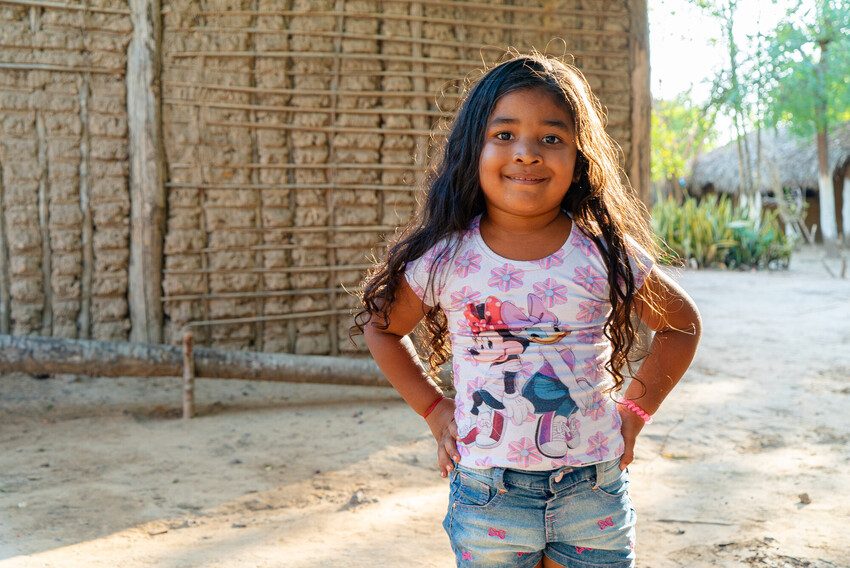
Vitória, 4, Brazil. Image credit: Plan International
Governments, Intergovernmental and Development Aid Institutions and Development Banks
Case study: Defending FGM ban in The Gambia
Plan International (led by Plan Senegal), together with UNFPA, UNICEF, local civil society partners and youth-led movements, succeeded in defending the female genital mutilation (FGM) ban in The Gambia.
The Gambian government’s announcement of its plan to roll back this law resulted in a surge of collective advocacy to influence policy makers to protect the rights of girls and young women.
In July 2024, the government of The Gambia made the landmark decision to uphold the FGM ban: protecting thousands from this harmful practice.
Girl from Senegal. Image credit: Plan International.
International and National NGOs and Charitable Organisations
Case study: ActionAid and Egyptian Red Crescent
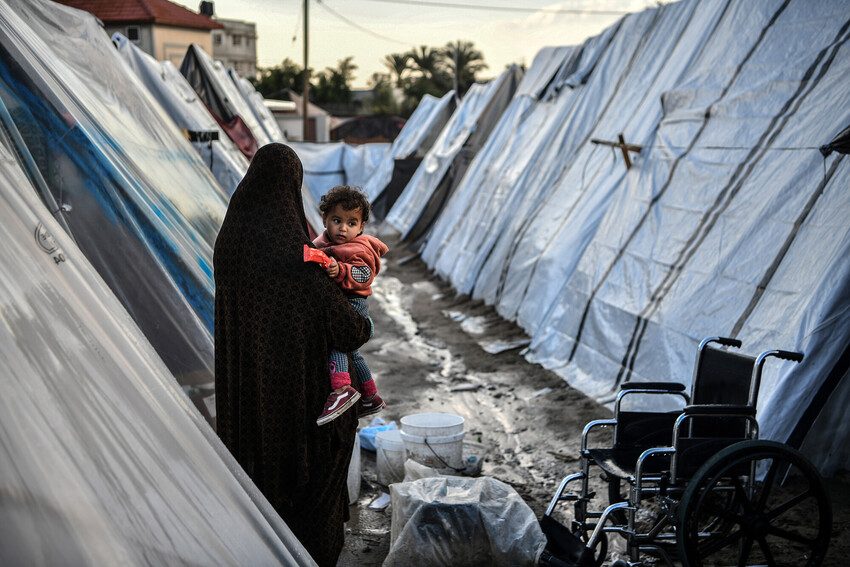
As the emergency in Gaza presented overwhelming unmet humanitarian need, in collaboration with local organisations and humanitarian partners, Plan International took a decision to work in the occupied Palestinian territory for the first time.
Plan International Egypt works with ActionAid to prepare dignity kits. Responding to the personal needs of displaced people, primarily girls and women, the kits contain sanitary pads, soap, hairbrushes, hair clips, dresses, and underwear. Plan International is also supporting the Egyptian Red Crescent to deliver much-needed first aid kits to families in Gaza.
Mother and child amid the tents in Rafah, southern Gaza. Image credit: Terre des Hommes / Abed Zagout.
Networks, Coalitions & Alliances
Case study: Joining Forces
Plan International is a founding member of Joining Forces: a coalition of the six largest child-focused agencies.
The Joining Forces for Africa ‘Acting to End Child Labour’ project addresses the consequences of child labour that is exacerbated by the agricultural devastation and poverty resulting from climate change.
Targeting these root causes, JOFA builds the capacity of community-led interventions, such as Community Child Labour Committees, that provide families support so that children can return to school instead of engaging in dangerous and exploitative work.
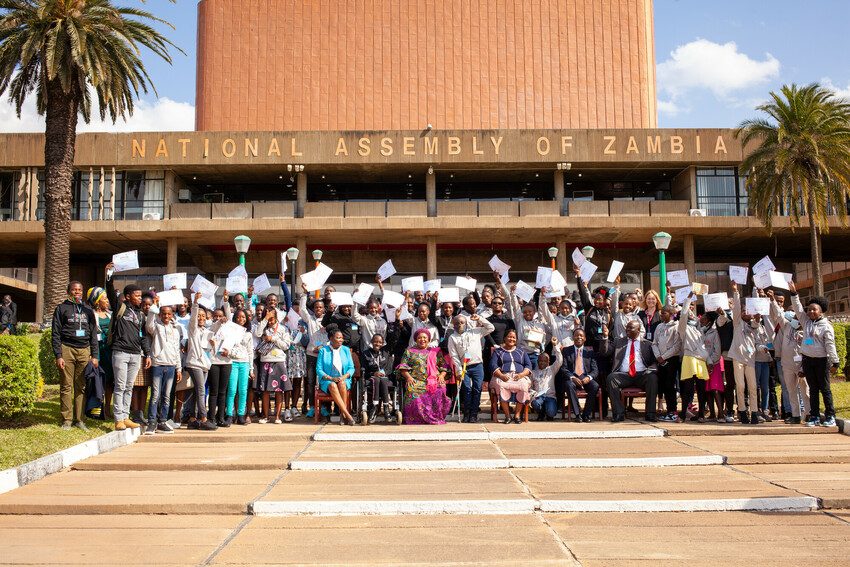
Participants in the first Children’s Parliament outside the National Assembly of Zambia. Image credit: Eric Malyangu (Plan International).
Private Sector Companies & Foundations
Case study: Beiersdorf
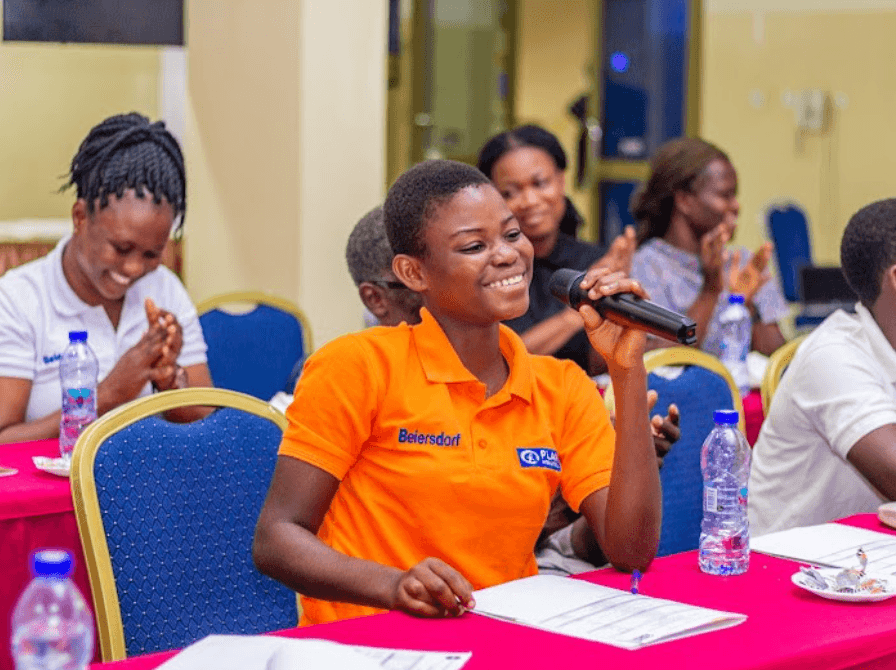
Plan International Germany and Beiersdorf began their partnership in 2020, which has since expanded to many Plan offices including Colombia, Ecuador, Brazil, Philippines, Vietnam, Kenya, Ghana and Nigeria.
Our ambition is to support and protect girls and young women to lead equal and self-determined lives. The Learn and Be Protected project teaches adolescents how to exercise their right to education and protect themselves against violence and addresses critical issues such as teenage pregnancy and sexual violence. Learn more here.
Bieirsdorf and Plan International support girls and young women to take the lead. Image credit: Plan International
Youth-led Organisations & Movements
Case study: Kibera Joy Initiative
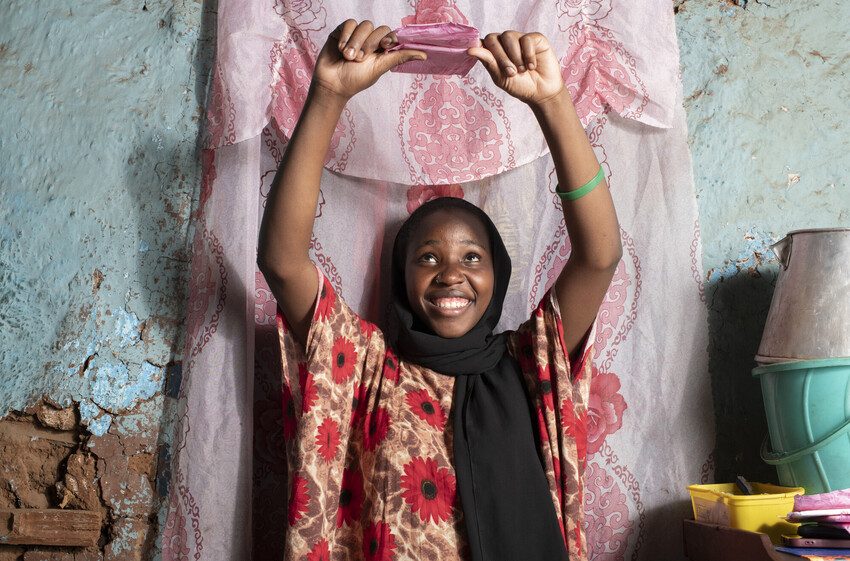
Kibera Joy Initiative is a youth-led organisation based in Nairobi’s Kibera neighbourhood. Its ‘My Period, My Pride’ campaign drives positive change around menstrual hygiene management, challenging harmful gender norms and enhancing young people’s understanding of sexual and reproductive health and rights.
As a Plan International partner for five years under the ‘Safe and Inclusive Cities’ project, Kibera Joy Initiative has increased access to youth-friendly sexual and reproductive health and rights and sexual and gender-based violence information.
Faulat, 21, Kenya. Image credit: Plan International
How to partner with us
Plan International has offices in over 80 countries and our partnerships are most often led by the Plan office in the country where the partner is based. If your company or organisation is headquartered in one of our countries, please select it from the ‘Global Website’ button at the top right of this page and find the contact page for your local Plan International office.
If you are based in a country where we are not operational, but would still like to enquire about the possibility of collaborating with us then please contact our Global Hub at: GH.Partnerships@plan-international.org
In 2023, Plan International launched the Global Girls Foundation, an independent philanthropic foundation that builds partnerships with philanthropists who want to contribute their experiences and expertise to impactful projects. To find out more, visit the Global Girls Foundation website.
Accountability
Take a look at our policies and commitments for more information on how Plan remains accountable.
Related pages
Programmes and Influencing
We put gender equality and the persistent development challenges that girls are facing right at the heart of our organisational purpose.
We’re putting localisation into practice by shifting power to communities, partnering with local organisations and driving sustainable change for girls.
We use functional cookies to make this site work. We’d also like to set optional cookies to measure site usage, personalise content and tailor advertising to your interests. To choose which cookies to enable, click on Settings. For information about the cookies we use, see our Privacy Policy and Cookie Notice.