Language as a tool for change
Inclusive writing isn’t just about confronting and fighting stereotypes — it’s about building equality.
We are Plan International; we work with children and girls in over 80 countries to help create a world where we are all equal.
Plan International was founded over 80 years ago with a mission to promote and protect the rights of children.
Today, we are a global organisation that is active in over 80 countries to advance children’s rights and equality for girls. Over the 5 years from 2017-2022 our ambition is to transform the lives of 100 million girls.
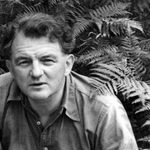
The organisation was set up by British journalist John Langdon-Davies and refugee worker Eric Muggeridge in 1937, with the original aim to provide food, accommodation and education to children whose lives had been disrupted by the Spanish Civil War.
Langdon-Davies conceived the idea of a personal relationship between a child and a sponsor – a model that puts the child at the centre, and remains the core of what we do.
Belgium, Germany, Japan and the UK joined Canada, the US, Australia and the Netherlands as donor countries. We were recognised by the Economic and Social Council of the United Nations.
We marked our 60th anniversary of helping children. Offices opened in France, Norway, Finland, Denmark, Sweden and the Republic of Korea.
Our donor countries increased to 21 as offices opened in Colombia, India, Ireland, Italy, Hong Kong, Spain and Switzerland.
In 2022, we are marking our 85th anniversary of supporting children. We are active in over 75 countries to advance children’s rights and equality for girls.
We work to create a world where all girls know and exercise their rights and live the life they choose, until we are all equal! Last year, we worked in over 80 countries, and reached more than 22 million girls.