Strategy
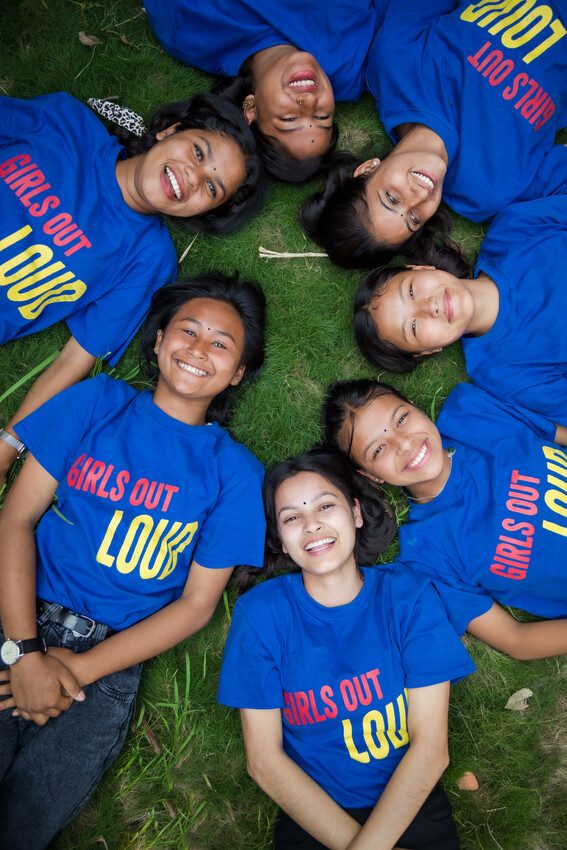
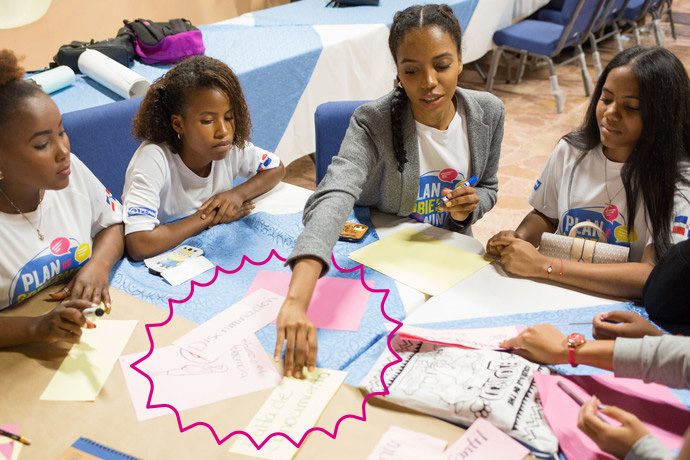
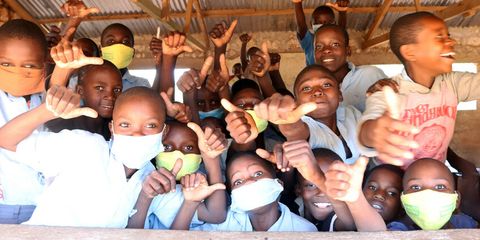
Children sharing ideas in support of Plan's Learn Without Fear campaign to end school violence
In our country strategic plan priority is given to defining Plan’s relationship with communities and institutions – with a focus on social change and building capacity with the poorest children to address their rights and development issues.
Our strategies are aligned with the United Nations’ Convention on the Rights of the Child, and include:
Non-discrimination
- strengthening capacities and competencies of children and adolescents so that they will recognise, exercise, and enjoy their rights
- increasing responsiveness and effectiveness of public institutions for the rights of children and their families
- encouraging positive change with the participation of children and young people from Haiti and Dominican Republic, as part of a cross-border framework.
Child’s best interest
- influencing public policy decision-making
- assuring children’s satisfaction, well-being and happiness
- promoting trust, safety, respect, autonomy, and solidarity.
Right to life, survival and development
- improving child-raising practices and raising the educational level
- promoting preventive health and strengthening community influence on institutional health services
- developing local supply and demand for basic small savings and loans services
- promoting awareness about risks and vulnerabilities in case of natural or other disasters.
Participation
- developing children’s and adolescents’ ability in communication, sports, arts, and life skills
- supporting youth organisations that allow the exercise of active citizenship
- promoting the creation of state mechanism and public policy to ensure participation of children and adolescents.
Key challenges
In the Dominican Republic the most serious issues for children’s survival are HIV and AIDS; teenage pregnancy; ignorance of early childhood development and good child-rearing practices; and weak public health services for mothers and children.
The quality of learning is extremely poor; Only 6 of 10 children reaches fifth grade, and merely 10% graduate from secondary school.
Children are not expected to express their opinions or contribute to family or community decisions. There is a cultural tolerance for violence, often gender related, and the legal system is weak in applying the law.
Plan Dominican Republic works to implement strategies that acknowledge that boys, girls, and adolescents are the basis for transformation, that they have the right to be heard and to actively participate in the development of their community.
Read more about what we do.