Families in Ethiopia work together to end FGM
23 January 2026In Afar, a remote region of Ethiopia, baby girls are often subjected to painful and life-threatening genital cutting as early as one week after birth. Female genital mutilation (FGM) is a deeply rooted and harmful practice that has been considered the norm for generations.
But today, the winds of change are blowing: more parents are daring to say ‘no’ and are choosing to let their daughters grow up free and without being subjected to FGM. This quiet revolution shows that hope can be stronger than tradition.
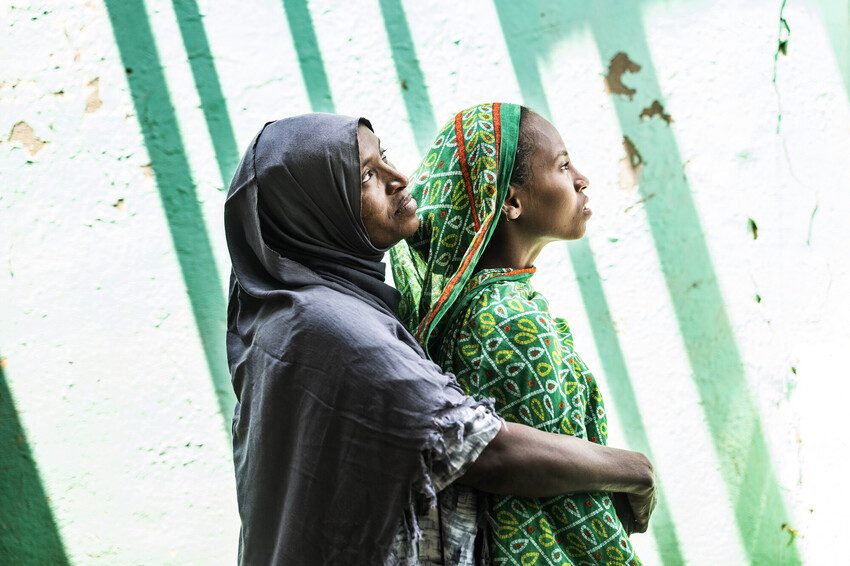
The Afar region of Ethiopia feels surreal: a scorched landscape of sandy plains and a horizon that seems to melt in the heat. Amid the sand and dry trees, where nomadic communities move through the emptiness, small villages and colourful towns appear. It is a beautiful place, but behind this beauty lies a harsh reality for girls.
Shishig, 34, mother to a 14-year-old daughter called Eman, knows this reality all too well. She was one of the first parents in her community to decide not to subject her daughter to FGM. “Female circumcision is hardly ever talked about here,” she says.
“It is extremely dangerous. That is why I decided to protect my daughter.”
Shishig, mother of Eman.
“But I knew that it can cause children to bleed to death and that it has lifelong consequences. Women experience problems during menstruation, have difficulty urinating and face a high risk of infections. It is extremely dangerous. That is why I decided to protect my daughter.”
Fear of deviating from expectations
Female genital mutilation, also referred to as female circumcision or cutting, is one of the most harmful practices in the world. It involves the partial or total removal of the external female genitalia, often without anaesthesia and against the girl’s will. In some cases, the vaginal opening is subsequently sewn closed. The psychological effects of this practice can remain with girls and women throughout the course of their lives.
Although the practice is prohibited by law in Ethiopia, it remains widespread: an estimated 65% of women have undergone female genital mutilation/cutting. In the remote villages of Afar, where traditional leaders and village elders still hold considerable influence, there was little awareness of the health risks associated with the practice for many years. Even today, over 95% of girls in the region are subjected to genital cutting. For many families, the practice feels like an unbreakable social norm.
Something that harms girls is not culture.
Zehara, community educator.
Philipos Petros, expert in sexual and reproductive health and rights at Plan International Ethiopia, explains: “Many people believe that female genital mutilation is simply part of life and that it helps their daughters to marry later on. Underlying this practice are strict ideas about how girls are expected to behave: remaining chaste and virginal. Parents fear gossip and social exclusion if they deviate from these expectations.”
According to Petros, change is only possible when people realise that they are not alone. “To bring an end to female genital mutilation, enough people need to believe that others also support change. In addition, both the risks of female cutting and the benefits of abandoning the practice must be clearly understood.”
Building networks to stop FGM for good
That change begins with courageous parents in Afar who are among the first to decide not to subject their daughters to FGM. During training sessions organised by Plan International, they receive practical tools to overcome resistance in their communities and to build networks together that actively advocate for change.
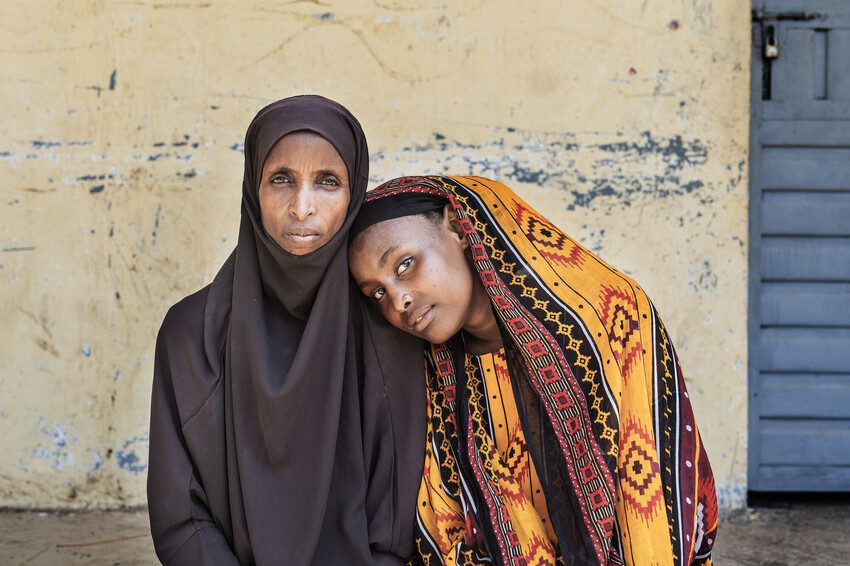
Zehara, 37, is a teacher and community educator. She knows how difficult it is to break the status quo. “There is a lot of pressure from the older generation to have girls cut. Some people say: ‘This is our culture.’ But something that harms girls is not culture, that’s what I tell them.”
Her mission is clear: to show others what the real consequences of genital cutting are.
“When I told other parents that our children are being mutilated, it sparked a major debate. One woman asked me: ‘Are you trying to make me disloyal to my faith?’ No, I said. Then I told them about a seventeen-year-old girl with a swollen abdomen. Her father thought she was pregnant, but at the hospital it turned out that menstrual blood had built up because of her circumcision. She was facing life-threatening complications. That made the parents stop and think.”
Parents like Zehara hope that their choice will serve not only as an example to their peers, but also to a new generation. Her fourteen-year-old daughter Fatuma is already turning that hope into action: as a member of the Girls’ Club, she speaks out against FGM and inspires other girls to do the same.
These clubs, established by Plan International at various schools, are a key pillar in the fight against this harmful practice. Children learn about the health risks of female cutting and, together, challenge the stigma that still clings to girls who have not been cut.
Bringing the community together
Working with parents and children is one of Plan International’s core strategies to curb harmful practices like FGM. But the organisation takes things further, explains Petros.
“We engage in dialogue with village elders, community leaders, health workers, law enforcement officers, local media representatives, and even the cutters themselves. We also involve religious leaders, because female genital mutilation is often wrongly linked to religion. In reality, it has nothing to do with faith.”
“Female genital mutilation is often wrongly linked to religion. In reality, it has nothing to do with faith.”
Philipos Petros, Plan International.
Men must take a stand
Ali, 48, is one of the first men to speak out openly against FGM. He acknowledges that fathers in Afar often still have the final say within the family, and that this is precisely why he believes men must take a stand. He decided not to subject his daughters to the practice and now encourages other fathers to do the same.
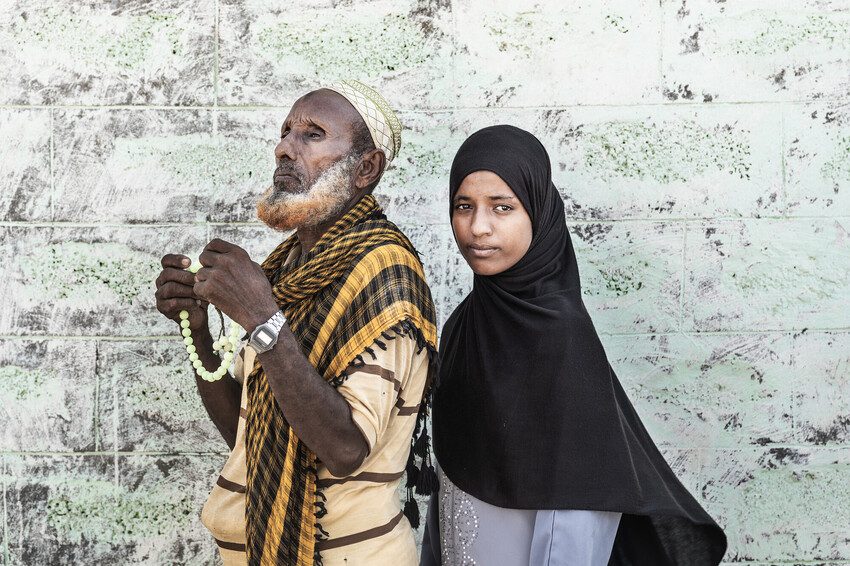
“Female genital mutilation is often seen as a fixed part of our society,” he says, “but, in fact, it is something that has developed over time. Something that started at a certain point can also be brought to an end.”
Girls carry this movement forward
The numbers show that the efforts of parents, girls and Plan International are beginning to bear fruit: in communities where they join forces, the number of girls subjected to FGM is slowly but steadily declining. Yet the wider context shows how fragile the progress can be. In other parts of Ethiopia, where conflict and poverty dominate daily life, parents are once again turning to the harmful practice.
It is a difficult process but together we can stop female genital mutilation.”
Seyida, 14.
During awareness-raising sessions organised by Plan International, parents commit to continuing to protect their daughters and granddaughters, even in times of crisis, when old customs can resurface. And the young people? Inspired by their parents, they carry the movement forward through the Girls’ Club.
Seyida, Ali’s fourteen-year-old daughter, knows that not everything changes in a single generation. But every step brings them closer to a society that is free from FGM.
“It is a difficult process,” she says, “but together we can stop female genital mutilation.”
Related pages