Adolesent-friendly health service centres handover to government
22 December 2025Two adolescent girls inaugurated newly constructed Adolescent-Friendly Health Service buildings in Bardiya, marking a significant step towards ensuring safe, confidential, and non-judgemental sexual and reproductive health services for girls through a KOICA-supported Adolescent Sexual and Reproductive Health and Rights project.
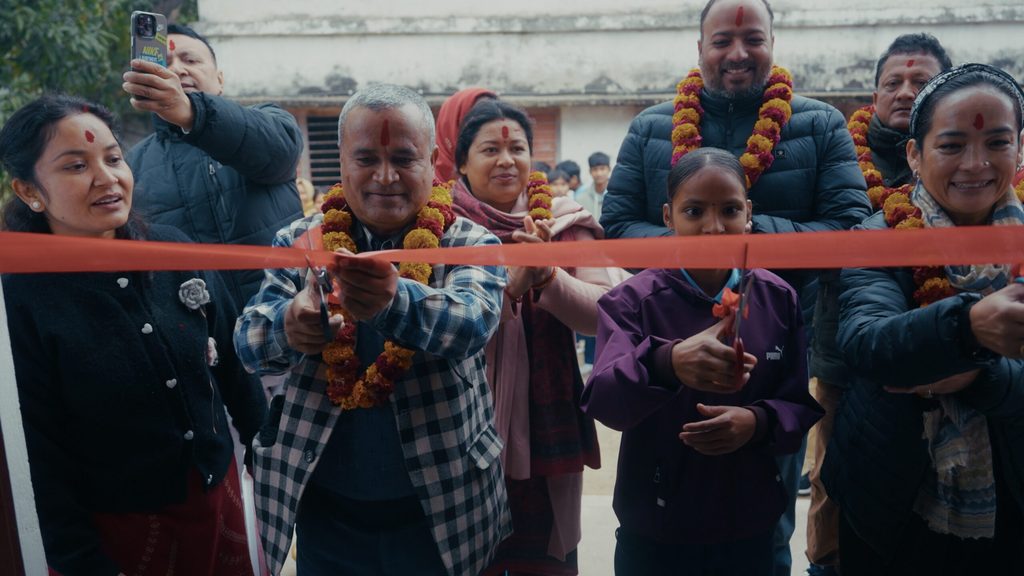
Plan International Nepal, in partnership with Radhakrishna Tharu Jansewa Kendra (RKJS), Bardiya, has formally handed over adolescent-friendly health service (AHFS) centres constructed under the Adolescent Sexual and Reproductive Health and Rights (ASRHR) Phase II project to the local government. The project is supported by the Korea International Cooperation Agency (KOICA).
Adolescent-friendly health centres opened in Bardiya
Under the project, the construction of six AFHS centres has been planned to be completed within the 3-year project period. As part of this commitment, two AFHS buildings have already been constructed and handed over to government health institutions in Bardiya district. These facilities are located at Pashupatinagar Health Post in Geruwa Rural Municipality and at Pahadipur Basic Health Post in Barbardiya Municipality.
According to Project Coordinator Suraj Aryal, RKJS, the centres aim to ensure adolescents’ privacy and provide quality counselling, information, and sexual and reproductive health services through trained health workers. He added that the initiative addresses gaps in infrastructure that previously limited the delivery of adolescent-friendly health services.
AFHS buildings handover
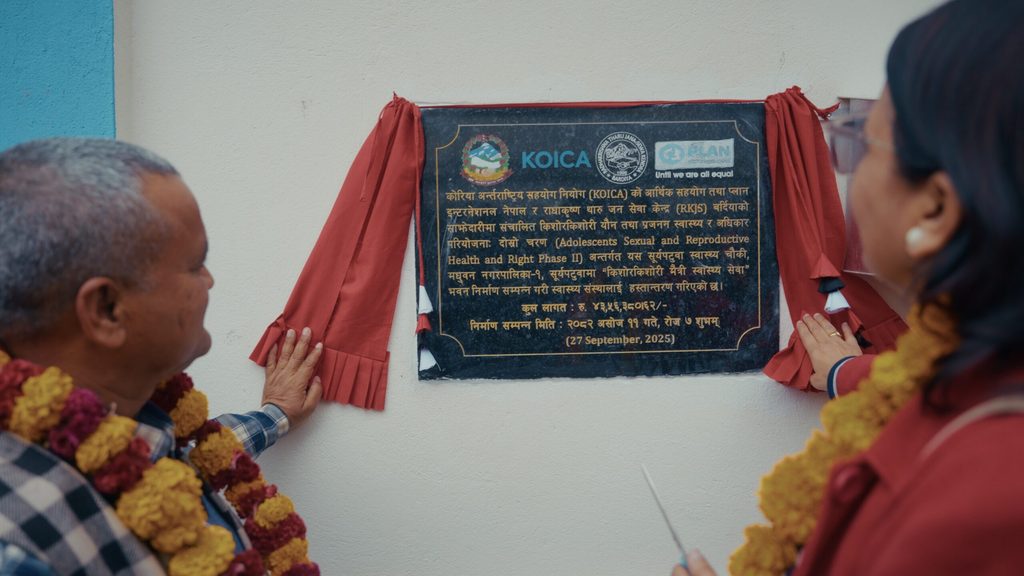
On 19 December 2025, a dedicated AFHS centre at Mathuradhwar Health Post, Gulariya Municipality, constructed at a total cost of NPR 4,527,803.94, was inaugurated by Mayor Muktinath Yadav. Similarly, the AFHS centre at Suryapatuwa Health Post, Madhuban Municipality, completed at a total cost of NPR 4,356,380.62, was inaugurated by Tej Bahadur Bhat. Both buildings have now been formally handed over to the respective local governments for operation and management. The centres were inaugurated by adolescent girls Parbati and Nandani, a powerful reminder that these spaces exist for girls, by girls, and with girls.
Parbati mentioned, “Having this centre means I can easily come here and talk openly about my health. A safe and confidential space like this is very important for girls.”
“Having this centre means I can easily come here and talk openly about my health. A safe and confidential space like this is very important for girls.”
Parbati, an adolescent girl
Following the handover, the respective health institutions will assume full responsibility for the centres, including their regular operation, care, protection, and maintenance. They will ensure budget allocation for long-term sustainability. The health facility operation and management committees and health facility administrations will carry out regular monitoring and promote adolescent-friendly health services to increase access for adolescents, particularly girls.
The centres are designed to prioritise privacy, dignity, and non-judgmental care. They provide safe spaces where adolescent girls can seek sexual and reproductive health information, counselling, and referrals without fear, stigma, or discrimination, addressing long-standing barriers that limit girls’ access to essential services.
“As parents, we worry about our daughters asking questions outside the home,” shared a parent from the community. “Knowing there is a safe and respectful place where they are treated kindly gives us confidence and relief.”
“Knowing there is a safe and respectful place where they are treated kindly gives us confidence and relief.”
Parent
A local teacher highlighted the value of the centres in supporting adolescents beyond the classroom. “Many girls hesitate to talk openly about sexual and reproductive health in school,” the teacher said. “These centres help them learn in a supportive environment and make informed decisions.”
Partnership and ownership
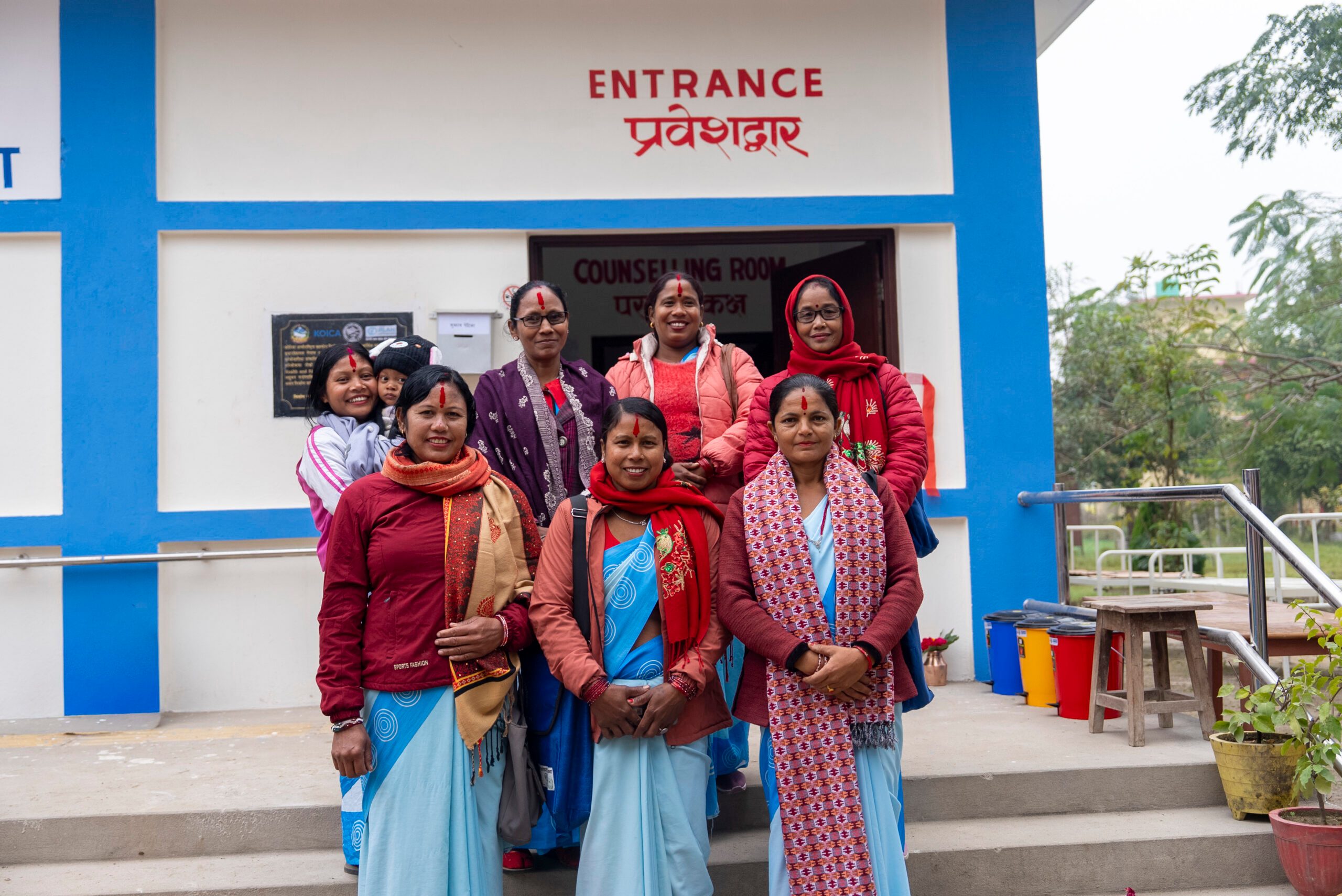
Local government representatives reaffirmed their commitment to sustaining the services. “By taking ownership of these centres, we are ensuring adolescent-friendly services remain accessible, confidential and responsive to young people’s needs,” said a municipal representative.
Emphasising the importance of partnership and sustainability, Mina Kumari Parajuli, Regional Manager of Plan International Nepal, said, “Adolescent girls need safe, confidential and judgement-free spaces to access sexual and reproductive health information and services. When these services are rooted within government systems, they become more sustainable and reach more girls who need them the most.”
The Executive Director of RKJS, Mr. Dinesh Shrestha, added, “These centres reflect the voices and realities of adolescent girls. Government ownership will help ensure that the services continue to grow and respond to their needs.”
The ASRHR Phase II project aims to strengthen adolescent-friendly health systems, challenge harmful social norms, and ensure girls can access sexual and reproductive health and rights with dignity. With the handover now complete, the centres will continue to serve as trusted hubs for adolescents across Bardiya district.
Related pages