Som Lal is earning through cash for work
Som Lal from Sindhuli is protecting his community school from landslides while earning his first income through the Cash for Work programme. His work ensures safety for his daughter and 200 other children, while building skills and pride.
Protecting the school, he once attended
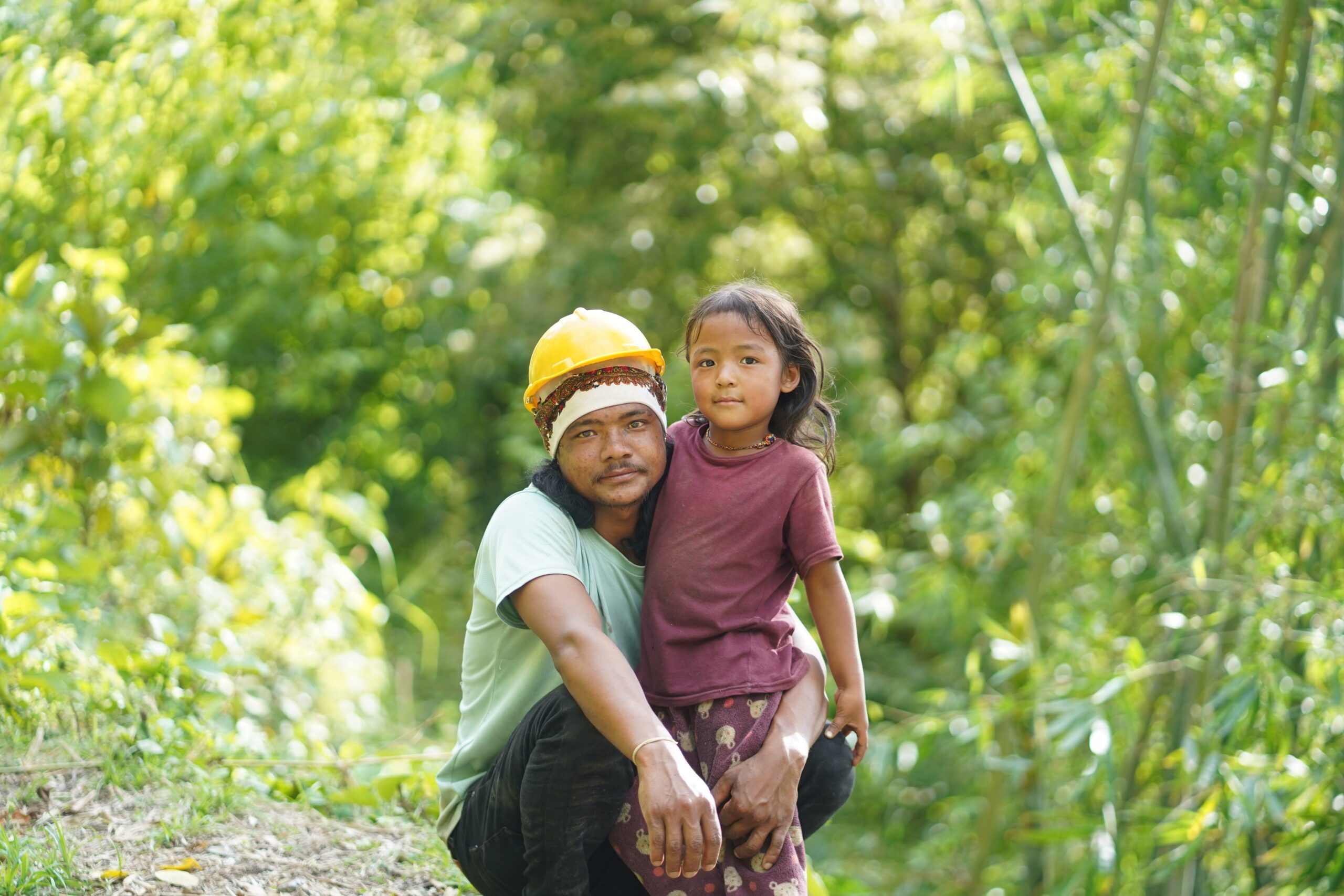
Meet Som Lal, 23 years old, a young father from Sindhuli, who is turning challenges into opportunities. Through the Cash for Work programme, he is helping build a gabion wall to protect his community school from landslides, earning income, gaining skills, and creating a safer future for his daughter and 200 other children.
“I studied at this school up to grade 6. I was worried that a landslide might wash away the school.”
“Now, with the gabion wall construction underway, I feel relieved and proud to be personally involved in protecting the school. Also, I am earning money from this work,” says Som Lal.
Som Lal has worked in construction for 7 years, gaining experience in housing, rural roads, and small infrastructure projects. For the past 3 months, he has been employed under the Cash for Work approach of the Youth Employment and Entrepreneurship Development (YEED) project, implemented in his community. The project engages local youth in constructing gabion walls around landslide-prone schools, providing short-term employment while protecting children’s learning spaces.
Every day, Som Lal works on placing stones, weaving gabion mesh, and stabilising slopes using nature-based techniques. The work carries deep personal meaning: he studied at this school as a child, and now his 8-year-old daughter is enrolled there.
“My daughter is now in grade 2 at the same school. Before the wall construction started, I was always worried. Now I finally feel at peace. Because the school is close to our home and my daughter studies here, I work on this construction project with even more dedication and responsibility, and generate income as well.”
Earning, learning, and planning for the future
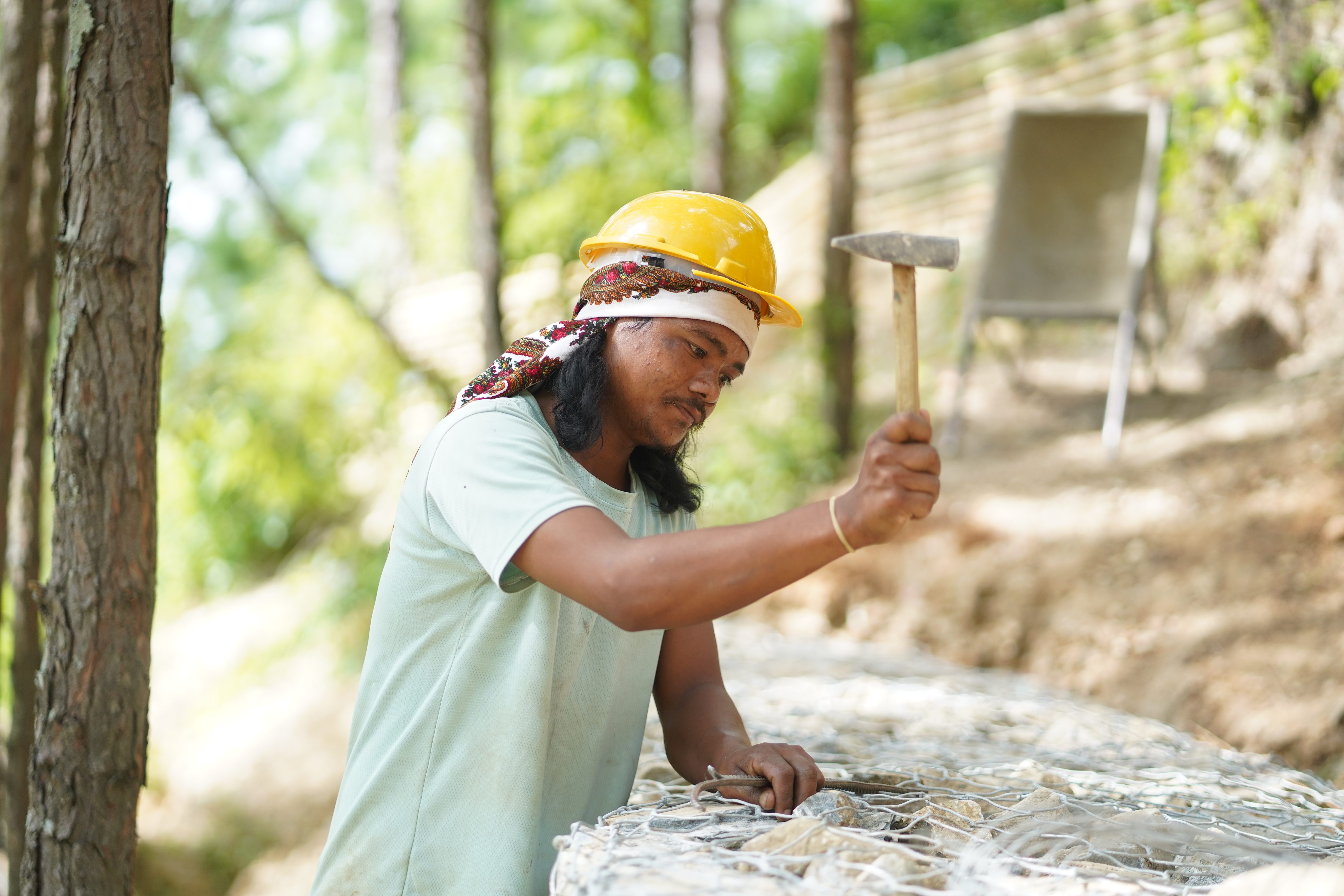
“I have been working here for 3 months. In the first month, I earned 222 euros. The second month, I earned less because I was busy with farming, but I am happy that I can stay at home with my family while earning.”
Som Lal, a father
In his first month of work under the Cash for Work programme, Som Lal is earning and helping manage household expenses and support his daughter’s education. “We have only a small piece of upland farmland. So, we rely on share-cropping and daily wage labour to cover our expenses,” he explains.
“I have been working here for 3 months. In the first month, I earned NPR 32,000 (EUR 222). The second month, I earned less because I was busy with farming, but I am happy that I can stay at home with my family while earning.”
Determined to remain in Nepal and build a better future for his daughter, he adds,“I am not interested in going abroad for work. I want to stay with my family, work here, and support my daughter’s education.”
“Due to financial hardship, I could not study beyond grade 6. But I want my daughter to study well and grow up to be capable and successful. I am ready to work hard and make any sacrifice for her future.”
Som Lal’s story demonstrates how local youth, given the opportunity through Cash for Work, can contribute meaningfully to community resilience while securing income, gaining skills, and improving their family’s future. His commitment has also motivated other young people in the village to explore local employment opportunities rather than seeking risky overseas work.
About the project
Sindhuli is a hilly, landslide-prone district where communities face challenges in education, employment, food security, and disaster risk. Schools are particularly vulnerable to monsoon-triggered hazards, often disrupting children’s learning and safety.
The YEED Project, implemented in partnership with Sindhuli Integrated Development Services, provides rural youth with employment, entrepreneurship, and skills development opportunities while integrating disaster risk reduction measures.
Through the Cash for Work approach, around 45 young people, including Som Lal, are constructing gabion walls around the school. The project combines small-scale engineering with nature-based solutions, such as plantations and bamboo walls, to stabilise slopes, prevent erosion, and strengthen community resilience.
Related pages