Sadre, a religious leader challenging child marriage
Sadre, 46, a Madrasa Maulvi from Dhanusha, is using his religious leadership to promote girls’ education and challenge child marriage in his community.
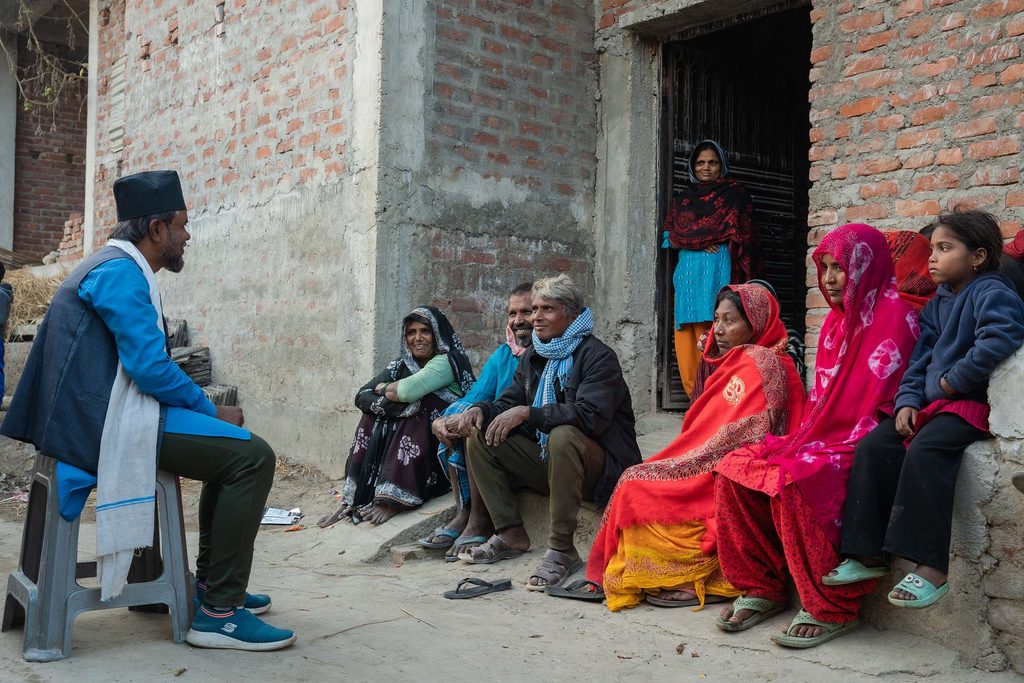
Sadre, 46, a Madrasa Maulvi and teacher from Dhanusha, is using his religious leadership to promote girls’ education and help end child marriage in his community. Once surrounded by silence on these issues, he is now actively encouraging dialogue, awareness, and change.
The power of education and awareness
For many years, Sadre lived within a community where child marriage was widely accepted and rarely questioned. As a Madrasa Maulvi and teacher, he focused on religious instruction, and, like many around him, he had limited exposure to discussions of girls’ education, health, or rights.
“Without education, awareness is not possible,” Sadre reflects today. But this understanding did not come overnight.
Like many families in Dhanusha, there were no open conversations about sexual and reproductive health and rights (SRHR), menstrual hygiene, or the impact of child marriage. He says, “Girls often left school early, and marriage was seen as their only future. These practices were accepted as normal and continued from one generation to the next without question.”
“I grew up in a community where child marriage was the norm,” says Sadre.
He adds, “Dhanusha faces challenges common in many marginalised communities. Poverty, limited access to education, and strong social norms have contributed to child, early, and forced marriage [CEFM], especially among girls from the Muslim community.”
He further adds, “Formal education for girls was often deprioritised, while discussions around reproductive health and menstrual hygiene were considered taboo. These factors reinforced cycles of inequality, limiting opportunities for girls and increasing health and economic risks for families.”
Training and learning about girls’ rights
“I began to change when I joined trainings on preventing CEFM, as well as on SRHR, water, sanitation, and menstrual hygiene,” Sadre says.
“I learned about the serious health risks of early marriage, how girls lose out on education, and how these practices keep families in poverty.”
“I realised how much damage child marriage causes, not just to girls, but to entire families and communities,” he says.
At first, absorbing these ideas was challenging. They questioned long-held beliefs and social expectations. But gradually, his perspective changed. He began to see education, not early marriage, as the foundation for a healthy, dignified life.
“Today, I openly speak about these issues in madrasas, neighbourhood gatherings, and community meetings.”
“I engage children, adolescents, women, and men in discussions on education, sanitation, gender equality, and the prevention of child marriage.”
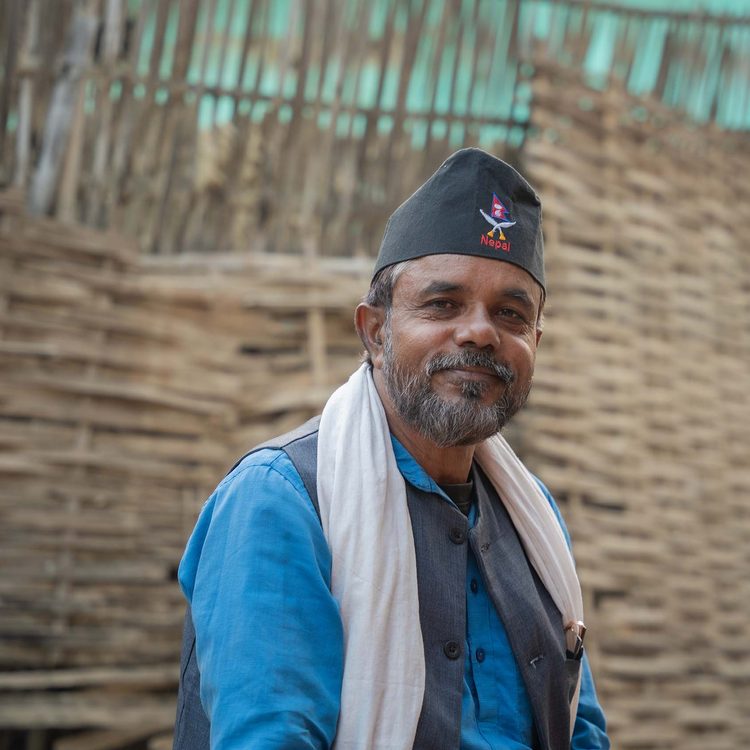
“I engage children, adolescents, women, and men in discussions on education, sanitation, gender equality, and the prevention of child marriage.”
Sadre, a religious leader
“Urdu education is important,” he explains, “but formal education based on the Government of Nepal’s curriculum is equally necessary.”
Challenging harmful practices has not been without resistance. Speaking out against child marriage and dowry has required confronting deeply entrenched norms, even within family and religious spaces. In one instance, Sadre chose to boycott a wedding after learning that a large dowry had been demanded.
“We tried to convince them many times,” he recalls. “When they refused, we decided not to participate.”
Lasting impact
Change has also taken root within his own household. Sadre shares a moment that deeply moved him.
“One day, someone said my daughter, who was in grade 9, was now of marriageable age.” My daughter then replied, ‘I am studying. Getting married now would be child marriage. If you force me, I will call 100 and report it to the police.’ Hearing this made me extremely happy.”
For him, it was clear evidence that education empowers girls to speak for themselves.
Today, child marriage cases in his community have significantly decreased. More children, especially girls, are attending school.
Conversations around women’s health and menstrual hygiene are becoming more open, and families are increasingly seeking counselling and guidance.
“Education is what truly makes people aware,” Sadre says. “Especially to end child marriage, educating girls is essential.”
“Although challenges remain, particularly around the dowry system, I continue to advocate for long-term change.” Through sustained dialogue, collaboration with local government, and community engagement, Sadre remains committed to ensuring that girls grow up safe, educated, and empowered.
His journey demonstrates the powerful role religious leaders can play in transforming social norms and in building a future where girls’ rights are respected and protected.
About the project
As part of Child Not Bride, a four-year project funded by NRK Telethon and led by Plan International with BEE Group and Aasaman Nepal, Sadre’s story highlights the project’s commitment to engaging religious and community leaders. By working with influential figures like him, the project raises awareness on girls’ rights, prevents child marriage, and promotes gender equality.
Related pages