Ruhi’s entrepreneurial journey as Mithila artist
Ruhi is a young Mithila artist from Madhesh Province who transformed her childhood passion into a certified profession. Today, she earns her own income, supports her family, and inspires other girls to stay in school and choose their own future. Here is her story in her own words.
Becoming a certified artist
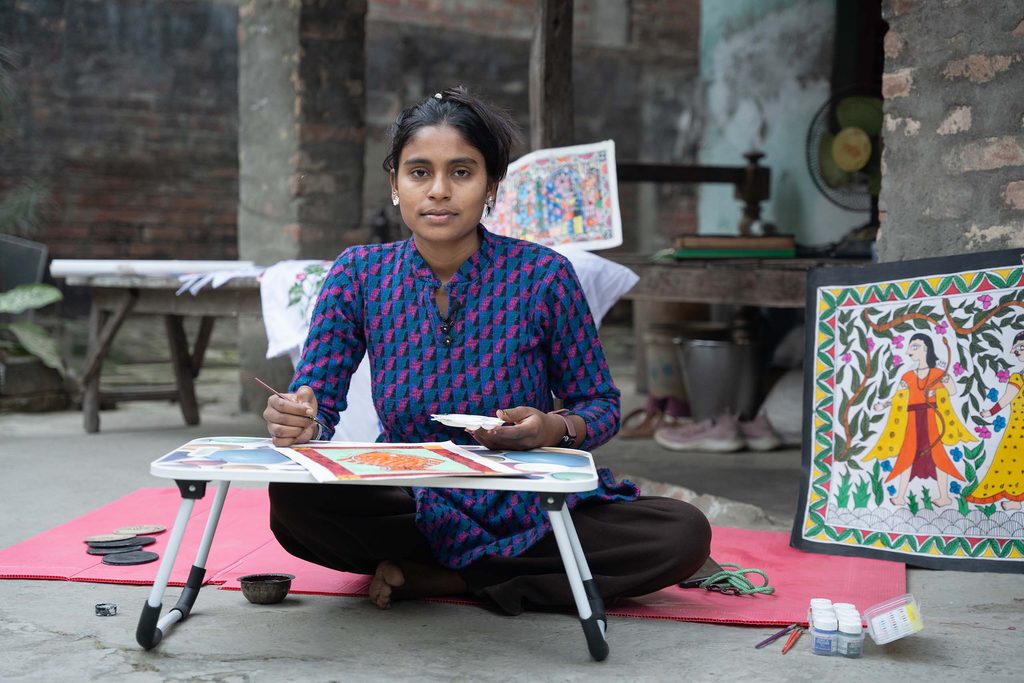
“My name is Ruhi, and I am a young Mithila artist from Madhesh Province. What began as a childhood love has now become my profession and my source of independence.”
“When I was little, I used to travel to Janakpur with my mother. I would stand and stare at the vibrant Mithila paintings on the walls and in shops. The colours, the patterns, and the stories of women’s lives stayed with me.”
“That was when the desire to learn Mithila painting took root in my heart,” I remember.
“But growing up, art felt like a distant dream. My parents struggled financially, and every decision in our home was shaped by survival. Still, my mother insisted that my elder sister and I continue our education, even when money was tight.”
“I was studying, but I never imagined I could formally learn Mithila art. It felt like something meant for others, not for someone like me.”
“I was studying, but I never imagined I could formally learn Mithila art. It felt like something meant for others, not for someone like me.”
Ruhi, Mithila Artist
In many parts of Madhesh Province, girls’ choices are limited by poverty, social norms, and lack of access to skills training. Early marriage is common. Education is often seen as an expense, not an investment. Mithila painting, although traditionally practised by women, is often viewed as decorative rather than a real livelihood. In the community, girls usually complete basic schooling and then prepare for marriage.
“Everything changed when I was in my first year of college. One day, I saw a public notice on a municipal wall about skill-based training for young women aged 18 to 24 under the Child Not Bride project. Mithila painting was one of the options.”
“I fell within that age group. I felt like this notice was meant for me.”
“I applied immediately and chose Mithila art at every stage of the selection process. Through the project, I completed 390 hours of professional training. I also joined life-skill workshops that strengthened my confidence and practical knowledge.”
“In 2024, I became the first person from my background to receive government-accredited certification in Mithila painting. Later, I was selected as an assessor for the 2025 Council for Technical Education and Vocational Training examinations.”
“For the first time, I felt my skills were truly valued.”
Earning, teaching, and encouraging girls
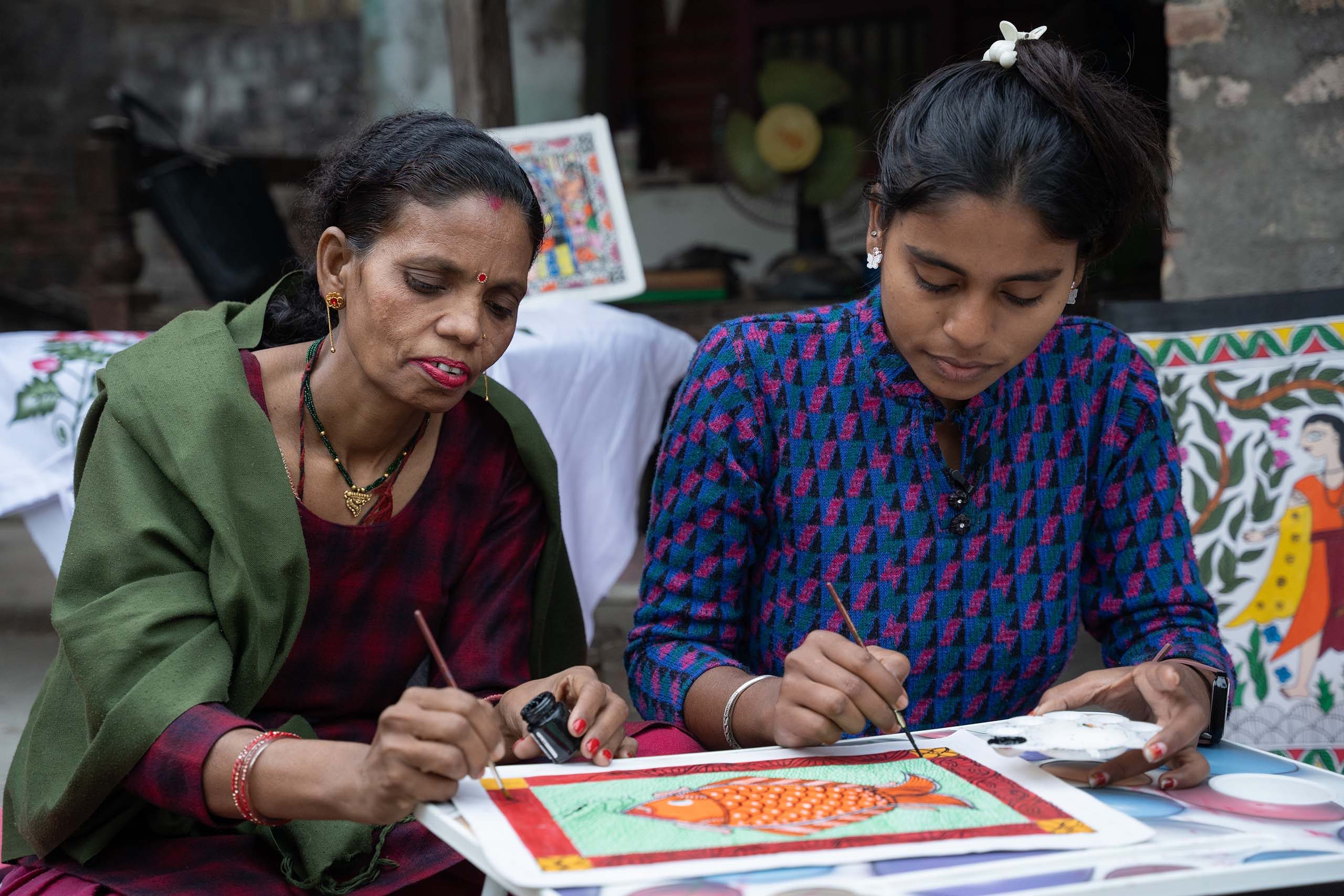
“After completing my training, I started working professionally.”
“I first worked with fellow trainees in a collective Mithila art shop. Later, I began producing and selling paintings from my own home, responding directly to customer demand.”
“Today, I earn an average of NPR 7,000 to 8,000 (roughly around €41–€47) per month by selling Mithila paintings.”
“I contribute to my family’s income, pay for my education, and save for the future. I have also trained my mother and sister in Mithila painting, turning it into a shared family effort.”
“Breaking social expectations has not always been easy.”
“In our society, there is still a belief that women should remain confined to the home.”
“When I began promoting my work publicly, especially on social media, some people were sceptical. But I continued. My mother even helps by taking photos and videos of my paintings.”
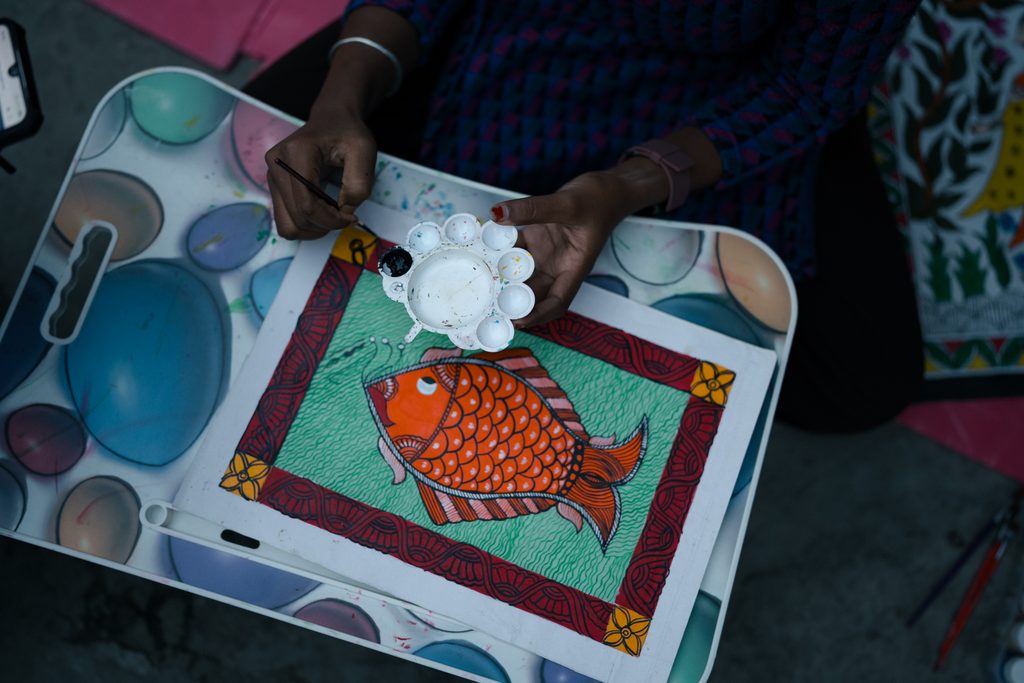
“Today, I earn an average of NPR 7,000 to 8,000 (roughly around €41–€47) per month by selling Mithila paintings.”
Ruhi, Mithila artist
“My work has gained national recognition. I secured first place at the #ArtisPower event.”
“I was also selected to paint a mural at the Office of the Chief Minister of Madhesh Province.”
“My mother now paints alongside me. She says my journey has changed how our family thinks about girls’ futures.”
“Other girls from our neighbourhood regularly visit our home to learn and practise Mithila painting. Parents are beginning to see that skills can change a girl’s life.”
“Because I continued my education and became self-reliant, I was able to avoid child marriage. Many girls in my community are not as fortunate.”
“Looking ahead, I want to complete my education and pursue advanced-level training in Mithila painting. Janakpur’s art market is growing, and I want to stay competitive and keep improving my craft.”
“For me, Mithila art is more than an income. It is a record of our culture and a way for women to express their voices.”
“By sharing my skills and my story, I want to challenge harmful norms and encourage girls to choose education, independence, and dignity.”
“I want the younger girls who come after me to believe they have choices. This is the change I want to see.”
About the project
Child Not Bride is a four-year project funded by NRK Telethon, led by Plan International and implemented with BEE Group and Aasaman Nepal. It empowers girls and young women at risk of early marriage through education, life skills, and government-accredited business training, helping them start their own businesses, earn income, continue their schooling, and support their families. The project also provides financial and material support to boost independence and build a sustainable future.
Related pages