Dil’s journey back to learning
Dil, 14, returned to school through an accelerated learning programme and rediscovered his confidence to learn. Now, he encourages other children to go back to class and believe in their future.
Returning to the classroom with confidence
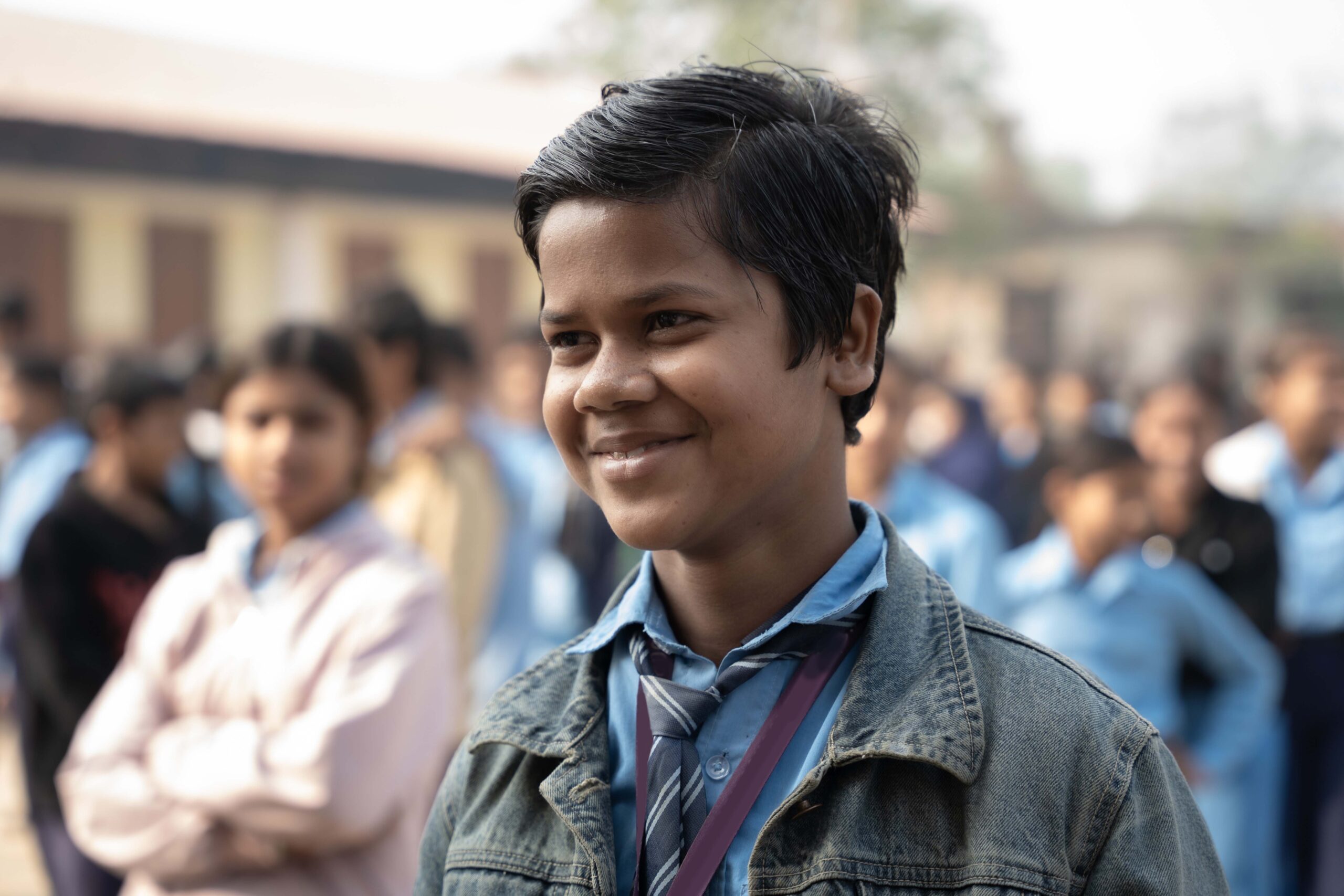
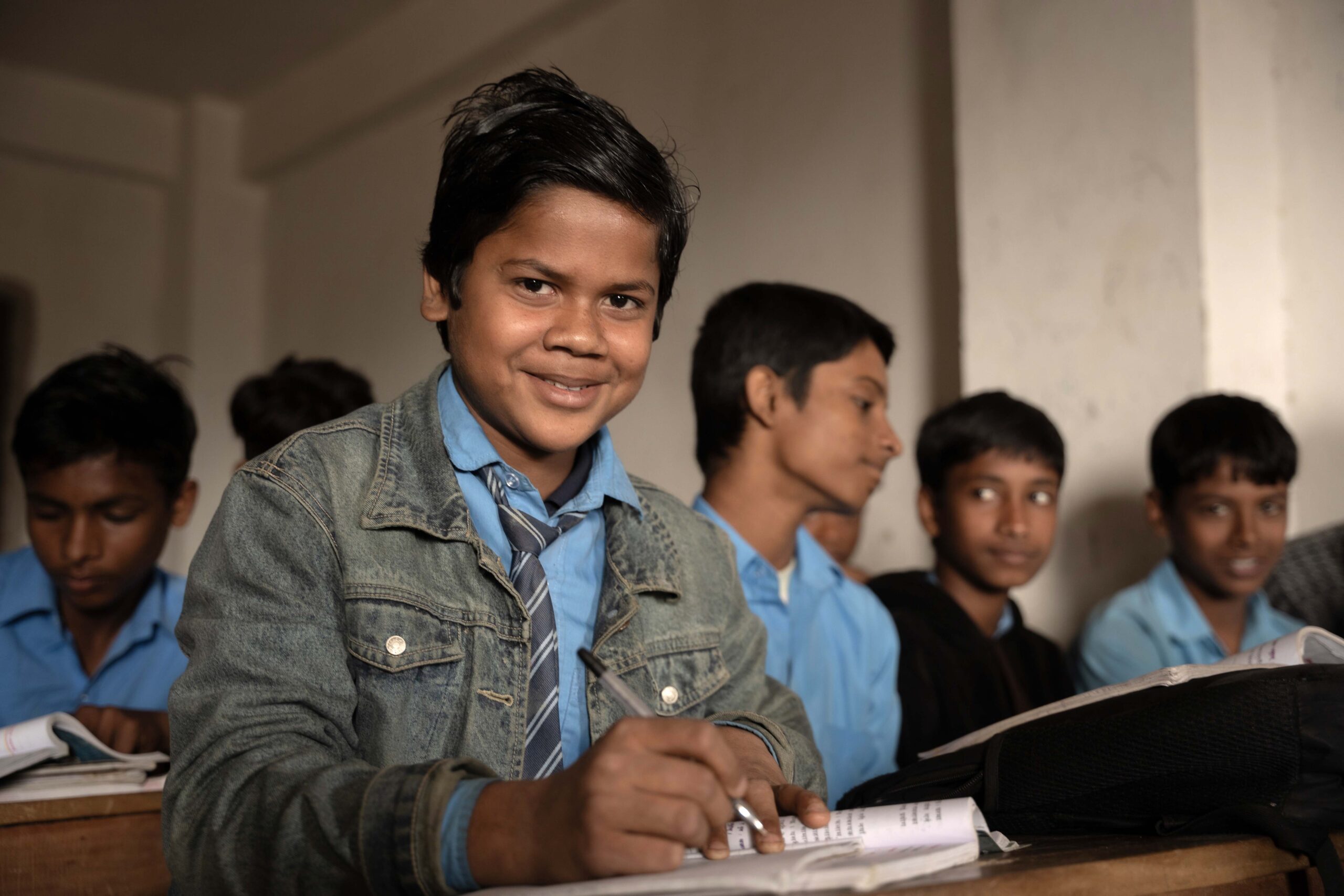
Fourteen-year-old Dil from Dhanusha once drifted away from school. Today, he sits in a classroom again, focused, confident, and determined to learn.
Dil reflects his time, “I was in grade 4 when I slowly stopped attending classes. What began as an occasional absence soon became routine. Days passed without books, homework, or lessons.”
“I stopped paying attention to my studies,” Dil recalls. “I spent most of my time playing and getting into fights with my friends.”
Without the structure of school, learning faded into the background. Dil became known in his community as a child who no longer went to school.
Everything changed when facilitators conducting a community survey identified him as an out-of-school child. “I enrolled in an accelerated learning programme (ALP) designed for children who had missed years of schooling.”
At first, returning to a learning space felt unfamiliar. “I used to sit at the back and didn’t talk much,” he says. “I felt uncomfortable.”
But the classes moved at a pace that suited him. Gradually, his reading and writing improved. More importantly, he began to believe in himself again. After completing one year in the programme, Dil successfully re-enrolled in grade 7 at a secondary school.
“I enrolled in an accelerated learning programme designed for children who had missed years of schooling.”
Dil, 14, Dhanusha
Learning, leading, and looking ahead
“Returning to formal school came with challenges. English was difficult, and adjusting to a larger classroom took time. But this time, I did not give up,” says Dil.
With encouragement from his teachers and friends, he began participating actively in class. He now attends school regularly and is known as a hardworking and supportive student.
Dil is also encouraging other children who left school to return. “Education gives us knowledge,” he says, “and it helps us stay away from wrong behaviour.”
His classmates have noticed the change. One friend says, “When Dil grows up, he will become a social worker.”
“When Dil grows up, he will become a social worker.”
A classmate of Dil
Learning continues at home as well. A small learning corner has been set up where Dil studies and often shares what he learns with his mother, grandmother, brother, and sister. His home has become part of his learning journey.
Dil’s father works in gulf country. Even from a distance, he continues to motivate his son. “My father is my best friend,” Dil says. “He always reminds me to study well. He tells me that education will help me find a good job here in Nepal and earn respect. My father’s words always guided me.”
Now, Dil has a clear dream for his future. “I want to become a doctor,” he says. “I want to help sick people in my community.”
Dil’s journey shows what becomes possible when children are given the right support, encouragement, and opportunity to return to learning and shape their own future.
About the project
Child Not Bride is a four-year, multi-sectoral project funded by the Norwegian Broadcasting Corporation (NRK Telethon) that focuses on education, developing youth leadership, and strengthening youth economic empowerment. The project is led by Plan International and implemented by our local partners, BEE Group in Bardiya and Aasaman Nepal in Dhanusa.
One of the project’s key strategies is the ALP, which aims to bridge the gap for children who have dropped out of school or experienced interruptions in their learning. The ALP centres play a pivotal role in building children’s confidence, enabling them to return to formal schooling and stay engaged in their education.
Through personalised support, a tailored curriculum, and a nurturing environment, ALP aims to break down barriers that prevent children from accessing education, ultimately fostering a generation of empowered and educated individuals ready to make a positive contribution to their communities.
Related pages