A classroom, a chance for Premika
Premika, 16, once struggled to attend school without proper supplies. Today, she goes to school with confidence, motivated to learn, and inspired to become a nurse for her community.
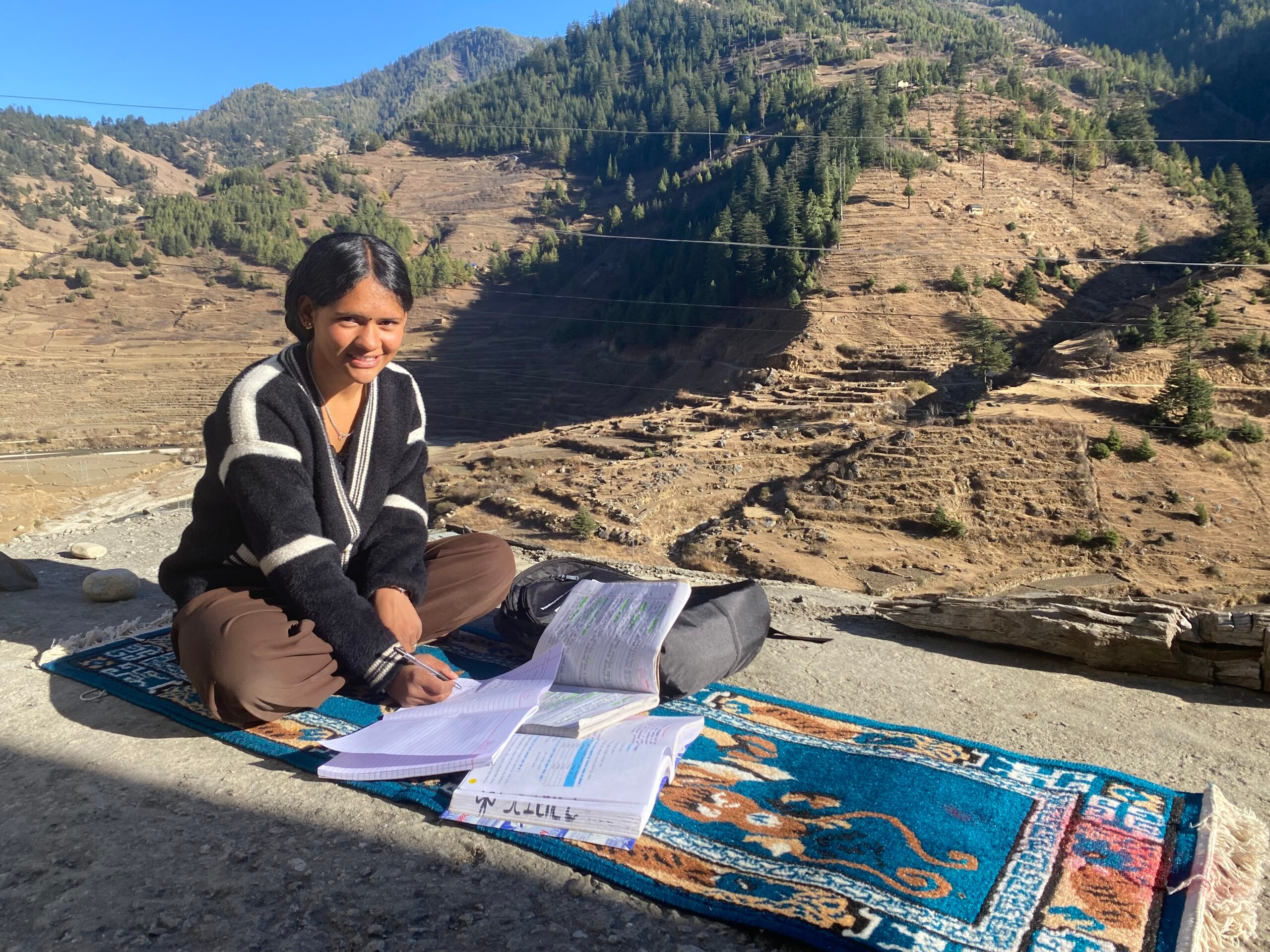
Every morning, before the sun fully rises over Jumla, 16-year-old Premika is already awake. She helps her grandmother with household chores, prepares herself for school, and then begins her long walk to a government school where she is currently studying in grade 10. This routine has been part of her life for years, shaped by responsibility far beyond her age.
Premika has lived with her grandparents since she was 8. After her parents separated, both remarried and gradually became absent from her life. Her grandparents became her only caregivers, relying on small-scale farming to survive. Their income is just enough to manage daily food needs, leaving little room for other essentials such as clothing, healthcare, or school supplies.
“I knew my grandparents were doing everything they could,” Premika shares. “So I tried not to complain.”
“I knew my grandparents were doing everything they could. So I tried not to complain.”
Premika, 16, Jumla
Overcoming barriers to education
Education, however, was never something she wanted to give up. Premika says, ” I have understood early on that school was my only pathway to a better future.” Despite financial hardship, she remained a regular student. Rain or shine, she walked to school, completed her homework on time, and actively participated in class. Her teachers describe her as disciplined, sincere, and respectful.
Yet, learning without basic materials was a daily struggle. Premika often attended classes with worn-out notebooks, a torn school bag, and a faded uniform she had used for years. Sometimes, she had to share notebooks with classmates or reuse old copies.
“It was difficult,” she admits. “I felt shy sometimes. I worried that others could see how poor I was.”
These challenges affected her confidence as much as her learning. The lack of essential materials became a barrier that no amount of determination alone could remove.
That barrier began to lift through the Promoting Equitable Access in Education project. During a school-level identification and selection process, Premika was identified as a child in need of educational support. The project prioritises girls and children from the most marginalised communities studying in grades 6–10, including children with disabilities. Following a proper assessment, Premika was selected for need-based educational assistance.
The support she received included a complete set of essential learning materials: a school bag, a school uniform, and necessary stationery items. Premika reflects, ” For me, these items represented more than school supplies. They restored my confidence and dignity.”
“The day I received the materials, I was very happy,” she recalls with a smile.
“Now I have many notebooks, a new school uniform, a school bag, and necessary stationery. Now I have enough materials for a year. These materials have motivated me to go to school regularly and study better.”
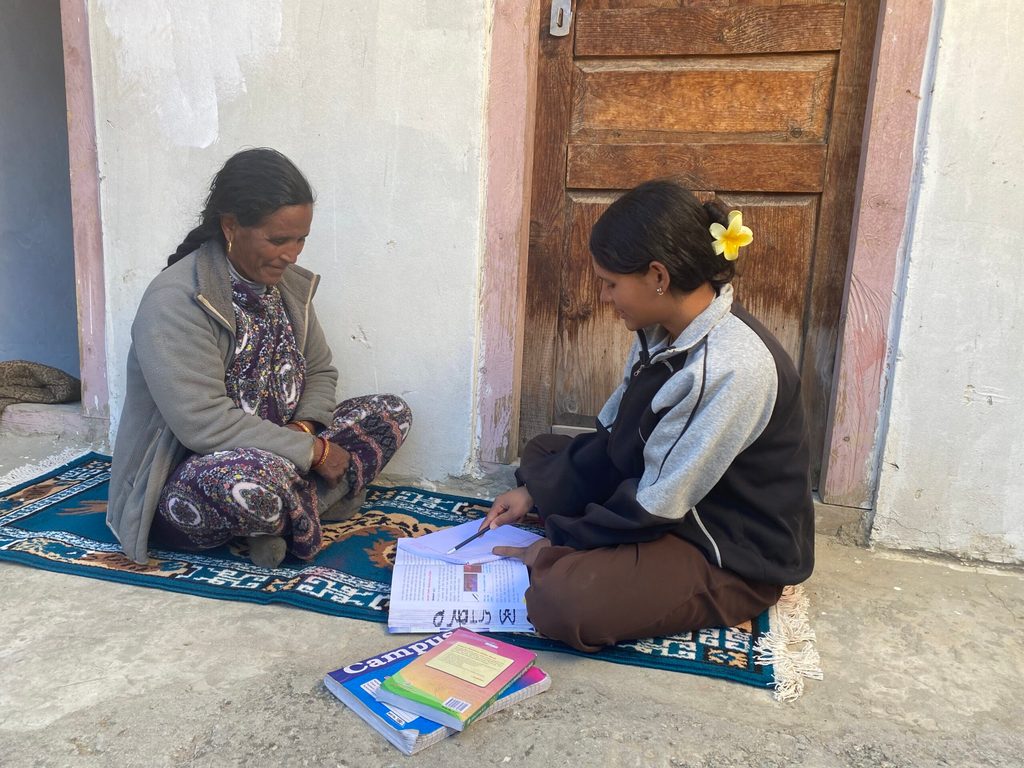
“Now I have many notebooks, a new school uniform, a school bag, and necessary stationery. Now I have enough materials for a year. These materials have motivated me to go to school regularly and study better.”
Premika, 16, Jumla
She shares, “Since receiving the support, my school attendance has become even more consistent. I participate actively in classroom discussions and group work, no longer hesitant to raise my hand. Teachers have noted improvements in my engagement and academic performance.”
At home, the change is equally evident. “This support showed us that our granddaughter’s education matters,” her grandfather shares. “We felt we were not alone.”
A dream of helping her community
Every evening, Premika now studies under a dim light, carefully completing her homework and revising her lessons with renewed enthusiasm.
Looking ahead, Premika carries a clear and powerful dream. She strongly says, “I want to become a nurse.” Growing up in a village with limited access to quality health services, she has seen women suffer due to a lack of proper medical care, especially during pregnancy and childbirth.
“I want to help the women in my village so that they do not suffer because of a lack of health services,” she says softly, yet with firm conviction.
Her dream reflects not only personal ambition but a deep sense of responsibility towards her community. Today, Premika walks to school with confidence, her school bag on her back and determination in her heart.
“I want to help the women in my village so that they do not suffer because of a lack of health services.”
Premika, 16, Jumla
About the project
The Promoting Equitable Access in Education project is supporting girls like Premika to continue their education. Implemented from July 2025 to March 2026 in Kalikot and Jumla districts in partnership with KIRDARC, the project works to reduce barriers to access and retention in education for children in Grades 6 to 10, with extended support for children with disabilities from grades 1 to 10. Premika is one of 3,331 children reached by the project, which prioritises girls and children from marginalised communities through need-based education support such as school bags, uniforms, and stationery.
For Premika, this timely support has made a meaningful difference. Having the materials she needs has improved her learning environment, strengthened her confidence and motivation, and helped her stay in school. Her story reflects a key outcome of the project: when marginalised children receive the right support at the right time, they are empowered to continue learning, believe in their potential, and dream beyond their circumstances.
Related pages