Plan International Cambodia has announced compelling new evidence of progress in reducing child, early and forced marriage and unions (CEFMU) in Ratanakiri and Stung Treng provinces.
These findings are drawn from an end-line study and final project evaluation of the Time to Act! Supporting Adolescent Girls and Boys in Northeast Cambodia to End Child, Early Marriage and Unions and Successfully Transition to Adult project. The project was implemented across 86 villages to advance adolescent girls’ rights, improve education, strengthen protection systems, and promote economic empowerment.
Child marriage in decline
It shows a significant decline in child and early marriage among adolescent girls aged 18-22. The proportion of girls married before age 18 dropped sharply from 26.3% to 9.5%, while marriage before age 15 fell from 2.5% to 0.6%. Child and early marriage among boys also decreased significantly, from 6.2% to 2.1%.
“I want all girls to continue studying and build their own futures like I did.”
Kanada
These reductions were accompanied by substantial improvements in education outcomes. Grade 9 completion among girls increased from 36.5% to 64.9%, and coverage of comprehensive sexuality education expanded from 50.2% to 96.7%. Meanwhile, parental support for students rose, and gender-responsive teaching practices increased from 37.8% to 69.7%.
Economic empowerment indicators among programme participants showed some of the strongest improvements. Employment within 6 months of completing training rose from 54.74% to 94.17%, while financial independence after 1 year increased from 57.4% to 88.5%. Additionally, the proportion of young women employed in non-traditional trades more than doubled.
Impact of girls’ empowerment
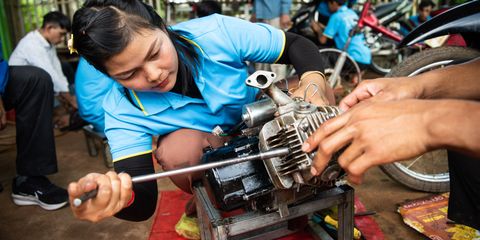
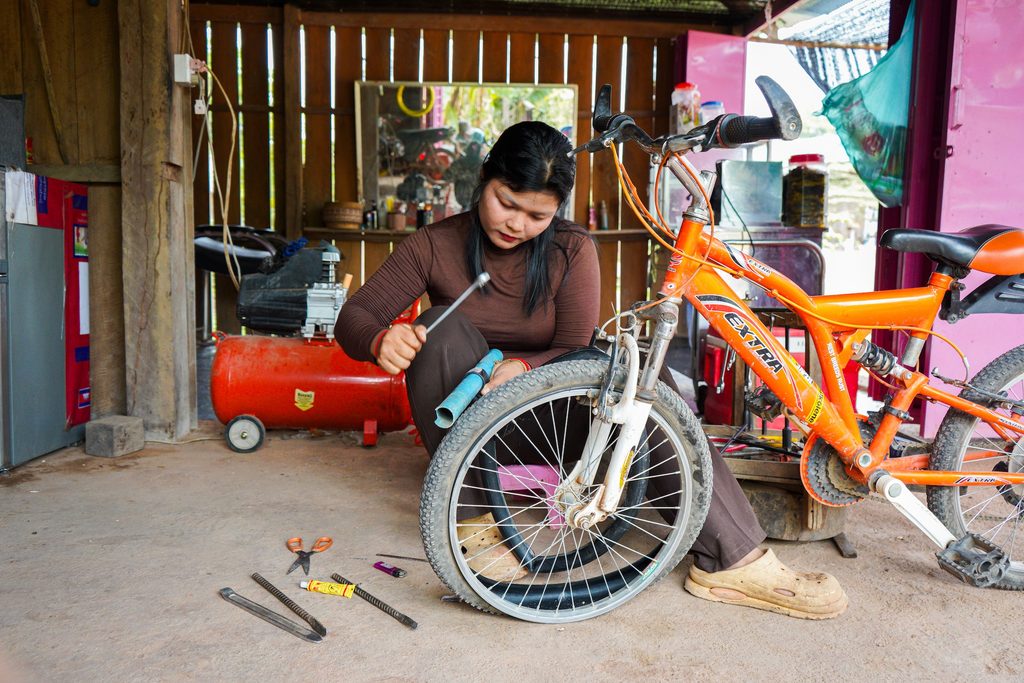
Kanada, a young woman from Ratanakiri province who married at age 17 and now owns a motorcycle repair shop after completing skill training, shared how early marriage can negatively impact girls’ futures, including their education and career opportunities. She encourages girls to delay marriage and pursue their studies until they can secure decent employment.
“My shop has completely changed my life and I am so proud to run it. I want all girls to continue studying and build their own futures like I did.” explained Kanada.
Mr. Yi Kimthan, Interim Country Director of Plan International Cambodia, emphasised that empowering girls directly contributes to reducing child, early and forced marriage.
“These results clearly demonstrate that when girls are empowered through education, protection, and economic development opportunities, rates of child, early, and forced marriage decline—and their futures broaden,” explained Kimthan. “The progress seen in Ratanakiri and Stung Treng shows that multi-sectoral approaches truly work.”
He added that this progress is only the beginning. With sustained commitment from the government, donors, and communities, Cambodia can move toward a future where no girl is forced into Child and Early Marriage and Unions and every adolescent has the opportunity to thrive.
“When girls are empowered through education, protection, and economic development opportunities, rates of child, early, and forced marriage decline—and their futures broaden.”
Kimthan, Interim CD of Plan International Cambodia
Plan International Cambodia emphasises that while these results show significant progress, sustained investment is essential to scale effective models nationwide. This includes integrating comprehensive sexuality education in schools, strengthening community-based protection systems, and expanding market-relevant vocational training for girls—especially those from rural and indigenous communities.
The Time to Act! project supported adolescent girls and boys in northeast Cambodia to end child and early marriage and unions, and to successful transition to adulthood. Implemented in partnership with communities, local authorities, and government institutions, the project created safer environments, expanded learning opportunities, and empowered young people to make informed decisions about their futures. Overall, the project provided direct support to 10,656 people and reached an additional 153,472 people indirectly.
Download press release here:
Child early marriage decreased in Stung Treng and Ratanakiri provinces
102.56 kb
Related pages