Interview: voices from Ukraine into EU decision-making
Key priorities for EU leaders ahead of the Humanitarian Senior Officials Meeting on Ukraine
28 January 2026As Ukraine enters the fifth year of full-scale war, humanitarian needs remain severe and increasingly complex. People are dealing with repeated displacement, ongoing attacks on energy, health, and education infrastructure, and long-term disruption to schooling and social services.
On 29 January, the European Union will host the Sixth Humanitarian Senior Officials Meeting in Brussels to review the most urgent humanitarian challenges linked to the war in Ukraine.
The meeting, organised by the European Commission’s Directorate-General for European Civil Protection and Humanitarian Aid Operations (DG ECHO), brings together representatives from Ukraine and EU Member States, European Commission officials, donors, humanitarian organisations, and local Ukrainian partners. Discussions will focus on funding needs for the year ahead, cooperation with local organisations, access and delivery challenges, and how communities can move from emergency aid towards more sustainable livelihoods.
Ahead of the meeting, we spoke with Sven Coppens, Plan International’s Director for East and Central Europe and lead of the organisation’s Ukraine Humanitarian Crisis Response.
Plan EU: You’re heading into a high-level EU meeting on Ukraine. What are the main messages you want to share?
Sven Coppens: There are many important messages coming from the ground, but two stand out in particular: education and the growing human resource crisis.
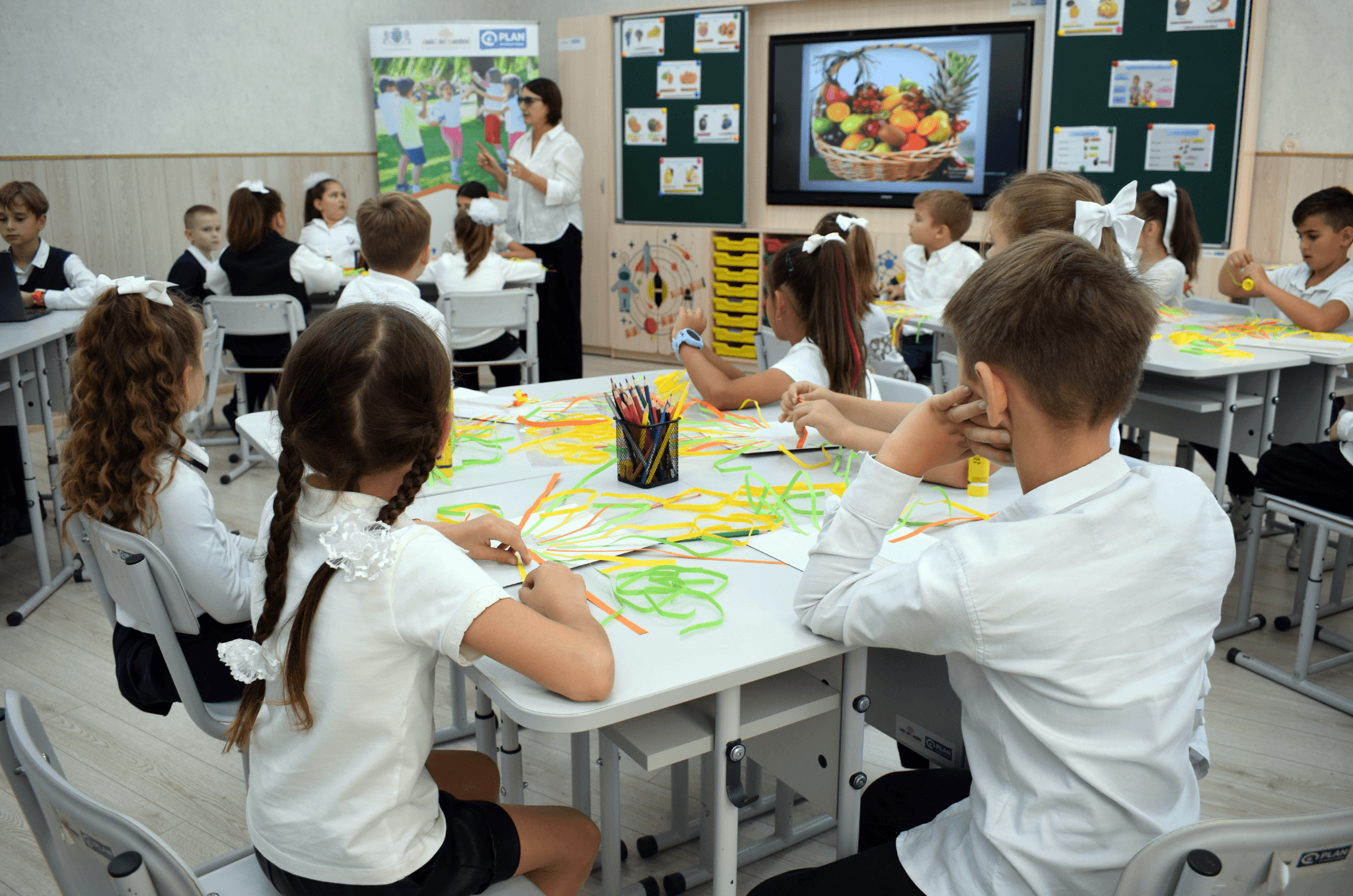
Ukraine is facing a quiet yet profound human capital emergency. After four years of disrupted education, destroyed schools, and prolonged displacement, the country risks a long-term skills gap that could shape its recovery for decades. More than one-third of children are still not learning fully in classrooms, and millions have lost years of schooling. Teachers, most of them women, are overstretched, underpaid, displaced, and leaving the profession in growing numbers.
Education is not just a service; it is a protection measure and the foundation of Ukraine’s future recovery and reconstruction workforce. At the same time, young people are under immense pressure. Many are struggling with poor mental health, job insecurity, and deep uncertainty about their future. Fewer than 60% of young people now see their future in Ukraine, and only one in three displaced young people plans to return. Without serious investment in youth, skills building, employment opportunities, and mental health support, the country risks a long-term brain drain. Ultimately, Ukraine’s recovery will depend on whether it can retain, bring back and support its young people.
From your experience, what realities of daily life for people affected by this crisis deserve more attention from EU leaders?
Ukraine remains one of the world’s most challenging humanitarian crises. What we are seeing now is a shift from an emergency response to a prolonged protection crisis. Affected populations are still being evacuated from the front line. Civilian infrastructure continues to be targeted systematically. Many people have been displaced for years without clear paths to return or rebuild their lives.
This has serious social and psychological consequences. Mental health distress is growing as people cope with loss, separation, conscription, and the collapse of livelihoods. Without adequate support, stress and trauma can lead to harmful coping mechanisms and long-term social breakdown.
Mental health is often treated as a secondary issue, but in Ukraine it is central to recovery. Without sustained investment in mental health and psychosocial support, family services, and community-based care, the country risks intergenerational trauma and weakened social cohesion.
“Humanitarian aid alone cannot safeguard Ukraine’s future. Education, mental health, and protection services must continue without interruption.”
Four years into the war, where do you see the biggest gaps in the current response, and how could the EU help close them?
In 2026, an estimated 10.8 million people will still need humanitarian assistance, yet funding shortages mean that only around 3.6 million can be reached. The funding cuts in 2025 have already disrupted essential services, hitting people with multiple vulnerabilities the hardest.
Local organisations are playing a vital role in the response, but their ability to act quickly is still often limited by complex donor requirements, heavy administrative burdens, and a lack of funding for overheads and staff care. Moreover, humanitarian aid alone cannot safeguard Ukraine’s future. Education, mental health, and protection services must continue without interruption, or the consequences could be permanent – especially for women, children, and displaced families. Four years into the war, the priority is no longer only about meeting immediate needs; it is about preventing irreversible harm in a prolonged protection crisis.
Looking ahead, what role do you see the EU playing over the next 6–12 months in supporting Ukraine and neighbouring countries?
EU leadership must start with concrete action to protect civilians. International humanitarian law must be upheld, and attacks on civilians and civilian infrastructure must stop, including the use of explosive weapons in populated areas. Stronger action is also needed to prevent and respond to grave violations against children, including attacks on schools and health facilities.
At the same time, the EU must work to preserve and expand shrinking humanitarian access. Protection services, child protection, and mental health support should be treated as life-saving priorities, not optional add-ons. These services require stable funding and continuity, particularly for children, caregivers, adolescents, and people living close to hostilities.
What outcomes are you hoping for from this meeting?
We hope for open and honest discussions that reflect the reality on the ground, and for EU leaders to hear and act on the recommendations of the humanitarian actors.
This includes sustained investment in education and in safe, trauma-informed learning solutions. Adolescents and young people need skills training and employment pathways to prevent a lost generation and to support Ukraine’s recovery.
We are also calling for predictable, multi-year funding that bridges humanitarian response and recovery systems, including education, mental health care, gender-responsive social services, and youth employment. Emergency aid alone cannot sustain people through a prolonged crisis.
Finally, legal and administrative barriers that limit humanitarian operations must be reduced. Only a coordinated effort between governments, donors, development actors, and civil society can create a real pathway from emergency response to long-term stability.
“Girls and women face distinct and often hidden risks. Many are taking on increasing care responsibilities while coping with displacement, economic hardship, and trauma.”
How is the war affecting girls and women differently?
Girls and women face distinct and often hidden risks. Many young women are taking on increasing care responsibilities while coping with displacement, economic hardship, and trauma. Women, especially those caring for families, consistently report the lowest levels of mental wellbeing.
Gender-based violence (GBV) remains one of the most urgent yet under-addressed threats. In 2025, an estimated 2.42 million displaced and war-affected people were at high risk of GBV. Women and girls are disproportionately affected, but men, boys, people with disabilities, and older people are also becoming increasingly vulnerable.
Without sustained investment in protection, mental health support, and gender-responsive services, these risks will continue to grow – often unseen – with serious long-term consequences.
Since February 2022, Plan International has delivered assistance in Ukraine and neighbouring countries through a localised, partner-led model. To date, 1.7 million people across Ukraine, Poland, Romania and Moldova have been reached with services ranging from life-saving aid to child protection or GBV prevention. Plan’s experience shows that empowering local actors isn’t just aspirational in Ukraine, but essential for an effective lasting response.
Categories: Education, Emergencies, Skills and work
Related pages