Plan International EU Liaison Office – Key Insights
In late November, African and European leaders, youth representatives, and civil society organisations gathered in Luanda, Angola, for a milestone moment in African Union (AU) – European Union (EU) cooperation. For the first time, the AU–EU Civil Society & Youth Forum took place right before the formal 7th AU–EU Summit, incorporating civic and youth voices in a more structured way than ever before. This article summarises key outcomes and reflects on what these events mean for children, young people – especially girls and young women, and civil society across both continents.
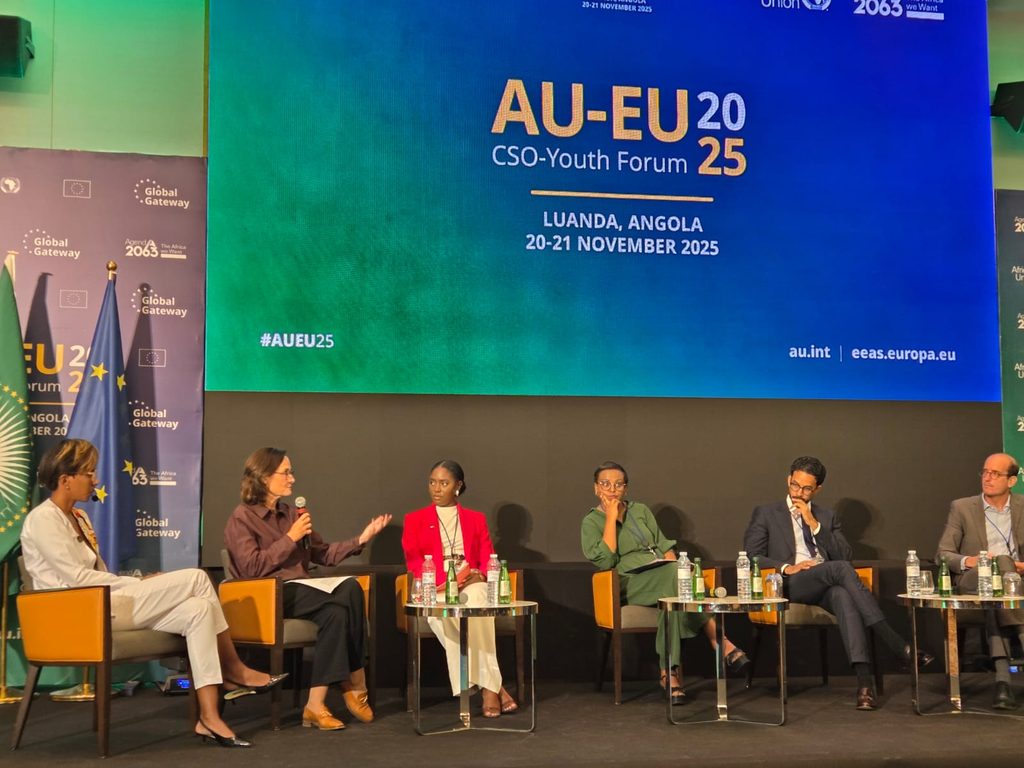
A New Chapter: AU–EU Civil Society & Youth Forum
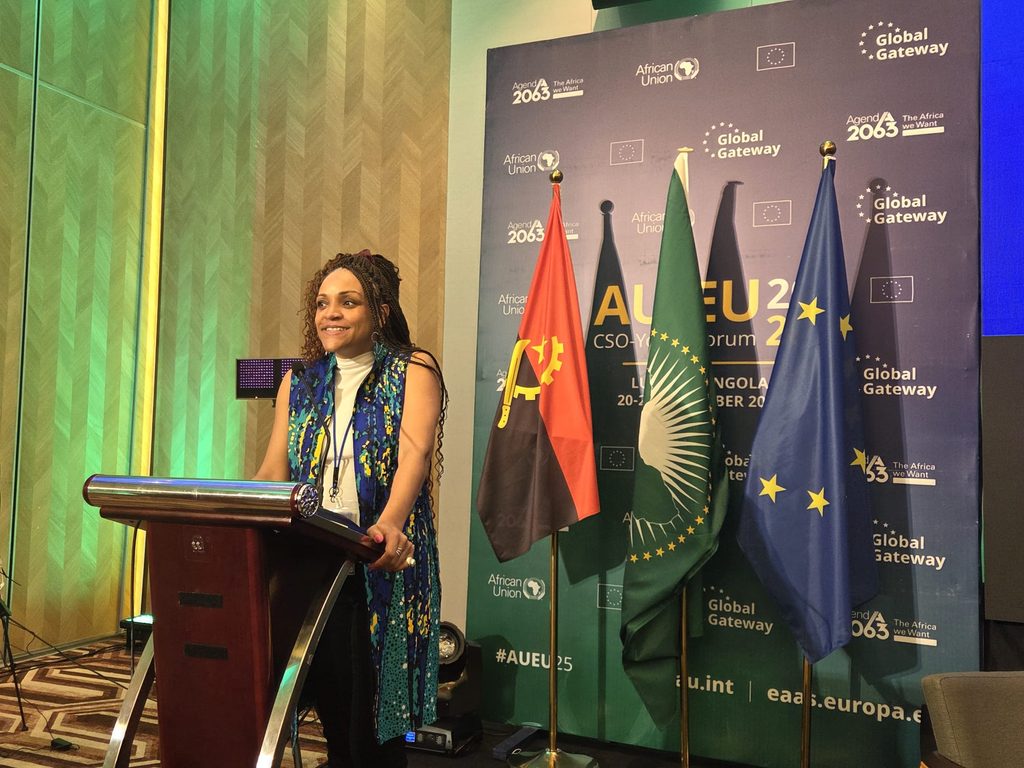
Held from 20–21 November 2025, the Forum marked the first institutionalised, in-person platform for civil society and youth within the AU–EU partnership. Over 100 CSO and youth delegates from both continents met in Luanda following an earlier virtual engagement in 2025. This represented a critical shift toward embedding civic participation in intercontinental policy processes.
As Plan International we were represented by the Plan Senior EU Representative Marcia Banasko who served as the rapporteur for the Peace, Security, and Governance group, ensuring that the voices of young people and civil society were at the heart of the dialogue.
The forum discussions centred on the Summit’s four priority areas – Peace & Security, People, Prosperity, and Multilateralism – tackling issues such as climate resilience, youth entrepreneurship, digital inclusion, culture, education, and mobility. Participants drafted a joint CSO–Youth Declaration, which was officially delivered to AU and EU decision-makers.
Key Recommendations
- Invest in peace, security, good governance, and youth-inclusive political participation.
- Support youth education, skills, employment, and protection of women and girls.
- Create simpler AU–EU youth mobility and visa pathways.
- Increase investment in health, education, social protection, and climate adaptation.
- Reform global and domestic financing systems, including fair debt and climate finance.
- Promote agroecology, food sovereignty, and sustainable green transitions.
- Expand digital connectivity, literacy, and fair technology governance.
- Ensure Global Gateway investments benefit local communities.
- Establish permanent AU–EU consultative status for youth and civil society.
- Make global institutions more democratic and accountable, including on climate and trade.
- Protect civic space, media freedom, and inclusive participation in AU–EU processes.
For organisations such as Plan International, this is an important step forward. As outlined in our “Vision to Action” position paper, youth must not only be consulted but empowered to shape policy. The creation of the Forum reflects a growing recognition of this need.
The 7th AU–EU Summit: Renewing a 25-Year Partnership
“Africa’s greatest asset is its youth … and together, Africa and Europe can lead the way”
António Costa and Ursula von der Leyen.
The Summit took place 24–25 November 2025, co-chaired by Angolan President João Lourenço and European Council President António Costa. It marked 25 years of AU–EU summits and coincided with Angola’s 50th year of independence – reinforcing the symbolic significance of this year’s meeting. EU and AU Commission leadership also attended.
The Summit reaffirmed the Joint Vision 2030 as the blueprint for Africa-Europe engagement through the next decade. Discussions and the resulting political declaration emphasised:
1. Peace, Security, and Governance
Leaders committed to strengthening cooperation on peace operations, maritime security, cyber threats, terrorism prevention, and rule of law. Governance commitments included support for inclusive institutions and human rights frameworks.
2. Sustainable Prosperity and Investment
A central focus was the Global Gateway Africa–Europe Investment Package, a €150 billion initiative intended to accelerate green, digital, health, education, and sustainable transport development. Leaders highlighted the role of innovation, digital transformation, and increased trade integration, including support for fairer debt governance and investment frameworks.
3. Mobility and Migration
The Summit placed renewed emphasis on expanding legal migration pathways, improving labour mobility, ensuring humane return and reintegration processes, and strengthening education and youth exchange programmes. This is a notable recognition of the role mobility plays in opportunity and inclusion.
4. Multilateralism and Shared Global Leadership
Under the Summit theme “Promoting peace and prosperity through effective multilateralism”, leaders presented Africa and Europe as partners positioned to advance global governance reform, especially in areas such as climate negotiations, international finance, and conflict prevention.
Header text
Header text
Header text
As António Costa and Ursula von der Leyen wrote in their joint op-ed, “Africa’s greatest asset is its youth … and together, Africa and Europe can lead the way”. For youth-focused development actors, this signals the possibility of long-term, equity-driven cooperation.
Civil Society Critiques: Progress, but Gaps Remain
Not all civil society assessments were celebratory. A widely circulated Eurodad analysis argued that the Summit fell short in several key areas, particularly around economic justice and accountability. Their main points included:
Weakness on Debt Reform
Although the Summit referenced international debt-architecture reform, it lacked concrete mechanisms to address the debt distress facing many African nations. Eurodad noted a tendency to encourage domestic reforms rather than address global systemic issues undermining fiscal space across the continent.
Risks in Private-Finance-First Approaches
Eurodad cautioned that the Global Gateway model risks prioritising private investor interests over public welfare. They highlight that using public funds to “de-risk” private investments may divert resources away from universal public services like health, education, and climate adaptation – sectors essential for children and marginalised communities.
Insufficient Accountability
The absence of the long-promised joint monitoring report, originally expected after the 2022 Summit, — raises questions about whether commitments will be effectively tracked. Without transparent monitoring, implementation risks remaining uneven and symbolic.
Limited Influence for Civil Society
While the Civil Society & Youth Forum is a positive step, CSOs remained largely excluded from core negotiations. This reinforces the need for structured, decision-making roles for civil society and youth within AU–EU governance bodies.
These critiques are essential for keeping the partnership accountable, and they align with many concerns raised by child-rights and gender-equality organisations.
Implications for Plan International and Youth-Focused Civil Society
Several outcomes are particularly relevant.
1. Recognition of Youth as Key Partners
The establishment of the Civil Society & Youth Forum demonstrates growing institutional openness. Plan International welcomes this and will continue advocating for young people, especially girls and young women, to have meaningful influence over decisions that affect them.
2. Opportunities Through Global Gateway and Joint Vision 2030
Commitments to expand education, digitalisation, climate resilience, and sustainable jobs align strongly with our work. With the right safeguards, these investments can reduce inequalities and unlock opportunities for millions of young people.
3. Mobility Pathways
Stronger commitments to legal pathways and educational exchanges have significant potential to expand youth opportunity, empower cross-cultural collaboration, and strengthen social inclusion.
4. Need for Stronger Accountability and Equity
Plan International shares concerns raised by Eurodad regarding debt justice, private-finance mechanisms, and transparency. Economic models must serve communities — not the other way around — and investments must protect human rights, public services, and vulnerable groups.
Our commitment is to ensure that the renewed AU–EU partnership remains people-centred, equitable, and accountable.
A Promising Turning Point – If Action Follows
The 2025 AU–EU cycle marks a pivotal moment. The combination of high-level political renewal and the institutionalisation of youth and civil society engagement offers a stronger foundation for a more inclusive partnership. But declarations must translate into real, measurable improvements for young people, children, and communities across Africa and Europe.
As Plan International EU Liaison Office, we will continue working closely with peers and partners to amplify youth voices and hold leaders accountable. We remain committed to ensuring the partnership delivers tangible progress on equality, justice, and opportunity.
Related pages