Skip to content
Menu Close
  • About us
  • What we do
  • Knowledge hub
Close
  • EU Liaison Office Home
  • About us
    • Purpose and ambition
    • About Plan International EU
    • Governance and membership
    • Meet the team
    • Work with us
    • Contact us
  • What we do
    • Girls’ rights and gender equality
    • Youth economic empowerment
    • Protecting children from harm
    • Girls in crisis
    • The EC as a donor
    • European Week of Action for Girls
  • Publications
  • Blogs
  • News
  • Case Studies
Close
Plan International's websites

Find the Plan International website you are looking for in this list

  • Global website
  • European Union Office
  • United Nations Office
  • African Union Office
  • Global Girls Foundation
  • Africa – West and Central
    • Benin
    • Burkina Faso
    • Cameroon
    • Central African Republic
    • Chad
    • Ghana
    • Guinea
    • Guinea – French
    • Guinea-Bissau
    • Guinea-Bissau – Portuguese
    • Liberia
    • Mali
    • Niger
    • Nigeria
    • Senegal
    • Sierra Leone
    • Togo
    • Togo – French
  • Africa – Eastern and Southern
    • Egypt
    • Ethiopia
    • Kenya
    • Malawi
    • Mozambique
    • Mozambique – Portuguese
    • Rwanda
    • Somalia
    • South Sudan
    • Sudan
    • Tanzania
    • Uganda
    • Zambia
    • Zimbabwe
  • Americas
  • Americas – Spanish
    • Bolivia
    • Bolivia – Spanish
    • Brazil
    • Brazil – Portuguese
    • Canada
    • Canada – French
    • Colombia
    • Colombia – Spanish
    • Dominican Republic
    • Dominican Republic – Spanish
    • Ecuador
    • Ecuador – Spanish
    • El Salvador
    • El Salvador – Spanish
    • Guatemala
    • Guatemala – Spanish
    • Haiti
    • Honduras
    • Honduras – Spanish
    • Mexico
    • Mexico – Spanish
    • Paraguay
    • Paraguay – Spanish
    • Peru
    • Peru – Spanish
    • USA
  • Asia-Pacific
    • Australia
    • Bangladesh
    • Cambodia
    • China
    • China – Chinese
    • Hong Kong, SAR of China
    • Fiji
    • India
    • Indonesia
    • Japan
    • Jordan
    • Laos
    • Lebanon
    • Myanmar
    • Nepal
    • Papua New Guinea
    • Philippines
    • Solomon Islands
    • South Korea
    • Thailand
    • Timor-Leste
    • Vietnam
    • Vietnam – Vietnamese
  • Europe
    • Belgium – Flemish
    • Belgium – French
    • Denmark
    • Finland
    • France
    • Germany
    • Ireland
    • Italy
    • Moldova
    • Moldova – Romania
    • Netherlands
    • Norway
    • Poland
    • Poland – Polish
    • Romania
    • Romania – Romanian
    • Spain
    • Sweden
    • Switzerland – French
    • Switzerland – German
    • UK
    • Ukraine
Close

EU Liaison Office
Search
Menu Close
EU Liaison Office
  • Home
  • Posts
  • The EU must #InvestInGirls to Achieve real inclusion

The EU must #InvestInGirls to Achieve real inclusion

Seizing the momentum for stronger collaboration and real impact

Every October, the European Week of Action for Girls (EWAG) brings young advocates from across the globe to Brussels. It is a space where girls, young women and their allies can directly engage with policymakers, share their experiences, and push for change.
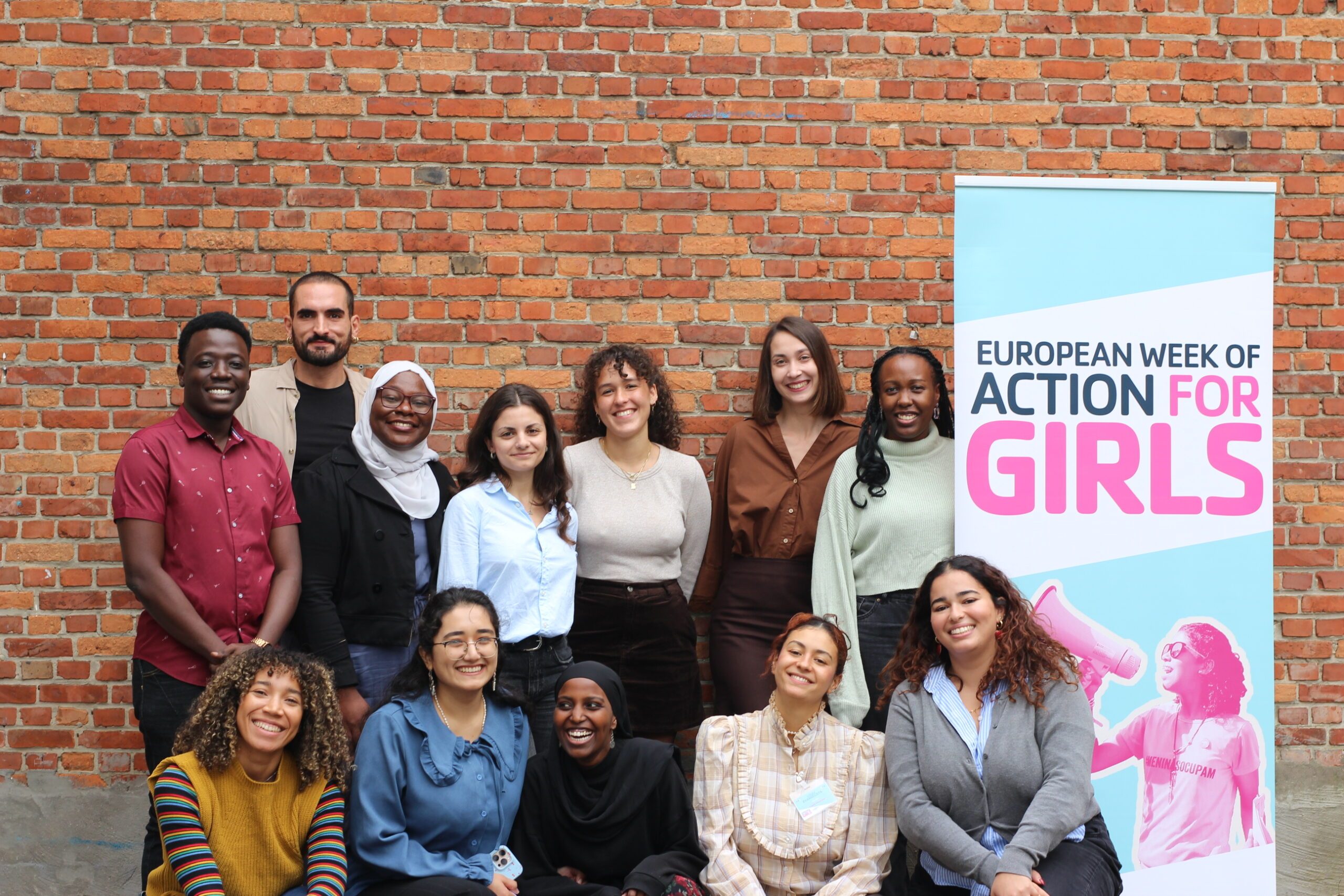
EWAG 2025 Participants and staff on the last  day of the programme.
EWAG 2025 Participants and staff on the last day of the programme in Brussels (Belgium). Photo credits: EWAG Coalition

A Key Moment to Advance Girls’ Rights

EWAG is more than just a conference; it is a reminder that youth advocacy is essential to build a better future. This year’s theme, #InvestInGirls, comes at a critical moment with negotiations on the EU’s next Multiannual Financial Framework (MFF) already underway. This framework will determine the Union’s budget priorities for the next years. #InvestInGirls highlights that advocacy should not be a privilege, but a right for everyone who wants to speak up. Real inclusion means ensuring that children and young people, especially girls and young women, can genuinely influence the decision that shapes their lives.  

Participation at the Heart of Inclusion

Inclusion can take many forms, and one of the most important is meaningful participation in decision-making. Too often policies are made by people who are not directly affected by them. Youth advocacy is not just a symbolic act, but a reflection of the perspectives of future decision-makers. Young people frequently push for more progressive policies and girls’ rights are often at the heart of their activism, whether if it’s fighting for access to education, reproductive rights or protection from gender-based violence. We often hear that young people, especially girls, are ‘at the heart’ of proposed policies, however, it doesn’t always feel that way.  
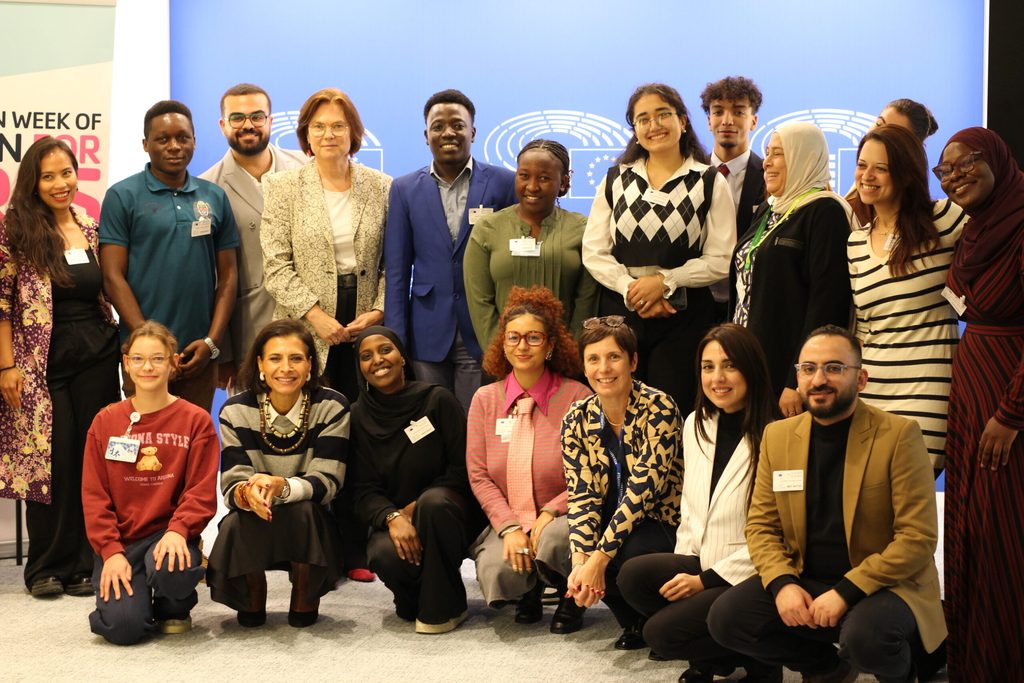
EWAG participants on Day 2 of the programme together with MEPs Abir Al-Sahlani and Marit Maij, and Chiara Damo, Head of Unit at the European Commission’s DG INTPA. Photo credits: EWAG Coalition

Giving Young People the Tools to Lead

Opportunities to speak up are deeply valued; EWAG, the UN’s Summit of the Future (a youth advocacy conference focused on peace and sustainability), and similar advocacy spaces are truly inspiring and important, but are they enough? While these events matter, they must be accompanied by sustained support and resources if we want real and lasting change.  

Many young people, especially girls outside privileged areas, are still expected to drive change with nothing but determination and hashtags. That’s why the EU’s external action budget plans matter. The proposed increases in funding for non-EU countries and global initiatives in the current MFF are encouraging, but consistency is key. Meaningful investment can empower youth-led organisations, giving them the tools to fight for change not just once a year, but every day in their communities. Investing in youth, and especially in girls, means building the infrastructure that allows us to lead, no matter our gender or background. 

The EU has the power to support youth advocates and the issues we are passionate about by allocating funds for youth-led initiatives and girls’ rights. EWAG is a brilliant example, and I am incredibly thankful for the opportunity to being given a platform to speak up, even from my own room. But this shouldn’t be the only chance some advocates ever get. We need more events that are accessible to the public, more platforms that amplify girls’ voices, and more opportunities for young people to engage in political processes, not just observe from the sideline. Youth organisations should be treated as partners, not just participants in a photo op.

Backing Girls’ Rights to Build a Fairer Future

Youth advocacy is not optional, it is essential. Essential to building a more inclusive Europe, essential to advancing gender equality, and essential to ensuring that those who are too often sidelined are finally heard. And girls’ rights? They are not a slogan or a box for decision makers to tick during election season. Girls and women account for nearly half of our world’s population. Their challenges are everyone’s challenges, not niche issues to be solved by women alone or dismissed in favour of supposedly more pressing priorities. When we advance girls’ rights, we are not just supporting girls themselves. We are shaping societies that are safer, fairer, and more resilient for all. Investing in girls is investing in our collective future, and that future starts now.


Photography, Face, Head

About the Author

Yelyzaveta (Liza) is an EWAG 2025 participant and a member of Plan Norway’s Youth Advisory Panel. She is also an active contributor to Green Youth, where she works to amplify young people’s voices in decision-making. Currently completing secondary school, Liza balances her studies with hands-on activism and volunteering. She frequently takes part in public protests and campaigns focused on peace and humanitarian aid, women’s reproductive rights, gender equality, and queer rights.

Her main advocacy passions include reproductive rights (with a focus on abortion access and comprehensive sex education), closing the gender gap across industries, advancing queer rights, and supporting mental health – particularly for those experiencing crisis.

Related pages
From Vision to Action: A Renewed AU–EU Partnership 

From Vision to Action: A Renewed AU–EU Partnership 

Position Paper:  From Vision to Action: A Renewed AU-EU Partnership Rooted in Rights, Education, and Equity.
Read more
See all news 
Six ways the Danish Presidency can invest in children and youth for a sustainable future  

Six ways the Danish Presidency can invest in children and youth for a sustainable future  

Plan International shares six recommendations to ensure this Presidency strengthens the EU’s role as an international political, diplomatic and humanitarian …
Read more
See all news 
The power of school: transforming children’s lives in Sudan

The power of school: transforming children’s lives in Sudan

Plan International, in partnership with DG ECHO, delivers an Education in Emergencies programme specifically adapted to the needs of the community in North D…
Read more
See all case studies 

Categories: Campaigns, Education, Sexual and reproductive health and rights, Youth empowerment Tags: Activism, Civic engagement, girls' leadership

Share

Follow us on social media:

© 2025 Plan International all rights reserved

  • Jobs
  • Our Terms and Conditions
  • Privacy Policy and Cookie Notice
  • Copyright
  • Raise a concern

Cookie preferences updated.

We use functional cookies to make this site work. We’d also like to set optional cookies to measure site usage, personalise content and tailor advertising to your interests. To choose which cookies to enable, click on Settings. For information about the cookies we use, see our Privacy Policy and Cookie Notice.
Read our cookie policy
This is an in page popup

This popup will be triggered by a user clicking something on the page.