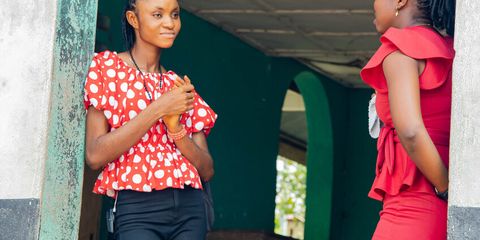
From school leavers to star teachers
Eunice, Kumba, and 200 other young women have been catching up on the learning they missed and have become certified as schoolteachers with real-life classro…
Plan International is an independent development and humanitarian organisation that advances children’s rights and equality for girls. We believe in the power and potential of every child but know this is often suppressed by poverty, violence, exclusion and discrimination. And it is girls who are most affected.
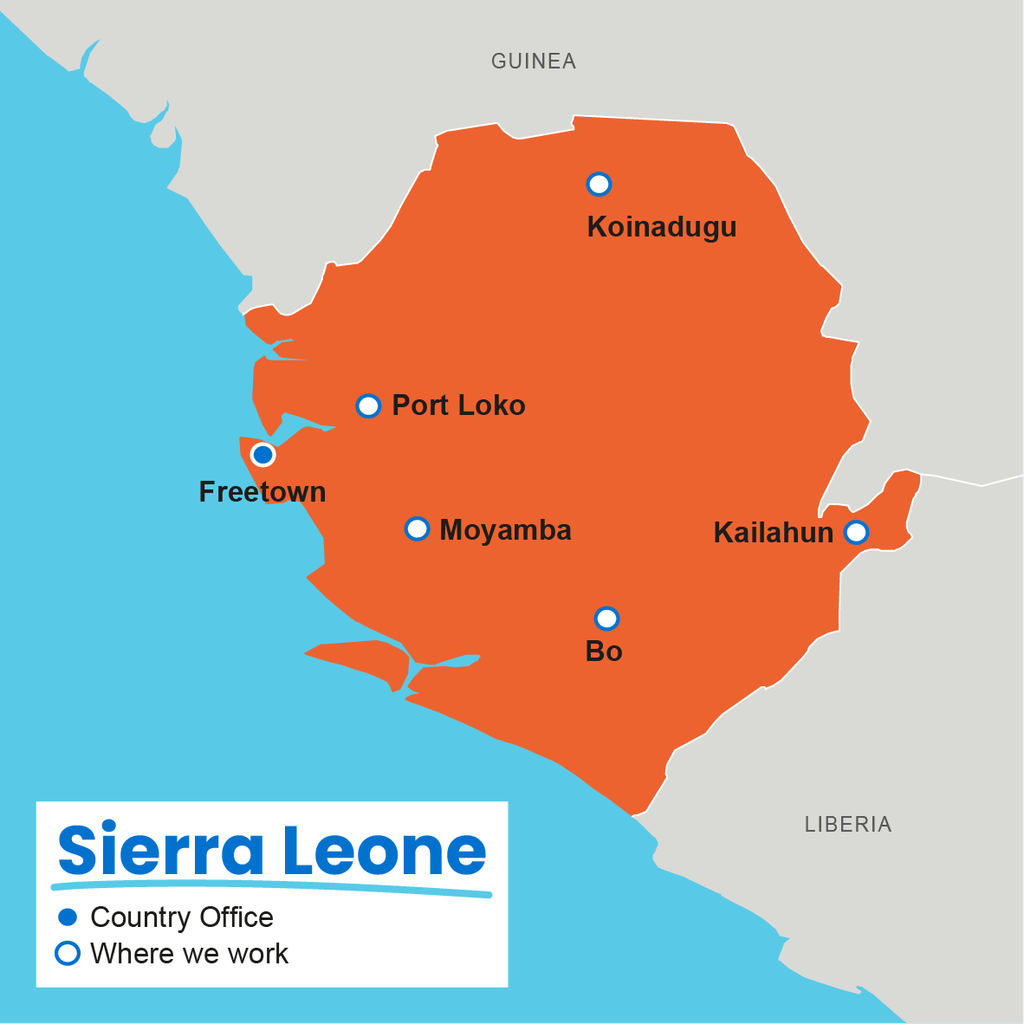
Since 1976 Plan International Sierra Leone has been working with girls, young people, communities and the government to raise awareness about the importance of children’s rights.
We strive for a just world, tackling the root causes of the challenges girls and vulnerable children face. We support children’s rights from birth until they reach adulthood, and we enable children to prepare for and respond to crises and adversity. We drive changes in practice and policy at local and national level using our reach, experience and knowledge.
For over 45 years, we have rallied other determined optimists to transform the lives of all children across Sierra Leone. We won’t stop until we are all equal.
Our priorities include:
We’re working with the Ministry of Basic and Senior Secondary Education and the Government of Sierra Leone to provide daily, free school meals for children across Sierra Leone.
6 Cantonment Road,
Off Kingharman Road PMB 245,
Freetown
sierra-leone.co@plan-international.org
Follow us: