Ukraine’s lost children find a loving home
In a small, rural village 50km outside the central Ukrainian city of Kropyvnytsky, a five-bedroom house in the middle of a quiet street has become a sanctuary for some of Ukraine’s most vulnerable children.
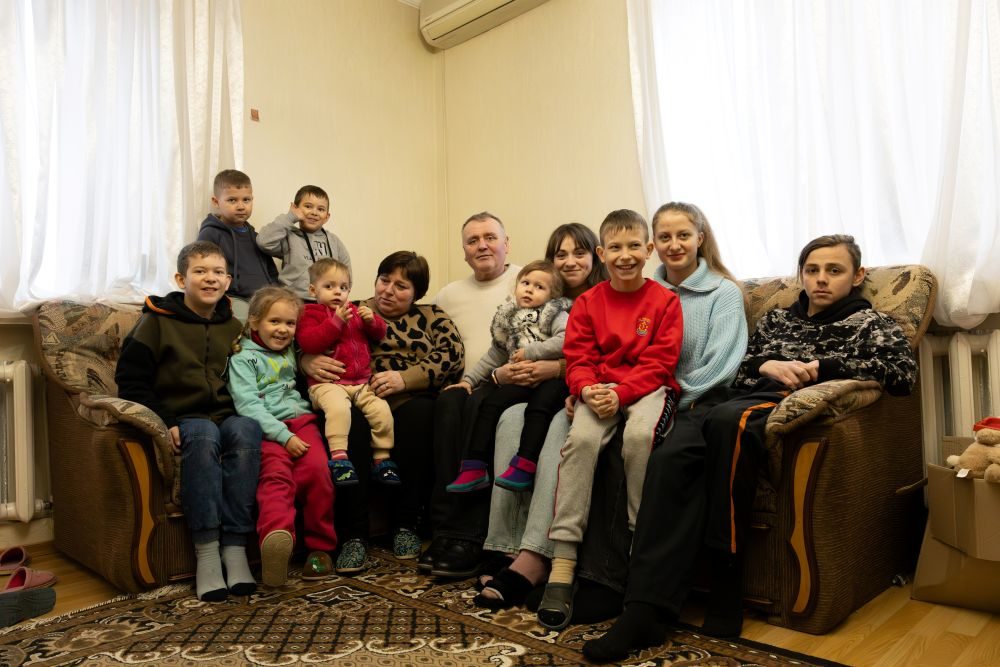
As war raged through the country, foster parents Yuri, 54, and Nadia, 49, moved into a large house in the countryside to fulfil what they now see as their shared purpose: “To protect as many children as possible and give them the tools for a happy future.”
That mission, which has seen 9 disadvantaged and abandoned children ranging from just 7 months to 16 years old welcomed into their home, has been supported by Plan International and its partner organisation, Slavic Heart to ensure the new family has the psychological, logistical and financial support they need.
“There’s always noise, but that means there’s always joy.”
Veronika, 16
Inside their living room, young children bounce between playing with toy trains, reading fairytales and building Lego houses. “There’s always noise here, but that means there’s always joy,” says Veronika, 16, who has lived with the family for almost 5 years.
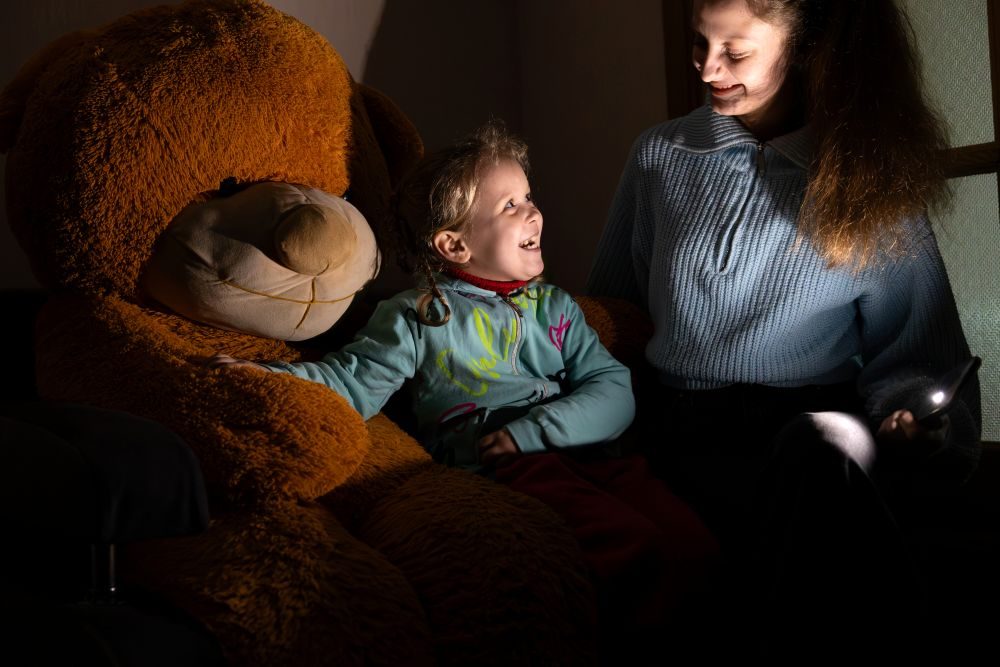
But creating a happy environment insulated from the pain and loss of the war around them has become harder than ever. Recent months have brought freezing temperatures to the region. Russian drone and missile attacks have targeted the energy infrastructure, cutting power to the home on a daily basis.
Despite this, the children, who have overcome hardship, are resilient. “We light candles and put more clothes on,” Veronika jokes, lifting her two-year-old sister up onto her lap. “We try to move around as much as possible and play games to stop it feeling so cold.”
Finding emotional healing
Understanding how to treat their psychological wounds from war and their memories of abandonment has been a challenge which parents, Yuri and Nadia, have learnt together.
“Some of our children have lost parents and relatives to war, others have no idea who their biological parents are,” Yuri says. “The emotional support delivered through regular therapy and training by social workers has helped my children get through the darkest days.”
Fifteen-year-old Vitali is one of the family’s oldest foster children, and he enjoys the responsibility of looking after his younger siblings. Though confident, he has suffered more than most children his age after losing his biological family and moving between different care arrangements throughout his childhood. At first, he rejected family rules and had a complete lack of trust in adults. He was irritable, lonely and prone to long bouts of inconsolable silence.
Therapy sessions were provided for Vitali, aimed at building emotional regulation and conflict resolution skills. Encouraging Vitali to feel safe and secure helped him cope better emotionally, and slowly, with the support of his parents, he began to become more social and motivated to learn both in school and at home.
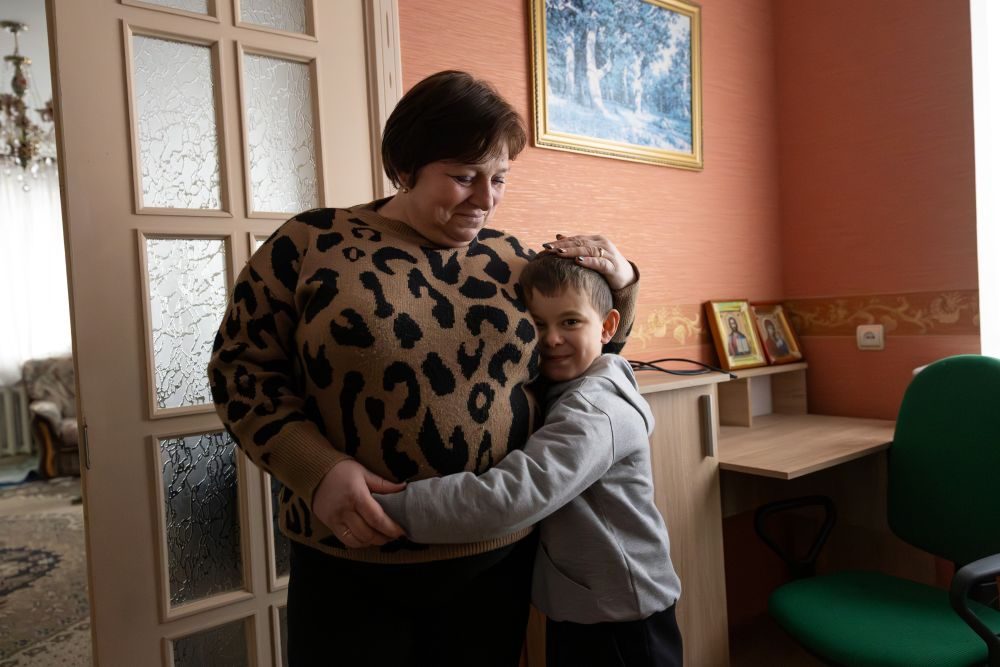
The majority of the children at the foster home are old enough to understand the perils of war. They have seen the drones buzzing overhead. They have heard the missiles exploding and the whirr of the increasingly common air attacks alarms. But inside their house in the middle of their quiet street, the children have also learnt how emotional and physical care from a loving family can make them feel safe and secure even in the most uncertain of times.
Categories: Emergencies
Related pages