Ending violence online and offline
Standing with women and girls for 16 days of activism
2 December 2025Across Plan International’s regional response, women and girls continue to face the combined impacts of war, displacement, discrimination, and rapidly growing online threats. This year, our work across Ukraine, Poland, Moldova, and Romania joins the global call to end digital violence against all women and girls, recognising how online harassment, intimidation, and misinformation increasingly erode safety and limit participation.
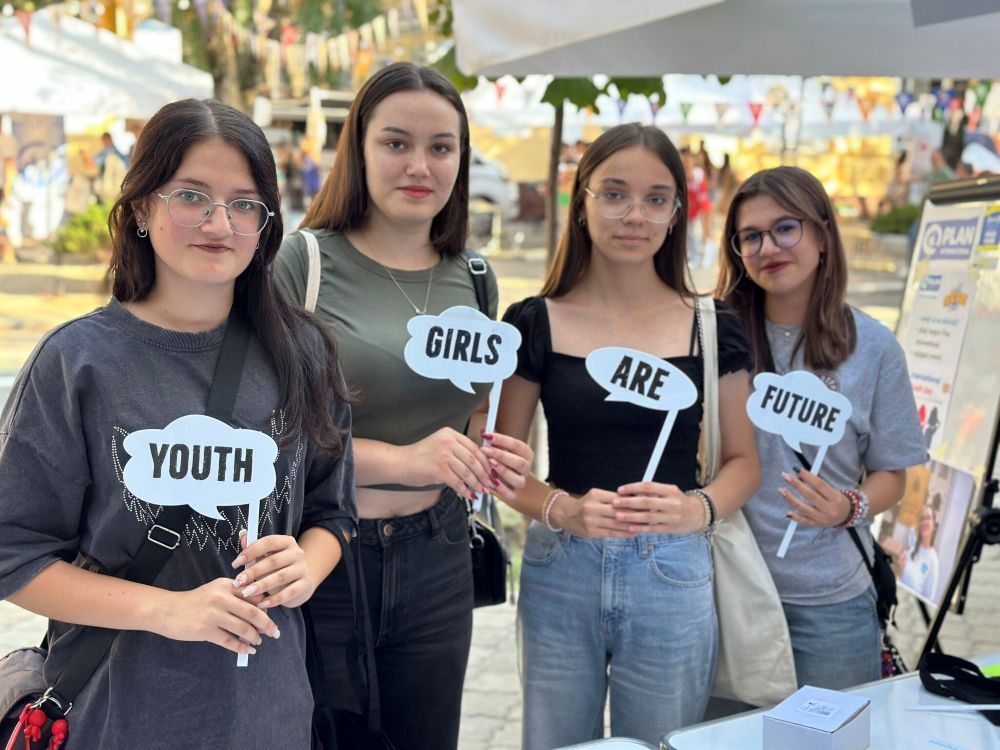
Girls at the Moldova Youth Festival in Chisinau, held on International Youth Day. © Plan International
In Ukraine, gender-based violence continues to rise. More than 291,000 domestic violence cases were recorded in the past year – a 17% increase – while hotlines across the region report heightened demand linked to insecurity and displacement. Ratifying the Istanbul Convention was a critical step, but implementation remains essential. The Istanbul Convention is Europe’s most comprehensive treaty to prevent and combat violence against women and domestic violence, setting binding standards for prevention, protection, prosecution, and survivor-centred support. Survivors must be believed, protected, and supported, not retraumatised by stigma or institutional barriers. Advancing survivor-centred justice across all 4 countries is key to ensuring accountability and safety.
Women remain central to resilience and recovery across the region. In Ukraine, 59% of new businesses in 2024 were founded by women. In Poland, Moldova, and Romania, women-led and refugee-led organisations continue to support displaced families, strengthen communities, and provide essential services. Yet across all settings, women’s voices remain underrepresented in recovery planning, political processes, and peacebuilding. Sustainable recovery requires women’s leadership at every decision-making level.
Protection risks for women and girls
Displacement continues to shape protection risks across the region. With over 10.6 million Ukrainians displaced, many residing in neighbouring countries, women face heightened risks of violence, exploitation, and trafficking. Many continue to lack safe housing, income, healthcare, childcare, or legal protection. They are not passive recipients of aid; they are caregivers, workers, and community anchors whose rights, and wellbeing must remain a priority.
Digital violence has become one of the most pervasive threats for women and girls. In Ukraine, 81% of women journalists report online abuse, and similar patterns appear across host countries, where activists and public figures face harassment and disinformation. Digital violence is real violence. Addressing it requires stronger laws, effective reporting systems, digital literacy, cross-border cooperation, and accountability from technology platforms to ensure that every woman and girl can safely learn, work, participate, and lead.
The psychological toll of conflict and displacement remains severe. 2/3rds of Ukrainians report symptoms of anxiety, depression, or trauma, and significant emotional strain is also felt among displaced women and caregivers in Poland, Moldova, and Romania. Expanding mental health and psychosocial support across East and Central Europe is essential.
16 days of activism
During the 16 Days of Activism, Plan International’s regional response calls for collective action to prevent violence, protect rights, expand essential services, support displaced women and girls, and eliminate all forms of digital violence. Violence is preventable. Equality is achievable. Together, across Ukraine, Poland, Moldova, and Romania, we can build a region where every woman and girl – online and offline – lives safe, empowered, and free.
Categories: Protection from violence
Related pages