Finding support through health education
After leaving their homes due to conflict in Ukraine, children and adolescents often struggle to adapt to a new environment, school and social circle. This emotional distress can lead to isolation. Creating safe, open spaces for children and adolescents is vital to ensuring their emotional resilience.
Daria, 14, left her home in Ukraine to live in Moldova. Like many children who have been forced to leave their homes, she carried a deep emotional burden. At school, Daria tried to be invisible. She struggled to connect with her peers in Moldova and seemed to be lost in her own thoughts all the time.
Daria became introverted and withdrawn and struggled to communicate. While this behaviour is typical of many adolescents, especially in new environments, Daria was dealing with another vulnerability.
After the birth of her younger brother, Daria had to fight for attention in her home. Alone, she dealt with questions about her body, growing up, fears and boundaries. The lack of open dialogue in the family made access to important information virtually impossible. For a teenager like Daria, this meant not just a lack of knowledge, but a sense of loneliness when it came to the most sensitive topics.
Finding support in a safe space
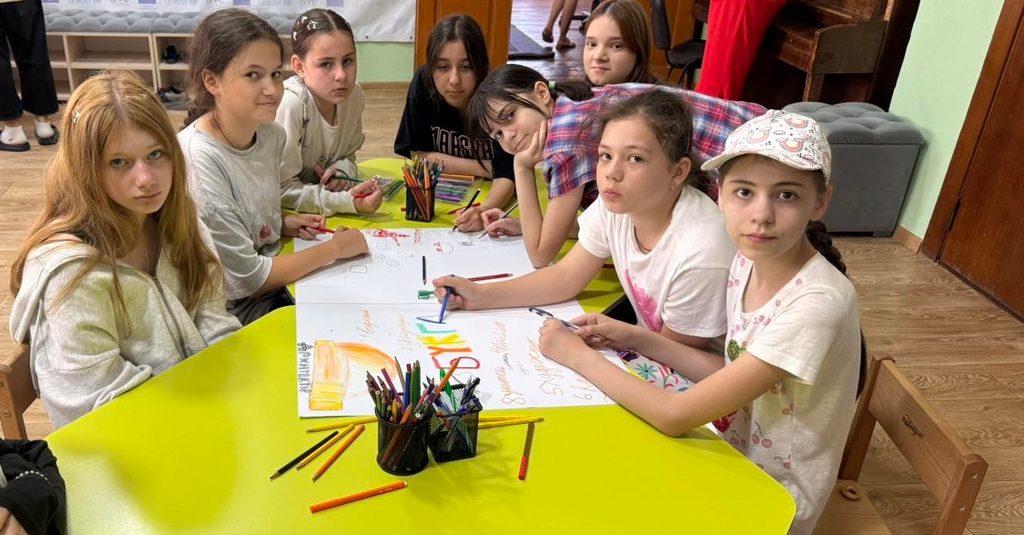
Daria came to the first modules on sexual and reproductive health feeling tense and embarrassed. She was passive, avoided eye contact, and sat with her eyes downcast. It seemed that what was happening was too difficult for her. However, over time, it became clear that it was not a matter of disinterest. For Daria, this was the first time anyone had spoken to her honestly, gently and without judgement.
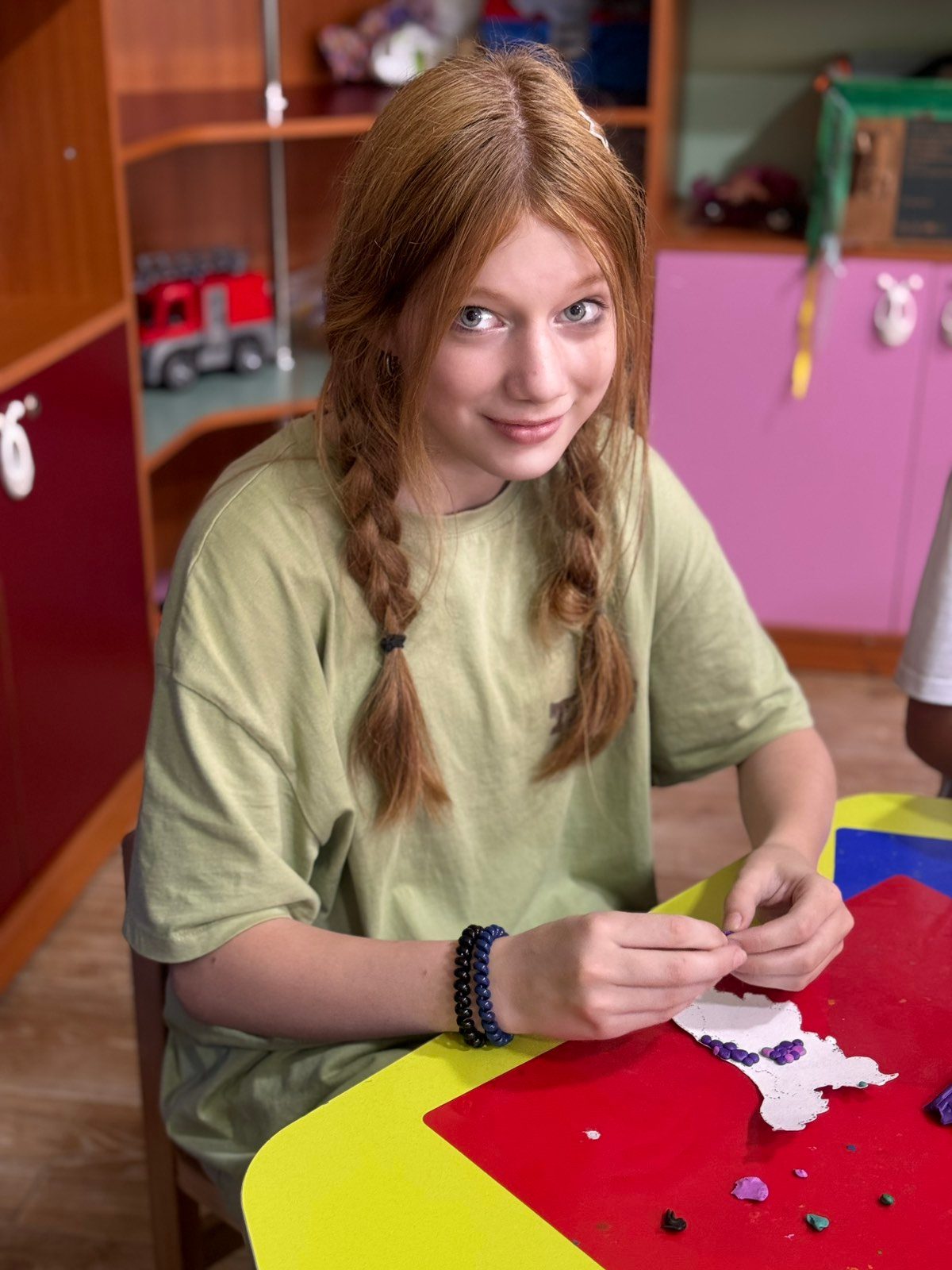
With each session, Daria gradually became more open. She began to listen more attentively and ask questions that she had kept silent about for a long time. The moment of truth came after the last module—Daria approached the teachers and hugged each one of them.
For girls like Daria, the honestly and openness of these sessions made it easier to breathe. The trust Daria established with her facilitators encouraged her to take a step she hadn’t dared to before: she asked for a personal meeting with the centre’s psychologist.
After completing the modules, Daria has already returned to the “Divertis” day centre twice. Not because it is part of the programme, but because it was here that she felt heard and protected for the first time. Daria’s story is a reminder that, for a teenager, timely, accurate information and a safe space can become a starting point for internal changes that cannot be measured in numbers but carry a long-term significance.
About the project
The “Divertis” day centres are supported by the Association for Child and Family Empowerment “Ave Copiii” in partnership with Plan International.
Categories: Emergencies, Sexual and reproductive health and rights
Related pages