Breaking barriers to education in Chocó
In Colombia’s Chocó region, children like Alex, Brayan, and Isabel face overwhelming obstacles to education – flooded streets, long journeys, and financial hardship. Despite poverty and unsafe conditions, their determination to learn shines through.
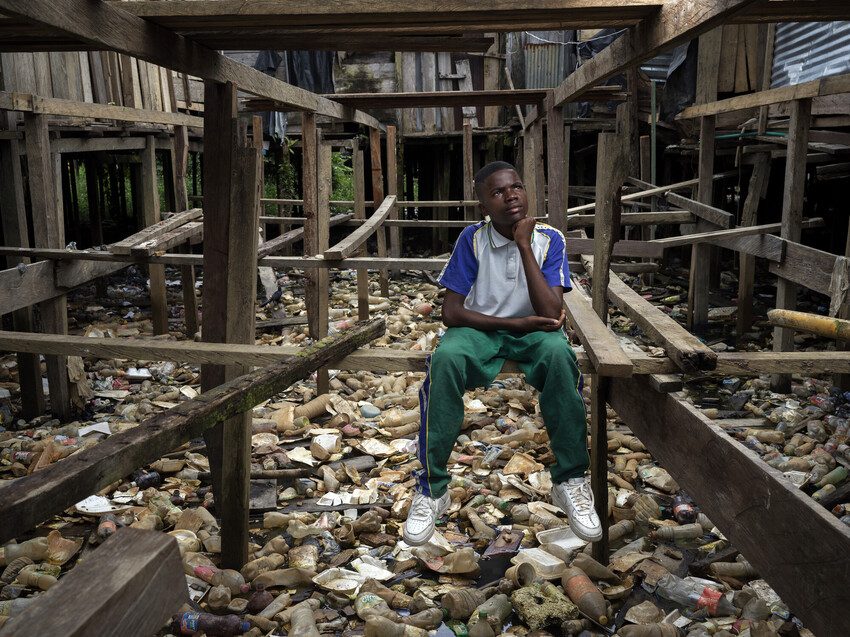
Alex, 15, hopes that earning a diploma will help him escape the poverty trap for good.
For 15-year-old Alex, the journey to school begins by wading through rubbish-filled streets. “There was a time when our neighbourhood was clean and the rubbish would flow away. Now, something is clogged and our house is surrounded by garbage,” he says. When the water rises, plastic bottles float into his home. To keep his uniform clean, Alex wraps his shoes in plastic bags before stepping into the plastic river.
Alex dreams of becoming a civil engineer. “Not all kids here go to school. They work at the market or on boats by the river to make money. I want to keep on learning. After graduating, I’d like to study civil engineering so I could raise our house higher. And maybe make a floor of cement so that the water can no longer seep through the wood of our house.”
Long journeys and sacrifices for learning
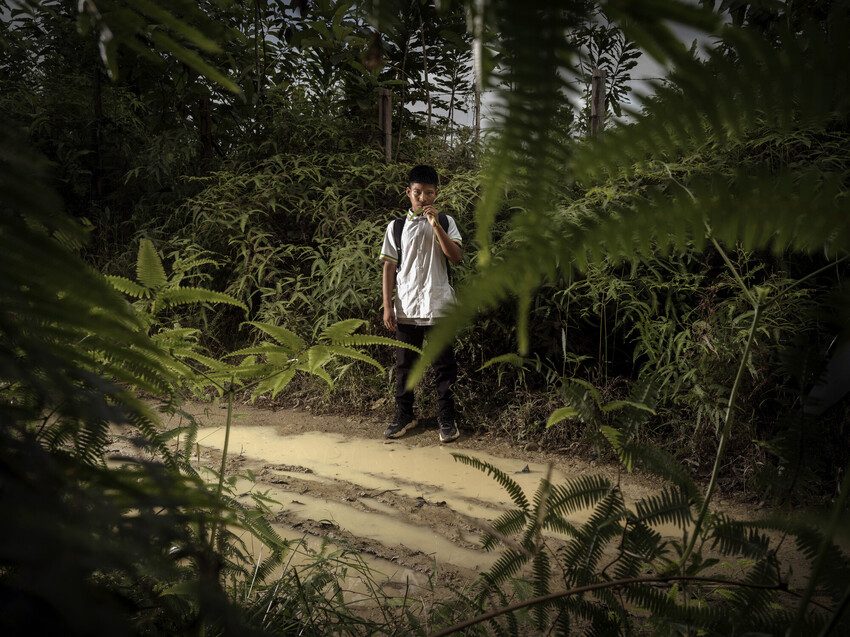
In Chocó, nearly 80% of the population lives in poverty, and education often takes a back seat to survival. For Brayan, 14, the challenge is distance. “The road I take is long and muddy, especially when it rains. Sometimes there are dangerous snakes on the road,” he explains. His 2 hour journey involves walking to a terminal and then taking a bus – a luxury his family cannot always afford. “I often go without breakfast. When I am late, I often cannot enter the class anymore.”
Brayan’s uniform is a symbol of sacrifice. “This is the first time I have a uniform because I was in community schooling until the sixth grade. My father had to sell our chickens to purchase it. That’s why I cannot damage or stain it. When boys in my class play football at school, I don’t play along because I am afraid to rip my trousers.”
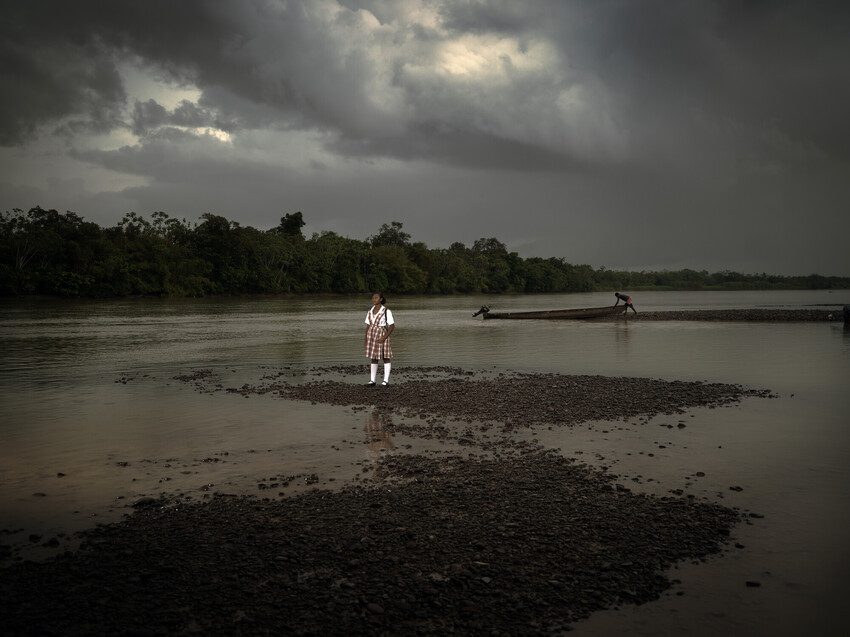
For Isabel, 13, the river is her biggest obstacle. “I leave at 6 and wait for the boat”, she explains. “I want to leave earlier, but taking the boat in the dark isn’t an option. By the time I get to school, the first class is already over.”
Isabel hates being late because she misses the teachers’ explanations and has to copy assignments from classmates. “I don’t want to hear things second-hand,” she admits. Boat trips are also expensive for her family, costing 2,000 pesos (about 40 euro cents) for a one-way trip. “When I leave school, there isn’t always a boat available. So sometimes I pay someone with a canoe. Otherwise, I have to wait longer at the pier for a boat to go home.”
Hope through Safe Horizons
These stories reflect the harsh reality for thousands of children in Chocó. The Safe Horizons: Andean Alliance for Disaster-Resilient Education project, funded by ECHO and implemented by Plan International works to ensure that children like Alex, Brayan, and Isabel can access education safely, breaking down barriers and building resilience for a brighter future.
Categories: Education
Related pages