What we do
Plan's work in Thailand covers 6 core areas, all of which are rooted in the rights of the child:
- child participation
- protection
- education
- household economic security
- HIV and AIDS awareness
- Corporate social responsibility for children.
Child participation
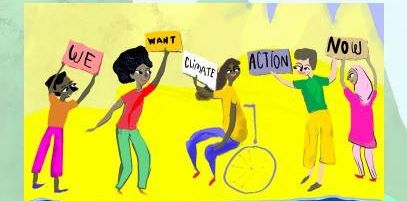
Children have the right to participate in decisions that affect their lives. We work with children and their communities to identify problems and implement solutions.
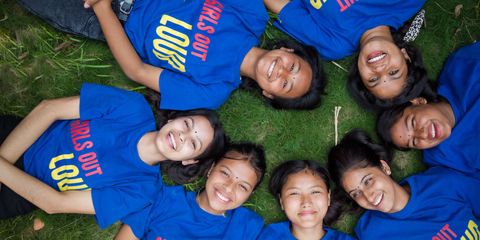
We promote child rights activities, including youth camps on child rights and awareness, as well as child-led clubs, government child councils and youth networks.
Plan Thailand also helps children to speak out by supporting them in producing their own media, such as film-making and journalism.
Protection
We promote child safe environments, free from abuse, neglect and exploitation, by:
- lobbying for the implementation of national policies on child protection
- training teachers and child caregivers on child protection
- training children on how to protect themselves.
Education
Our early childhood care and development (ECCD) and education programmes establish child-friendly learning environments and methods for children to gain quality education.
This approach helps to improve community and family health, hygiene and nutrition.
Household economic security
This programme helps families to provide for their children and become resilient to economic shocks, such as the loss of a job or a natural disaster.
We help expand livelihood opportunities through a number of initiatives from providing vocational skills training and agricultural support to promoting microfinance schemes and cooperatives.
HIV and AIDS awareness
Plan Thailand promotes HIV and AIDS prevention programmes for youths by supporting sex education curricula activities and strengthening youth groups so that they can be peer educators in their communities.
We also develop livelihood programmes for people living with HIV and help them obtain better access to health services.
Tuberculosis (TB)
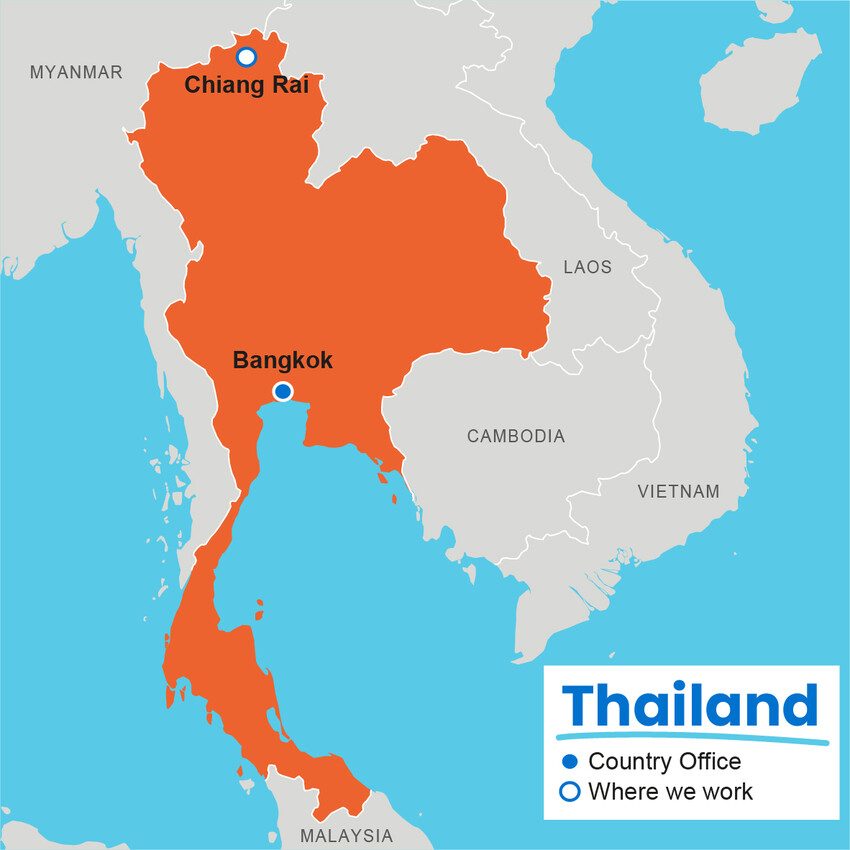
Plan is working in Chiang Rai province to provide Directly Observed Treatment (DOT) implementation to 89 TB patients who are hill tribes and migrants in 6 districts: Mae Chan, Mae Sai, Muang, Theng, Chiangkhong, and Phan. DOT is also implemented in 3 districts in Srisaket province in Muang, Khukan, and Kantralak districts. Plan is able to reach TB migrant patients for TB treatment in Srisaket.
Birth registration
Nearly one-quarter of children in the northern part of Thailand aged under 18 haven’t had their births registered.
The lack of birth registration creates a barrier to important social services, such as healthcare and education. Children without legal status are at greater risk of being exploited through trafficking, kidnapping, forced labour or sexual servitude.
Workshops and training sessions show stateless children how to prepare documents for identification and how to pursue their rights under the Nationality Law.
“Before this I dared not dream that I could be Thai like other children. After attending the legal clinic project’s training, I have hope and information to share with my friends,” said a participant.