Bokeo Programme Unit
Bokeo Province
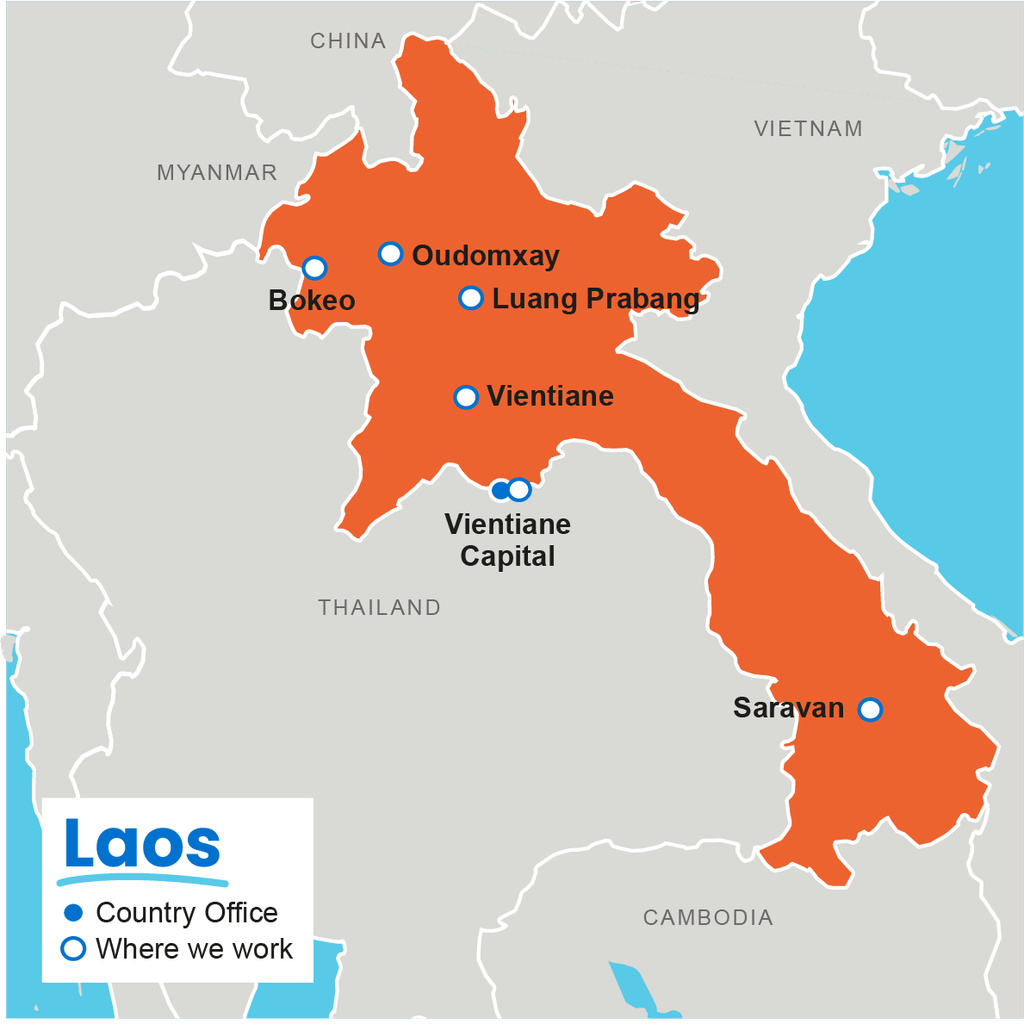
Bokeo Province is in northwestern Laos, in the ‘Golden Triangle’ where the borders of Laos, Myanmar and Thailand meet. Plan started work in the province’s Pha Oudom district in 2008 and is now expanding to work in Meung and Pak Tha districts.
These 3 districts are amongst the poorest in all of Laos, with low school enrolment and completion, few people with secondary education, poor hygiene, almost no sanitation, limited safe water access and high levels of child malnutrition.
The area is mountainous. Many villages are not connected by roads. In Pha Oudom district, for example, only 30 of the 89 villages can be reached by vehicle or motorbike. Another 16 can be reached by river, navigating rocks and rapids. In the remaining 43 villages people must walk for hours or more, the most remote are 2 days walk up and down steep paths. Villages are small – some as few as 14 households, too small to support a school. Most villages do not have electricity or mobile phone services.
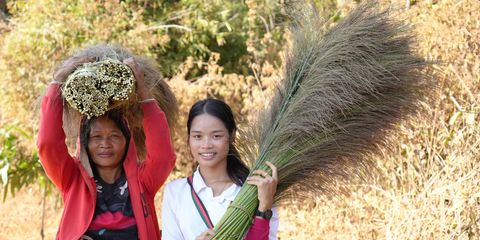
Most people farm rice and corn, supplemented by collecting vegetables from the forest. Some walk to their fields every day, returning in the evening carrying dry wood, local vegetables and grass for their animals on their backs. However some fields are so far up in the hills that people stay there for days or weeks in simple shelters.
Programme highlights
An early start to education
Plan Laos strengthens pre-school education by providing teacher training, arts and play materials and small grants for community construction. The next big challenge is setting up community play groups in villages too small to support a pre-school.
“After Plan started the project, I see the difference between children who attended and did not attend pre-school. The children in school know how to read, write and speak Lao language very well,” says Phetsamone, a 22-year-old community volunteer.
Quality education and child protection
Plan Laos helps the province and district education services provide supervision and advice to schools, trains community committees on their responsibility to protect children from violence and abuse and provides scholarships to help the poorest children – especially girls – to complete primary and then secondary school.
“Many children used to drop out of school to go to the field with their parents. My son was about to drop out too. He is now selected for scholarship, so he can continue his studies,” says Chue’s mother from Hmong ethnic group.
Water and Sanitation
Plan Laos strengthens communities' capacity to improve their own health situation through community managed improvements to the sanitation, hygiene and water conditions.
On 1 June 2010, Plan organised the International Children’s Day events for 10,305 children in 42 villages. Plan and government staff introduced activities including hand-washing, nail cutting, and teeth brushing to promote hygiene practices among the children.
Health and Nutrition
Plan Laos works to reduce levels of chronic malnutrition through strengthening the capacity of government officials and village trainers to conduct nutrition training. Plan also promotes knowledge of nutrition among parents and caregivers.
Support Plan’s work and sponsor a child