Kaolack Programme Unit
Plan's rural credit unions empower women as they can take out small loans and run their own business
Area: 16,010 sq. km
Population: 1,066,375
Communities: 4
Sponsored children: around 7,900
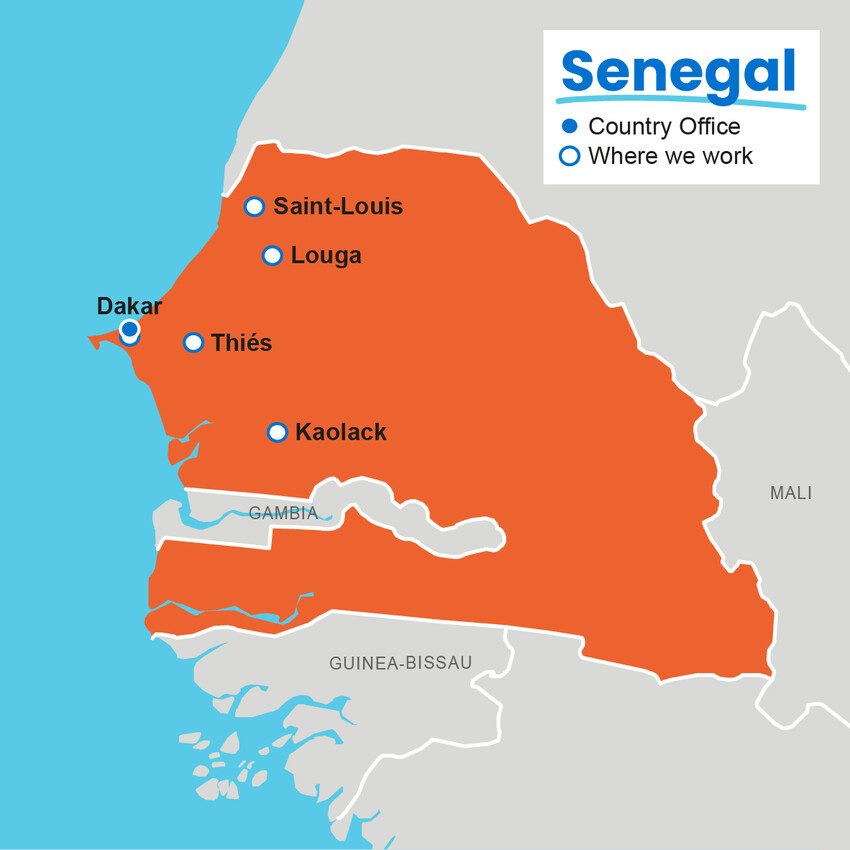
Plan’s Kaolack Programme Unit is located in the central part of Senegal, in an area known as the peanut basin. Since the colonial days Kaolack has produced most of Senegal’s peanuts, a vital commodity in the country’s economy. Kaolock is close to Gambia and shares the same Wolof, Fulani, Serere, or Mandingue ethnic groups.
Plan started work in Kaolack in 1989 where people’s main occupation is agriculture. They grow peanuts, the main cash crop, as well as millet, corn, watermelon and beans.
Programme highlights
Access to safe drinking water
Plan has been helping children access safe drinking water by extending the running water networks so they no longer have to travel long distances. Nearly 45,000 people, including 14,000 children under 6 were reached by the project.
Not only have the communities noticed a significant improvement in children’s health, but adults, especially women, now have more time to undertake income generating activities.
Pushing back malaria
Plan works with communities to reduce the incidence of malaria, an often fatal disease, by spraying indoor walls and curtains with insecticides which are harmless to human beings but which kill or repel the mosquitoes that spread malaria. 85% of houses have been sprayed, and as a result, a significant drop in the incidence of the disease has been noticed.
Mr. Ndiaye, head nurse from Taiba Niassene, said: “For more than 3 months, I have only received 1 case of malaria which is unbelievable compared to a few years ago when we were always snowed under by the big number of patients just lying on the floor waiting for treatment.”
Access to finance
Plan has helped establish 2 rural credit unions managed by the communities themselves. The unions make financial services more accessible to the rural communities which has encouraged households to diversify their source of household income.
In the long run, more and more youths will be able to find work locally, instead of having to go to big cities to work as street vendors. This is also progressively reducing women’s poverty as they are now able to take out small loans and run their own small business to improve their economic security.
Learn about Plan’s village savings and loans schemes near Dakar
You can support our work now: sponsor a child