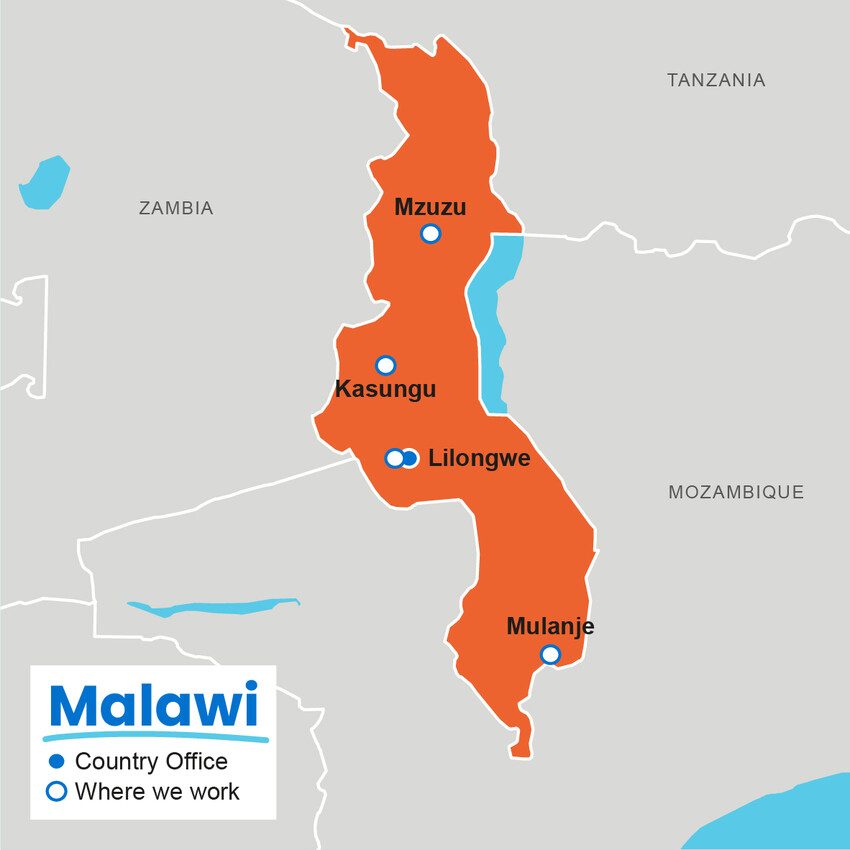
Mulanje Programme Unit
Northern Region
Communities: 13
Population: 173,581
Sponsored children: 7,000
Plan has been working in Mulanje since 1996. The programme unit is located in the north of Mulanje district below the Mulanje Mountain, the third highest mountain in Africa.
The major economic activity is small scale agriculture growing maize, pigeon peas, sesame and cassava and 95% people live on less than US$1 per day. The main ethnic groups are Lomwe, Yao and Mang’anja and 80% of the population practice child initiationwhere young boys and girls are taken to secluded areas by the elders, ostensibly to be taught to be better persons) between the ages 7 to 17.
Programme highlights
Maternal and child health
In partnership with Mulanje district health office, Plan has trained health surveillance assistants in the community integrated management of childhood illnesses. We provide emergency support to sick children and raise awareness on seeking healthcare. We have also drilled boreholes to provide potable water and reduce diseases such as cholera.
HIV and AIDS impact mitigation
Plan supports orphans and vulnerable children affected by HIV and AIDS by paying school fees so they can continue with their education to secondary level. We work with community-based organisations to provide life skills and emotional support to children and communities in Mulanje.
Food security and sustainable livelihoods
Plan has established farmer clubs where new farming technologies are being practiced and farmers are being linked to proper market structures. Farmers are being trained in business management, food processing, utilisation, value added products and crop production and processing.
We have improved a road and built 3 bridges to allow access to economic activities and for children to go to school during the rainy season.
Quality education support
The illiteracy level in Mulanje is 46%. Plan is improving childrens’ learning environment by constructing school blocks and toilets, drilling boreholes and providing school furniture.
Plan is strengthening school management committees and parents-teachers associations and, in partnership with the World Food Programme (WFP) is providing school meals to primary school children.
Child rights, gender and community empowerment
Plan promotes the Learn Without Fear campaign to end violence in schools, which has led to a decrease in cases of capital punishment and bullying. We also work on empowering youths, strengthening child protection structures and increasing participation in community development work.
Support Plan’s work – make a donation