Macenta Programme Unit
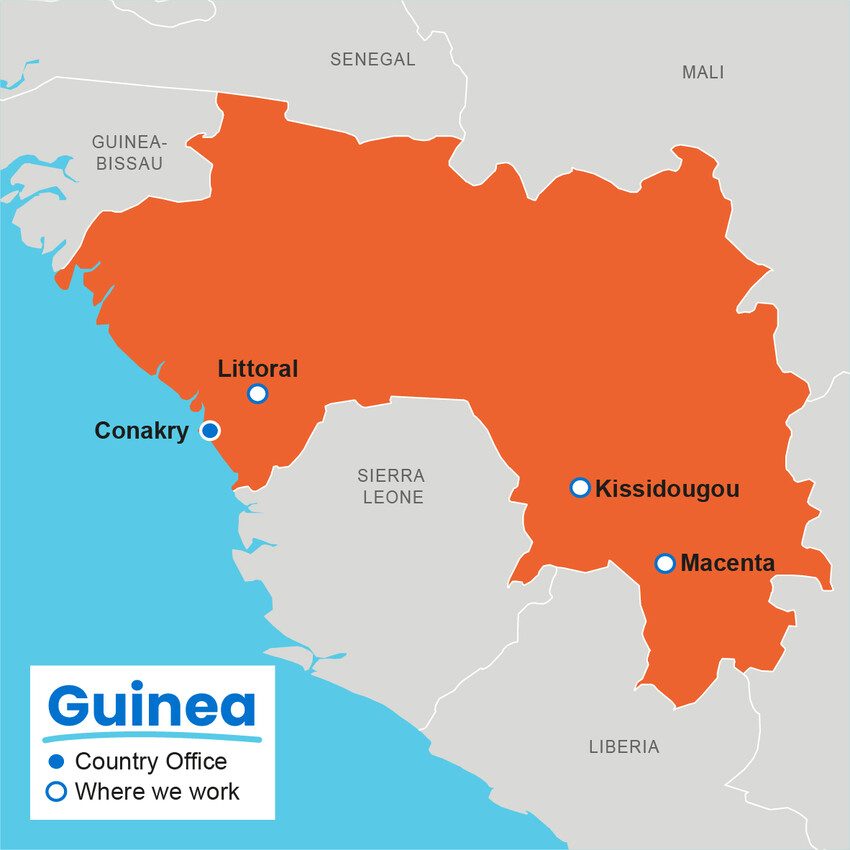
Macenta prefecture
Area: 8,710 sq. km
Population: 357,555 (2005)
Rural Development Communities: 14
Sponsored children: Around 8,200 (around 7,000 girls)
Macenta prefecture is situated in Guinea’s forest land, and its equatorial climate means it receives heavy rainfall – more than 300 days per year.
This abundance of rain provides favourable conditions for agriculture, which is the source of income for 80% of the population. The main crops grown are cereals, including rice and maize, tubers, coffee, cocoa and bananas.
Macenta’s main ethnic groups are the Toma, Kissi, Kpelle and Tomamania. But others have migrated to the region, including the Mandinka and Fula.
Plan Guinea has been working with the children, their families, and their communities in Macenta since 1994 to promote their rights and make sure they receive the best possible care. All of our projects are carried out in partnership with the communities and technical support of the local government services.
Programme highlights
Education and development
As well as helping communities build and equip classrooms, Plan Guinea’s education and development programme in Macenta builds school teachers’ capacity by training them in effective discipline techniques, and how best to use French textbooks to improve children’s language skills.
School-going children with physical disabilities have benefited from wheelchairs to help them become more mobile and make it easier for them to go to and from school.
Child protection and participation
Plan Guinea helps give children a voice through discussions about the rights and responsibilities of both children and adults on its radio programmes, called ‘La Voix de Finda et Alpha’ - recorded by the children themselves and broadcast to the communities in many of the local languages, as well as French.
Play zones and cultural centres have been built to provide safe places for children to play and learn. Other programme activities include celebrating the anniversary of the United Nation’s Child Rights Convention and World AIDS day.
Health and survival
To increase children’s chance of survival and help individuals improve their health, Plan Guinea trains community health workers, provides equipment and essential medicine to health centres, and is increasing the number of patients that can be seen by helping communities build and equip new units.
We also run campaigns to raise awareness about the dangers of HIV and AIDS and how to protect against them, safe childbirth practices and how to prevent other illnesses such as malaria.
Support Plan’s work: sponsor a child