<?xml version="1.0" encoding="utf-8" ?>
<rdf:RDF xmlns:rdf="http://www.w3.org/1999/02/22-rdf-syntax-ns#" xmlns:dc="http://purl.org/dc/elements/1.1/" xmlns:syn="http://purl.org/rss/1.0/modules/syndication/" xmlns="http://purl.org/rss/1.0/">


<channel rdf:about="http://plan-international.org/where-we-work/africa/burkina-faso/about-plan/news/aggregator/RSS">
  <title>News</title>
  <link>http://plan-international.org</link>

  <description>


  </description>


            <syn:updatePeriod>daily</syn:updatePeriod>
            <syn:updateFrequency>1</syn:updateFrequency>
            <syn:updateBase>2009-04-16T12:58:31Z</syn:updateBase>
        

  <image rdf:resource="http://plan-international.org/logo.png"/>

  <items>
    <rdf:Seq>
      
        <rdf:li rdf:resource="http://plan-international.org/where-we-work/africa/burkina-faso/about-plan/news/life-in-damba-refugee-camp"/>
      
      
        <rdf:li rdf:resource="http://plan-international.org/where-we-work/africa/burkina-faso/about-plan/news/mosquito-nets-save-lives-malaria-prevention-in-burkina-faso"/>
      
      
        <rdf:li rdf:resource="http://plan-international.org/where-we-work/africa/burkina-faso/about-plan/news/plan-burkina-makes-news-with-annual-report-launch"/>
      
      
        <rdf:li rdf:resource="http://plan-international.org/where-we-work/africa/burkina-faso/about-plan/news/plan-burkina-to-improve-access-to-water-and-sanitation"/>
      
      
        <rdf:li rdf:resource="http://plan-international.org/where-we-work/africa/burkina-faso/about-plan/news/using-the-power-of-cinema-to-educate-children"/>
      
      
        <rdf:li rdf:resource="http://plan-international.org/where-we-work/africa/burkina-faso/about-plan/news/plan-burkina-faso-bids-fond-farewell-to-country-direct"/>
      
      
        <rdf:li rdf:resource="http://plan-international.org/where-we-work/africa/burkina-faso/about-plan/news/plan-burkina-faso-fights-meningitis-outbreak"/>
      
    </rdf:Seq>
  </items>

</channel>


  <item rdf:about="http://plan-international.org/where-we-work/africa/burkina-faso/about-plan/news/life-in-damba-refugee-camp">
    <title>Life in Damba refugee camp</title>
    <link>http://plan-international.org/where-we-work/africa/burkina-faso/about-plan/news/life-in-damba-refugee-camp</link>
    <description>More and more people are fleeing Mali to Burkina Faso, and small refugee camps like in Damba are struggling to accommodate for everyone.</description>
    <content:encoded xmlns:content="http://purl.org/rss/1.0/modules/content/"><![CDATA[<div class="captioned image-right"><img src="http://plan-international.org/where-we-work/africa/burkina-faso/pictures/fetching-water-180" alt="Fetching water in refugee camp in Damba" class="image-inline" title="Fetching water in refugee camp in Damba" />
<p>The only water source available is from a hole dug in the ground</p>
</div>
<p>7 May, 2012: Situated in the north of Burkina Faso, Damba is a remote village only accessible by sandy tracks and is currently home to more than 3000 refugees, 62% of whom are children*, whose lives have been disrupted by the current political instability in Mali.  In just a few months, the population of Damba has increased more than tenfold.</p>
<p>"Me and my parents fled from our village because we were afraid for our lives. We arrived at the refugee site in Damba two months ago after travelling by road for several days and spending 2 days in the bush because of a breakdown," explains a young boy originally from Goussy in Mali.</p>
<p>There are hundreds of stories just like this. Many families have arrived in Damba with nothing and living conditions in the camp are grim.  There is almost no vegetation in the area and not enough food to go round.  Clean drinking water is not easily available and health care facilities are minimal. There is nothing for the children to play with.</p>
<p>According to another young boy aged 12: "Me and my brothers do not eat our fill every day. The wells where we get our water from are a long way away and the water makes people ill.  It is dirty and contains many microbes and this is why people are getting sick."</p>
<p>Nurse Assiata Passéré has been seeing an average of 35 patients a day at the camp, mostly people afflicted with skin diseases, conjunctivitis, severe abdominal pain and ringworm.  Many of the children that she’s seen are suffering from pneumonia and diarrhoea, life-threatening diseases.</p>
<p>The lack of sanitation at the refugee camp and shortage of treatments is causing her to worry about the spread of disease which could have a dramatic impact on young children whose health is already vulnerable due to malnutrition.</p>
<p><br />* According to a census conducted by the CONAREF and UNHCR at the end of March 2012</p>]]></content:encoded>
    <dc:publisher>No publisher</dc:publisher>
    <dc:creator>Lauren Mealor</dc:creator>
    <dc:rights></dc:rights>
    
      <dc:subject>Burkina Faso</dc:subject>
    
    <dc:date>2012-05-07T13:07:33Z</dc:date>
    <dc:type>Page</dc:type>
  </item>


  <item rdf:about="http://plan-international.org/where-we-work/africa/burkina-faso/about-plan/news/mosquito-nets-save-lives-malaria-prevention-in-burkina-faso">
    <title>Mosquito nets save lives: Malaria prevention in Burkina Faso</title>
    <link>http://plan-international.org/where-we-work/africa/burkina-faso/about-plan/news/mosquito-nets-save-lives-malaria-prevention-in-burkina-faso</link>
    <description>Plan teams up with the Global Fund to prevent malaria in Burkina Faso.</description>
    <content:encoded xmlns:content="http://purl.org/rss/1.0/modules/content/"><![CDATA[
<div class="captioned image-inline"><img src="http://plan-international.org/where-we-work/africa/burkina-faso/pictures/bednet180.jpg/image_preview" alt="Family sets up bednet 180" title="As part of Plan's partnership with the Global Fund, 7.6 millions bednets were distributed to families in Burkina Faso" width="180" height="180" />
<p>Families set up bednets outside to protect themselves from malaria whilst sleeping</p>
</div>
<p>31 October, 2011: As part of Plan’s partnership with the Global Fund, malaria prevention is a key priority and Plan in Burkina Faso is no stranger to encouraging people to use bed nets.</p>
<p>7.6 million&nbsp;long-lasting, insecticide-impregnated bed nets have been distributed across the whole country, a ratio of one net for every two people. In the village of Silmiougou, in the centre region of Burkina Faso, over 2189 habitants share 341 homes. This makes the chances of catching malaria easier, and many people subsequently have to undergo expensive hospital treatment. However, with the distribution of nets by Plan in this community, the number of cases of malaria has seen a significant decrease.</p>
<h2>Distributing the nets</h2>
<p>In Silmiougou, bed nets were distributed with instructions on how to use and set them up and take proper care of them. People in the community encourage one another to use the nets all the time, even just when resting.&nbsp;According to one member of the community, Halidou: “I was given the bed net; all the households in our compound got their share. I have been encouraging everybody to use it inside or outside. I try to set a good example while also protecting myself.”</p>
<p>The nets were given to families to use both inside their homes and outside as it’s often too warm to sleep inside at night, so children and their parents spend the night outside where it’s a little cooler. By using the nets outside, they are protected from catching malaria and other diseases spread through insects, and they can sleep soundly and not worry about getting sick.</p>
<p>Rakieta recalls previous years when she often caught malaria twice a year during the rainy season. “Thanks to the bed net, I have escaped the terrible headache, the vomiting, the high fever and the cold which used to send me straight to the hospital bed.”</p>
<h2>What’s next</h2>
<p>With such positive results, Plan is seeking additional funding for its work in Burkina Faso to provide more bed nets to families, and also focus on available and cheap medical care for malaria prevention and treating those who do catch the dreaded disease. Meanwhile, the families in Burkina Faso who have already received nets with Plan’s help are thrilled at the support and help that they have been shown.</p>
]]></content:encoded>
    <dc:publisher>No publisher</dc:publisher>
    <dc:creator>Lauren Mealor</dc:creator>
    <dc:rights></dc:rights>
    
      <dc:subject>Burkina Faso</dc:subject>
    
    <dc:date>2011-10-31T10:12:34Z</dc:date>
    <dc:type>Page</dc:type>
  </item>


  <item rdf:about="http://plan-international.org/where-we-work/africa/burkina-faso/about-plan/news/plan-burkina-makes-news-with-annual-report-launch">
    <title>Plan Burkina makes news with annual report launch</title>
    <link>http://plan-international.org/where-we-work/africa/burkina-faso/about-plan/news/plan-burkina-makes-news-with-annual-report-launch</link>
    <description>Plan Burkina Faso launches its annual report.</description>
    <content:encoded xmlns:content="http://purl.org/rss/1.0/modules/content/"><![CDATA[
<div class="captioned image-inline image-inline"><img src="http://plan-international.org/where-we-work/africa/burkina-faso/pictures/ActingCountryDirectorOumarouKoalashowingacopyofthereport180.jpg/image_preview" alt="report 180" title="" />
<p>Acting Country Director Oumarou Koala showing a copy of the report</p>
</div>
<p>29 June 2011: Twenty local media took part in the Plan Burkina Faso 2010 annual report launch on June 17th in Ouagadougou. A variety of articles and audiovisual items were published, produced and broadcast to the whole country.</p>
<p>Acting Country Director Oumarou Koala, assisted by the senior management team and program advisors, led the report presentation. A number of questions were raised especially regarding the budget. In 2010, Plan had a budget of 11 billion cfa, 9 were spent and questions were raised about the remainder and why it was not spent. The Plan team explained some challenged encountered that limited the procurement process for the year, and the process to re-program the money in 2011 was already underway. The journalists were glad to learn that the money would be spent in Burkina, a very poor country with lots of needs.</p>
<p>The criteria for the program area choices were also explored by the media attending. Questions were raised and answers given as to how program areas are chosen, where and based on what needs. Despite hard questions, the exercise resulted in positive media productions about the work of Plan in Burkina Faso.</p>
<p>The report was also positively received by the Ministry of Finance and Development. Mme Adelaïde Naré, the Minister’s Advisor, said, "Plan’s programmes are at the heart of the government’s concerns. Education, health, and access to water continue to challenge the government. The results achieved by Plan are very good and helpful to the communities and the government."</p>
<p>Read more about <a href="http://plan-international.org/where-we-work/africa/burkina-faso/what-we-do/What%20we%20do%20" class="internal-link" title="What we do">Plan's work in Burkina Faso</a>.<br /><br /></p>
]]></content:encoded>
    <dc:publisher>No publisher</dc:publisher>
    <dc:creator>Katarzyna Lalak</dc:creator>
    <dc:rights></dc:rights>
    
      <dc:subject>Burkina Faso</dc:subject>
    
    <dc:date>2011-06-29T09:59:16Z</dc:date>
    <dc:type>Page</dc:type>
  </item>


  <item rdf:about="http://plan-international.org/where-we-work/africa/burkina-faso/about-plan/news/plan-burkina-to-improve-access-to-water-and-sanitation">
    <title>Plan Burkina to improve access to water and sanitation </title>
    <link>http://plan-international.org/where-we-work/africa/burkina-faso/about-plan/news/plan-burkina-to-improve-access-to-water-and-sanitation</link>
    <description>Plan Burkina Faso announces a €5 million partnership agreement with the European Union in Ouagadougou to provide safe drinking water and sanitation infrastructures. </description>
    <content:encoded xmlns:content="http://purl.org/rss/1.0/modules/content/"><![CDATA[
<div class="captioned image-inline"><img src="http://plan-international.org/where-we-work/africa/burkina-faso/pictures/March6180.jpg/image_preview" alt="march for water" title="" />
<p>Women carrying containers over their heads during a march
for water</p>
</div>
<p>18 May 2011: Plan Burkina Faso announces a €5 million partnership agreement with the 
European Union in Ouagadougou to provide safe drinking water and 
sanitation infrastructures. In addition, Plan is providing an additional
 €1.8 million to match the grant. The partnership agreement will be 
signed in the United Kingdom offices of Plan and the EU later this 
spring.</p>
<p>Water conditions in Burkina Faso are mediocre. Despite efforts made 
recently to assist the population, 20.000 children under 5 die annually 
because of water related diseases. Economically, 5% of the Gross 
National Income is lost because of illness related to water and 
sanitation. Access to water varies on location; for example in the Sahel
 region where there are 35% less water points than in the Centre South 
region.</p>
<p>Women and children feel the impact caused by the lack of access to clean
 water more than most. Many hike for miles to collect water for the 
household, a chore that consumes hours each day. This is time that could
 be better spent in school, caring for the family, farming or earning 
additional income. Children and the elderly are especially vulnerable to
 water-borne diseases including cholera.</p>
<h3>Water and sanitation for everyone</h3>
<p>On 22nd March more than 5,000 people marched for 6 kilometers chanting 
“Water and sanitation for all” and “We want equal access to water and 
sanitation!” The crowd of demonstrators - women, young men and children -
 were called together by the Water, Sanitation and Hygiene (WASH) 
coalition of Burkina Faso. Plan was one of more than 60 NGOs partnering 
with the coalition at the event.</p>
<p>“Improve access to drinking water and sanitation in our schools and 
homes, because our education is hampered by our water chores,” declared 
Fatimata Tiemtoré on behalf of all the children at the event.</p>
<h3>Nobody should walk long distances to fetch water</h3>
<div class="captioned image-inline"><img src="http://plan-international.org/where-we-work/africa/burkina-faso/pictures/March180.jpg/image_preview" alt="march for water 2" title=" " />
<p>The crowd came together to advocate for water and sanitation
for all</p>
</div>
<p>“My wish is that nobody in Burkina Faso, woman and children especially, 
will ever have to walk long distances again to fetch safe, clean water,”
 said Laurent Sedego Minister in charge of Water and Sanitation.</p>
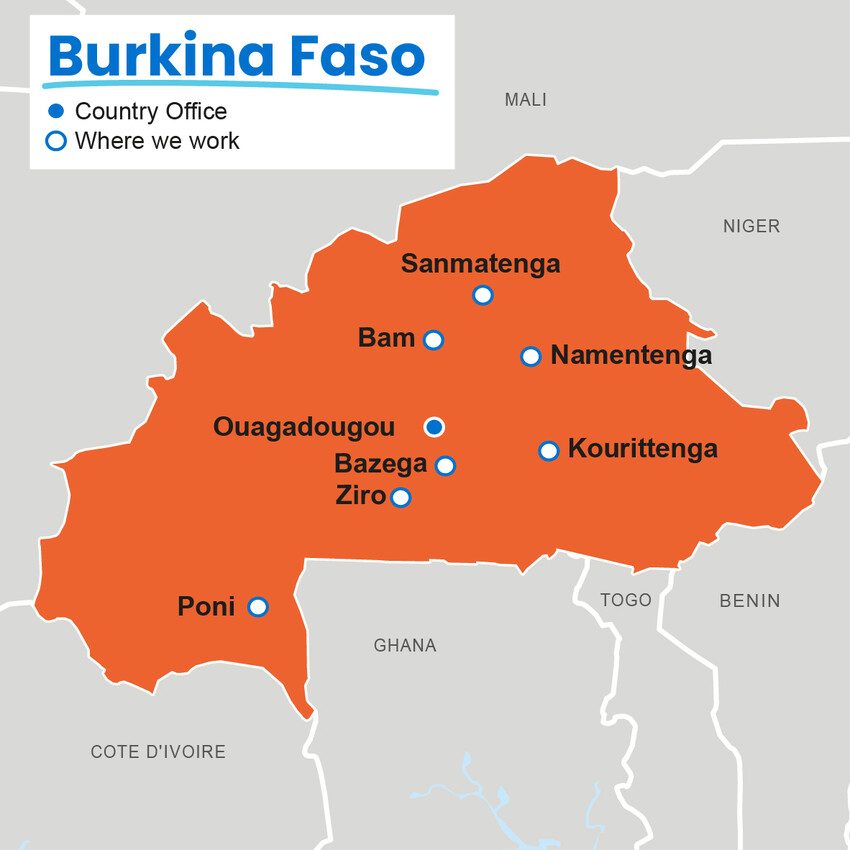
<p>Plan Burkina Faso has started to implement the new water project to 
provide safe drinking water and sanitation in the 12 communes of the 
Namentenga and Sanmatenga provinces (Centre North part of the country) 
and 15 others in the Poni and Noumbiel provinces (South West region). 
Its partnership with the EU has committed €3,503,861 to the Centre North
 project and €3,333,334 to the South West.</p>
<p>The project will provide 150,222 people, including 22,822 children, 
access to safe drinking water through 263 new boreholes. People will 
also benefit from hygiene and sanitation sensitization and training 
sessions, reducing the risk for water-borne disease to which children 
are particularly vulnerable.</p>
<p>Read more about <a href="http://plan-international.org/where-we-work/africa/burkina-faso/what-we-do/What%20we%20do%20" class="internal-link" title="What we do">Plan's work in Burkina Faso</a>.</p>
]]></content:encoded>
    <dc:publisher>No publisher</dc:publisher>
    <dc:creator>Katarzyna Lalak</dc:creator>
    <dc:rights></dc:rights>
    
      <dc:subject>Burkina Faso</dc:subject>
    
    <dc:date>2011-05-18T17:30:00Z</dc:date>
    <dc:type>Page</dc:type>
  </item>


  <item rdf:about="http://plan-international.org/where-we-work/africa/burkina-faso/about-plan/news/using-the-power-of-cinema-to-educate-children">
    <title>Using the power of cinema to educate children</title>
    <link>http://plan-international.org/where-we-work/africa/burkina-faso/about-plan/news/using-the-power-of-cinema-to-educate-children</link>
    <description>During the Panafrican Film Festival Plan Burkina Faso gathered the children from across the country to give them a chance to leave the village for the first time and to watch a show.
</description>
    <content:encoded xmlns:content="http://purl.org/rss/1.0/modules/content/"><![CDATA[
<p>2 May 2011: During the first week of March, Burkina Faso celebrated its Panafrican Film Festival of Ouagadougou (FESPACO). The festival, often compared to the Cannes festival of Africa, is the most prestigious event after the African Cup of Nations.</p>
<h3>Gathering the children from across the country</h3>
<div class="captioned image-inline image-inline"><img src="http://plan-international.org/where-we-work/africa/burkina-faso/pictures/youngreporters180.jpg/image_preview" alt="young reporters" title="" />
<p>Plan youth reporters interviewing a visitor during the festival&nbsp;</p>
</div>
<p>The event allowed 20 young reporters from Plan’s five program areas and 30 other children attended the festival and opening ceremony at the August 4th stadium, to watch a show of music and dance, fantastic horse race with great shows of riding command and a firework display.</p>
<p>“What I saw in Ouagadougou will always be my best souvenir; in fact I will never forget about this joyful experience,” said 13-year-old Koudougou Bruno who, like the majority of children, left the village for the first time in her life.</p>
<h3>Discussing the issues of violence in school <br /></h3>
<p>Moreover, thanks to Plan’s sponsorship of the junior section of the festival, from 9 to 11 am, and from 4 to 6 pm, children from the nursery, primary and secondary schools, alone or with their parents could gather at the National Arts Center Theater to watch films made for them.</p>
<p>Plan used this opportunity to discuss violence in school with the children attending the junior section and educate them on their rights. Cooperating with the local radio producing school children programs and the radio host Ouceni Sawadogo, the facilitators of the discussion encouraged children to answer questions related to their knowledge of child rights and violence in school.&nbsp;</p>
<div class="captioned image-inline"><img src="http://plan-international.org/where-we-work/africa/burkina-faso/pictures/filmfestival180.jpg/image_preview" alt="film festival reward" title="" />
<p>Serge Armel Sawadogo from Burkina Faso was awarded for his short film "Benere"</p>
</div>
<p>The competitions and quizzes boosted children’s participation in games to receive T-shirts, sweets, biscuits, comic strips on child rights, and posters. Plan and “Tonton Sawadogo” (Uncle Sawadogo) recorded children’s voices and included in a program which was broadcasted live during mornings and afternoons’ sessions.</p>
<p>“I have won a T-shirt, 2 posters, and a strip cartoon. I am very happy,” said Madou Sidibé, a young participant.</p>
<p>“Plan is doing a wonderful work. Sensitizing all the film enthusiast on child rights is a very good initiative. The children are responsible for our nation tomorrow. The earlier they know about their rights and duties, the better,” commented Nétané Bakari, the Executive Director of Prison Fellowship of Burkina, who came to the junior section with his children.</p>
<h3>Rewarding the best film and director <br /></h3>
<p>Finally, Plan Burkina, who sponsors the annual Children Film Award of the festival, awarded the 29-year-old director, Serge Armel Sawadogo from Burkina Faso for his short film “Benere” about a young girl caught up in issues relating to her rights to education, to protection, and to a family.&nbsp;</p>
<p>Read more about <a href="http://plan-international.org/where-we-work/africa/burkina-faso/what-we-do/What%20we%20do%20" class="internal-link" title="What we do">Plan's work in Burkina Faso</a>.</p>
]]></content:encoded>
    <dc:publisher>No publisher</dc:publisher>
    <dc:creator>Katarzyna Lalak</dc:creator>
    <dc:rights></dc:rights>
    
      <dc:subject>Burkina Faso</dc:subject>
    
    <dc:date>2011-05-02T12:30:00Z</dc:date>
    <dc:type>Page</dc:type>
  </item>


  <item rdf:about="http://plan-international.org/where-we-work/africa/burkina-faso/about-plan/news/plan-burkina-faso-bids-fond-farewell-to-country-direct">
    <title>Plan Burkina Faso bids fond farewell to Country Director</title>
    <link>http://plan-international.org/where-we-work/africa/burkina-faso/about-plan/news/plan-burkina-faso-bids-fond-farewell-to-country-direct</link>
    <description>Dr. Tounkara receives national distinction prior to his departure to Plan Canada. “The Chevalier de l’Ordre National” Medal was given to Dr. Tounkara for his excellent service to the children and youth of Burkina Faso.
</description>
    <content:encoded xmlns:content="http://purl.org/rss/1.0/modules/content/"><![CDATA[
<div class="captioned image-inline image-inline"><img src="http://plan-international.org/where-we-work/africa/burkina-faso/pictures/Affichagemdaille180.jpg/image_preview" alt="a reward" title="" />
<p>Dr. Tounkara receiving the distinction,"The Chevalier de l'Ordre National" medal</p>
</div>
<p>Dr. Mahamadou Tounkara, Plan Country Director completed his tour in Burkina Faso on December 19th. Before his departure, he was awarded a distinction by the Government of Burkina Faso in Ouagadougou for excellent service to the communities, especially the children and Youth of Burkina Faso. In his three years, he has mobilized more than 40 billion francs for Plan Burkina Faso programs. <br /><br />“The Chevalier de l’Ordre National” Medal was presented to Dr. Tounkara with gratitude by the Minister of Economy and Finance Marie Noël Vebamba. This is the 3rd most important distinction in the hierarchy of the Burkinabè Orders. <br /><br />“It is with a lot of emotion that I receive this distinction. My stay in Burkina Faso has been brief, but thanks to the support of all, including the government, partners and colleagues, we have been able to do our best towards the welfare of children, and I take this opportunity to thank all,” said Dr. Tounkara.<br /><br />The distinction was given during a special ceremony attended by high ranking officials from a variety of ministries and international organizations and members of Plan Burkina staff. Prior to the ceremony, the Prime Minister of Burkina Faso thanked him for his excellent work in Burkina.<br /><br />This was the third time in one year that Plan has been the recipient of a national award. In December 2009, a decoration was given to Dr. Tounkara acknowledging Plan’s promotion of human rights. This was followed by a certificate of recognition for Plan’s outstanding management of the emergency response to the floods, and the Country Director’s participation in the national council for emergency relief, where he represented the civil society. <br /><br />Dr. Tounkara will join Plan Canada in January and be responsible for the management of resources for the complete international programs.</p>
<p>Read more about <a href="http://plan-international.org/where-we-work/africa/burkina-faso/what-we-do/What%20we%20do%20" class="internal-link" title="What we do">Plan's work in Burkina Faso</a>.</p>
]]></content:encoded>
    <dc:publisher>No publisher</dc:publisher>
    <dc:creator>Katarzyna Lalak</dc:creator>
    <dc:rights></dc:rights>
    
      <dc:subject>Burkina Faso</dc:subject>
    
    <dc:date>2010-12-22T16:25:00Z</dc:date>
    <dc:type>Page</dc:type>
  </item>


  <item rdf:about="http://plan-international.org/where-we-work/africa/burkina-faso/about-plan/news/plan-burkina-faso-fights-meningitis-outbreak">
    <title>Plan Burkina Faso fights meningitis outbreak</title>
    <link>http://plan-international.org/where-we-work/africa/burkina-faso/about-plan/news/plan-burkina-faso-fights-meningitis-outbreak</link>
    <description>Plan is working fast to help Burkina Faso fight a meningitis outbreak.</description>
    <content:encoded xmlns:content="http://purl.org/rss/1.0/modules/content/"><![CDATA[
<div class="captioned image-right"><img src="http://plan-international.org/pictures/burkinaadvisor180.JPG/image_preview" alt="Burkina Faso health advisor 180" title="Health advisor in Burkina Faso talks to the community about meningitis " width="180" height="150" />
<p>A Plan health advisor talks to the community about meningitis</p>
</div>
<p>5 May 2010: Plan is working fast to help Burkina Faso fight a meningitis outbreak.</p>
<p>The country is being hit especially hard by the disease, with a new strain of the virus, known as strain X, already claiming half of all the 718 meningitis related deaths since the beginning of the year. In 5 districts the disease is at epidemic level, and 9 more districts are on high alert.</p>
<p>The mortality rate is particularly high at 14%. Worryingly, children and young people are the most affected group, with 80% of patients aged between 2 and 30. There is no vaccine for strain X.</p>
<h3>Life saving treatments</h3>
<p>Plan Burkina Faso has stepped up efforts to deal with the outbreak.<em> </em>Plan has signed a convention with the Ministry of Health to fund antibiotics, other treatments and laboratory use and equipment. Plan has also supported the Ministry in purchasing vaccines against the other strains of meningitis, which are still killing many.</p>
<p>On a more local level, Plan’s 5 programme units in Burkina Faso are helping to treat patients by donating medicines and by giving support to health workers. So far 5,118 people nationally have been treated for the disease.</p>
Plan’s 5 programme units in Burkina Faso are helping to treat patients by donating medicines and by giving support to health workers. So far 5,118 people nationally have been treated for the disease.
<h3>Informing communities</h3>
<p>As well as giving direct medical treatment, Plan is also promoting health messages through radio - an effective way of reaching populations who would otherwise be difficult to contact.</p>
<p align="justify">Dr Ismailou Kaba, Plan’s health advisor in Burkina Faso, said: "Plan is spreading awareness about the disease through radio broadcasts which contain key messages about the disease and the health centres. We play these key messages at certain times of the day to encourage the population to go to health centres as soon as possible to reduce the lethality of the disease. Plan has reacted quickly to the meningitis outbreak and we will continue to work with the government."</p>
<p>The country has never seen so many cases of this new type of meningitis, strain X. As there is no vaccine for it, the focus for the moment must remain on antibiotic treatment. Plan continues to work with communities to monitor the situation closely.</p>
<p>Find out more about Plan’s work in <a href="http://plan-international.org/where-we-work/africa/burkina-faso/about-plan" class="internal-link" title="About Plan in Burkina Faso">Burkina Faso </a></p>
<p>Learn about <a href="http://plan-international.org/what-we-do/health" class="internal-link" title="Health">Plan’s global health work</a>.</p>
<p>&nbsp;</p>
<p>&nbsp;</p>
<p>&nbsp;</p>
]]></content:encoded>
    <dc:publisher>No publisher</dc:publisher>
    <dc:creator>Farrah Easton</dc:creator>
    <dc:rights></dc:rights>
    
      <dc:subject>Burkina Faso</dc:subject>
    
    <dc:date>2010-05-05T20:15:00Z</dc:date>
    <dc:type>Page</dc:type>
  </item>


</rdf:RDF>